What is an infrared sauna and how does it work?
 By the Find My Sauna team·
Updated ·
8 min read
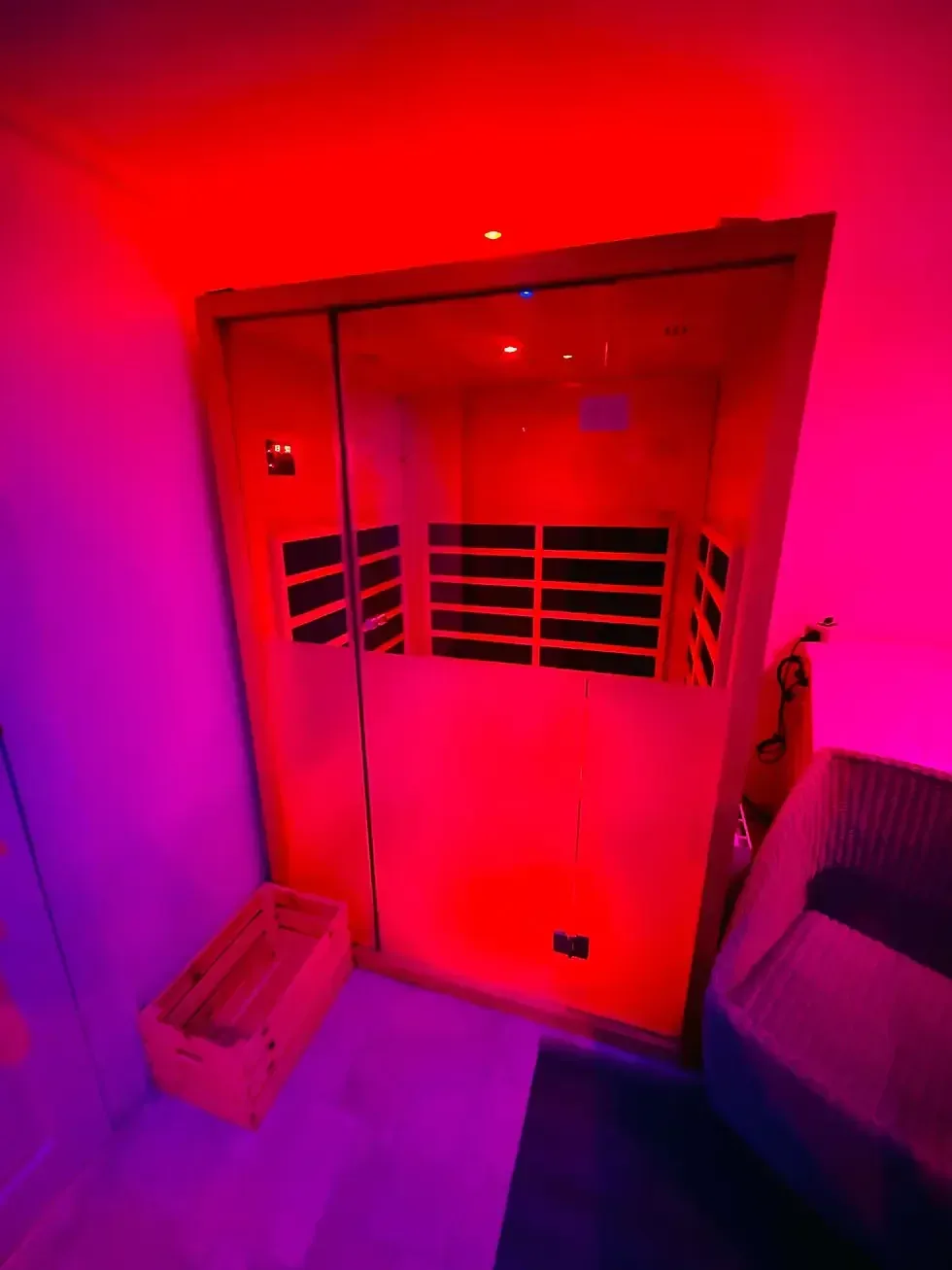
Infrared saunas feel gentler than the classic Finnish kind, and you'll now find them in recovery studios, gyms and day spas all over the world. This is what's going on inside one.
The short answer
An infrared sauna is a small wooden room with infrared heaters in the walls. A traditional sauna heats the air to 80–100 °C. An infrared sauna instead gives off infrared light that warms your skin and body directly. The air only reaches about 45–60 °C (113–140 °F), so it feels milder, but most people are sweating hard after 10–15 minutes.
How an infrared sauna works
Every sauna makes you hot. What changes is how the heat gets to you.
A traditional sauna has a stove, electric or wood-fired, that heats a pile of stones. The stones heat the air, and the air heats you. Air carries heat poorly, which is why a Finnish sauna runs at 80 °C or more: it has to be that hot to warm you up in a reasonable time.
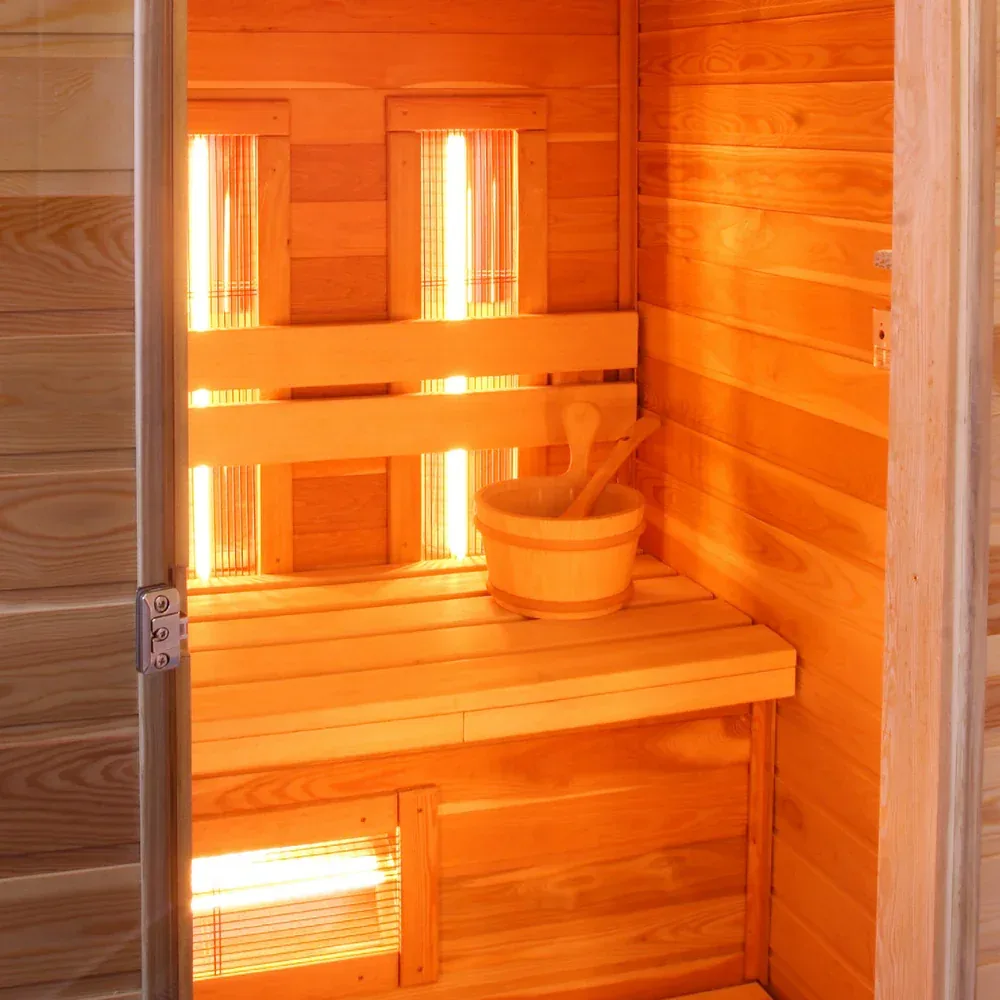
An infrared sauna skips the air. Panels on the walls, usually behind the bench and down by your legs, give off infrared light. You can't see most of it, but you feel it the way you feel the sun on your face on a cold, clear day. Your skin absorbs the light and it turns into heat there. The cabin air warms up too, just a lot less.
Carbon vs ceramic heaters
Most cabins use one of two heater types. Carbon panels are large and flat, and spread a soft, even warmth over a wide area. Ceramic or quartz heaters are smaller rods that run hotter and feel more intense up close. Plenty of newer cabins mix the two. Neither is clearly better. The main difference is how evenly the heat reaches you.
Near, mid and far infrared
Infrared light covers a range of wavelengths, and sauna makers split it into three bands:
- Far infrared is the most common in saunas. You feel it as warmth on and just under the skin.
- Mid infrared sits in between and mostly turns up in "full-spectrum" cabins.
- Near infrared is closest to visible light, which is why some heaters glow red or orange. It's the same family of light used in red-light therapy.
A full-spectrum sauna has all three. Manufacturers make big claims for each band, but hardly any research compares them head to head in a sauna. If you're trying infrared for the first time, any type will give you the basic experience.
Infrared vs traditional sauna
They feel quite different. Side by side:
| Infrared sauna | Traditional (Finnish) sauna | |
|---|---|---|
| Air temperature | 45–60 °C (113–140 °F) | 80–100 °C (176–212 °F) |
| How it heats you | Infrared light warms your body directly | Hot air and steam warm your body |
| Humidity | Dry, no water on stones | Dry, with bursts of steam (löyly) when water hits the stones |
| Typical session | 20–45 minutes in one go | 2–4 rounds of 8–15 minutes, with cool-downs |
| Feel | Gentle, easy to breathe, slow build | Intense, hot air on the face, social |
| Where you find it | Recovery studios, gyms, day spas, homes | Public saunas, bathhouses, spas, hotels |
People who struggle to breathe in a Finnish sauna often prefer infrared. People who love the ritual of steam, cold water and rounds tend to find infrared a bit flat. If steam is what you're after, read sauna vs steam room.
What a session is like
Most infrared saunas are private cabins for one to three people that you book by the slot, usually 30–60 minutes. A typical visit:
- Shower and drink some water. Arrive hydrated and rinse off any lotion.
- Sit on a towel. Wear a swimsuit or nothing, depending on the venue. Our guide to what to wear in a sauna covers the details.
- Settle in for 20–40 minutes. The cabin is often preheated. You'll feel warm straight away and start sweating after 10–15 minutes. Many cabins have coloured lights, music or a screen.
- Cool down slowly. Take a lukewarm or cool shower and sit for a few minutes before you get dressed.
- Drink again. You lose more fluid than you'd think, so have a glass or two of water.
A single session often costs about the same as a fitness class. Prices vary a lot by city, so check the venue's page before you go. For timings in other kinds of sauna, see how long to stay in a sauna.
What the research says
Most of the well-known sauna studies, including the big Finnish ones linking regular sauna use to better heart health, were done in traditional saunas. Infrared saunas have been studied much less, mostly in small trials. So far:
- Relaxation. This is the most consistent finding, and the main reason people keep going.
- Sore muscles. A few small studies in athletes suggest an infrared session after training may help people feel recovered sooner.
- Heart and blood vessels. Doctors in Japan use a gentle infrared sauna treatment called Waon therapy, and small trials in heart patients have been encouraging. Those were supervised medical programmes, not spa visits.
- Weight loss and "detox". The weight you lose in a session is water, and it comes straight back when you drink. Your liver and kidneys handle detox. Sweat plays almost no part.
For the wider evidence on saunas in general, read sauna benefits: what the research actually says.
Who should be careful
Infrared saunas are milder than traditional ones, but they still raise your body temperature and heart rate. Talk to a doctor first if you:
- are pregnant or trying to get pregnant
- have a heart condition, very low or very high blood pressure, or have recently had a heart attack
- take medicines that affect sweating, blood pressure or alertness
- have a fever or feel unwell
Don't use a sauna after drinking alcohol, and get out if you feel dizzy, sick or get a headache. Children should only go in briefly, at a lower temperature and with an adult.
This guide is general information, not medical advice.
Where to try an infrared sauna
Find My Sauna lists 629 places with an infrared sauna. These cities have the most:
A few to start with

Kontrast
Manchester · Finnish and infrared

Belleyme Marais
Paris · Infrared cabins

Szent Lukács Gyógyfürdő és Uszoda
Budapest · Thermal bath with infrared
Frequently asked questions
How hot is an infrared sauna?
The air is usually 45–60 °C (113–140 °F). It feels warmer than that because the heaters warm your body directly.
How long should you stay in an infrared sauna?
Start with 15–20 minutes. Regulars often stay 30–45 minutes. Get out sooner if you feel dizzy or unwell.
Is an infrared sauna better than a regular sauna?
Neither is better overall. Infrared is gentler and easier to breathe in, while traditional saunas have far more research behind their health benefits.
Do infrared saunas give off harmful radiation?
No. Infrared is a form of heat, not the ionising radiation used in X-rays. Cabins sold as "low EMF" are talking about the electric fields from the wiring, not the infrared itself.
How often can you use an infrared sauna?
Many people go 2–4 times a week. Daily use is fine for most healthy adults who drink enough water.


