Barrel saunas: cost, pros and cons
 By the Find My Sauna team·
Updated ·
7 min read
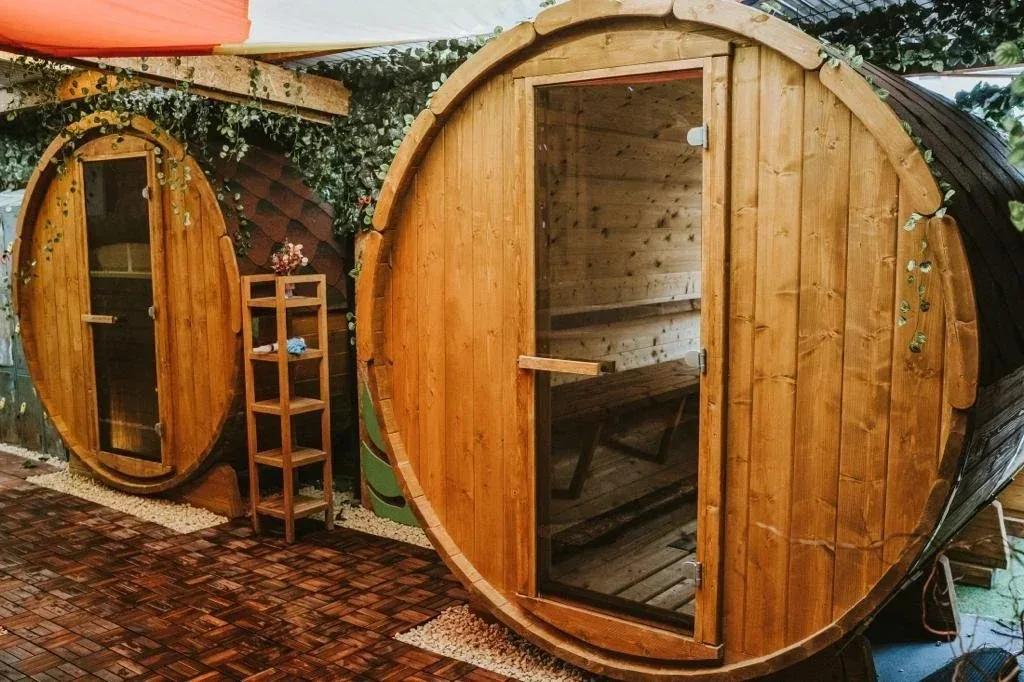
Barrel saunas have become the go-to garden sauna. They look great, arrive as a kit and heat up quickly. They also have quirks that sellers don't put in the brochure. Here's what to know before you buy one, or before you book a session in one.
The short answer
A barrel sauna is a round wooden sauna built from curved staves held together by metal bands, like a giant barrel lying on its side. The round shape means less air to heat, so it warms up fast, and it sheds rain and snow well. Prices vary widely with size, wood and heater, from a few thousand to well over ten thousand dollars, euros or pounds once you add a heater, foundation and electrics. The main downsides are limited headroom, only one level of bench, and some upkeep.
What a barrel sauna is
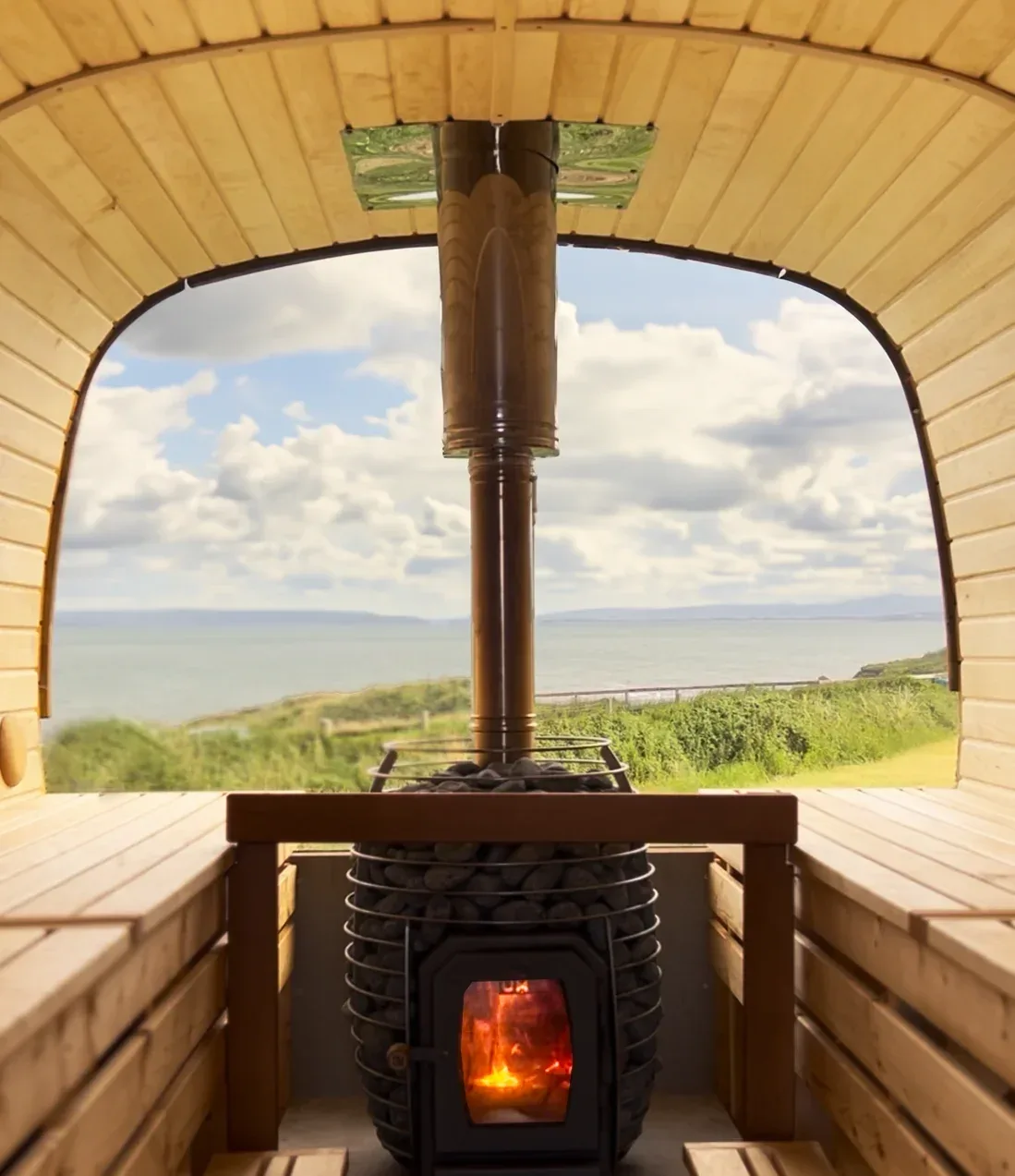
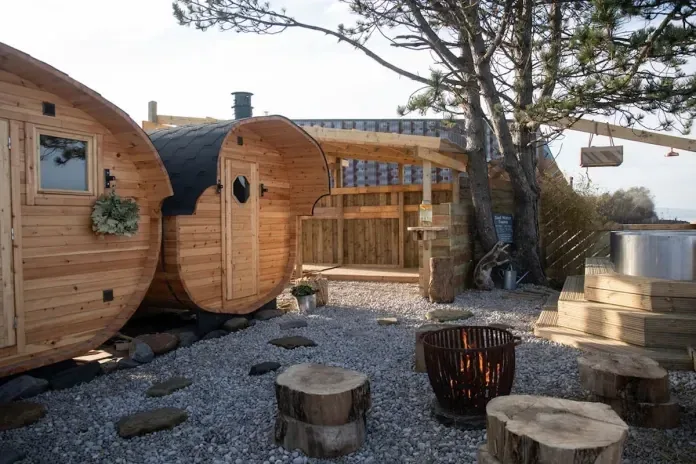
A barrel sauna is built from long planks, called staves, shaped to fit together in a circle. Steel bands around the outside hold them tight. Most have a door at one end, benches along both sides and a heater at the far end or next to the door. Some have a glass back wall or a front porch area for changing and cooling off.
They're popular for gardens, holiday cabins and pop-up sauna businesses, and you'll find plenty of them at the seaside and lakeside saunas listed on Find My Sauna.
Pros
- Heats up quickly. A round room has less air for its floor area than a square one, so the heater has less to warm.
- Strong and weatherproof. The curved shape sheds rain and snow, and the bands make the structure sturdy.
- Easy to install. Most come as kits that a couple of handy people can build in a weekend, or are delivered ready-built.
- Looks good. For plenty of buyers, that's half the appeal.
- Movable. Smaller barrels can be moved, or even put on a trailer.
Cons
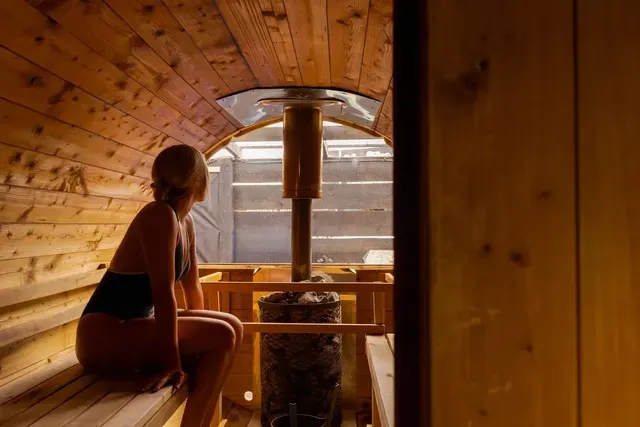
- Limited headroom. Taller people may not be able to sit up straight on the bench.
- Usually one bench level. You can't move up for more heat or down for less, which you can in a sauna with tiered benches. Our guide to sauna temperature explains why that matters.
- Cool feet, hot head. With the benches low in the curve, your feet sit in the coolest air. Some sauna fans find this the biggest drawback.
- Upkeep. Wood swells in wet weather and shrinks in dry. The bands may need tightening, and seams can open up or leak if the barrel isn't cared for.
- Small changing space. Unless you choose a model with a porch, you'll need somewhere else to change and cool down.
Electric or wood-fired?
| Electric heater | Wood-fired stove | |
|---|---|---|
| Convenience | Switch on, set the temperature, often with a timer or app | Light it, feed it and manage the vents |
| Heat-up time | Usually 30–60 minutes | Often similar, depending on the stove and weather |
| Installation | Needs a suitable power supply, usually fitted by an electrician | Needs a chimney, safe clearances and a supply of dry wood |
| Feel | Steady, controllable heat | Softer, crackling heat many people prefer |
| Off-grid | No | Yes |
Check local rules for wood-burning stoves and chimneys before buying one, especially in towns and cities.
Which wood?
- Cedar (often Western red cedar or Canadian cedar) resists rot well, smells lovely and stays fairly cool to the touch. It's usually the most expensive choice.
- Thermally modified wood, often spruce or pine that's been heat-treated, is stable, durable and darker in colour.
- Untreated spruce or pine is cheaper, but needs more care outdoors and may not last as long.
Whatever the wood, never varnish or paint the inside. It can give off fumes in the heat and get very hot to the touch.
What it costs
Barrel sauna prices vary a lot by country, size and wood. As a rough guide, the costs to budget for are:
- the barrel kit or ready-built sauna, the biggest cost
- the heater and sauna stones, if not included
- a level base: paving slabs, a gravel bed, a concrete pad or a deck
- electrical work for an electric heater, or a chimney kit for a wood stove
- delivery and assembly, if you're not building it yourself
- ongoing costs: electricity or firewood, wood treatment for the outside, replacement stones every few years
Get quotes for the base and electrics before you order. They can add more than people expect. Also check whether you need permission from your local planning office.
Setting one up
- Pick a level, well-drained spot with space around the barrel for air and maintenance.
- Think about privacy and the cool-down. Where will you sit between rounds? Is there room for a cold tub or shower?
- Get the base right. A barrel on uneven ground can warp and leak.
- Use a qualified electrician for any electric heater.
- Check the bands after the first few weeks and at the change of seasons.
Not ready to spend that much? Read are sauna blankets worth it? for a cheaper indoor option, and cold plunge benefits if you're planning a hot and cold setup.
Try one first
Lots of outdoor saunas rent barrel saunas by the session. Sitting in one for an hour is the best way to find out whether the headroom and single bench suit you.
Find My Sauna lists 259 outdoor saunas. These cities have the most:

Garden Sauna
Denver · Barrel sauna

Red Rock Sauna
Denver · Mobile barrel sauna
The Barrel Sauna Tallaght
Dublin · Barrel sauna
Frequently asked questions
Are barrel saunas any good?
Yes, for many people. They heat quickly and handle the weather well. The trade-offs are less headroom and only one bench level.
How long does a barrel sauna take to heat up?
Often 30–60 minutes, depending on the heater, the size and how cold it is outside.
Do barrel saunas leak?
They can if the wood dries out or the base is uneven. Tightening the bands and keeping the barrel level usually solves it.
How long does a barrel sauna last?
A well-built cedar or thermally modified barrel that is looked after can last many years. Cheap untreated wood wears out faster.
Do you need planning permission for a barrel sauna?
It depends on where you live, the size and the heater. Check with your local planning office before you buy.