Sauna temperature: how hot is a sauna?
 By the Find My Sauna team·
Updated ·
6 min read
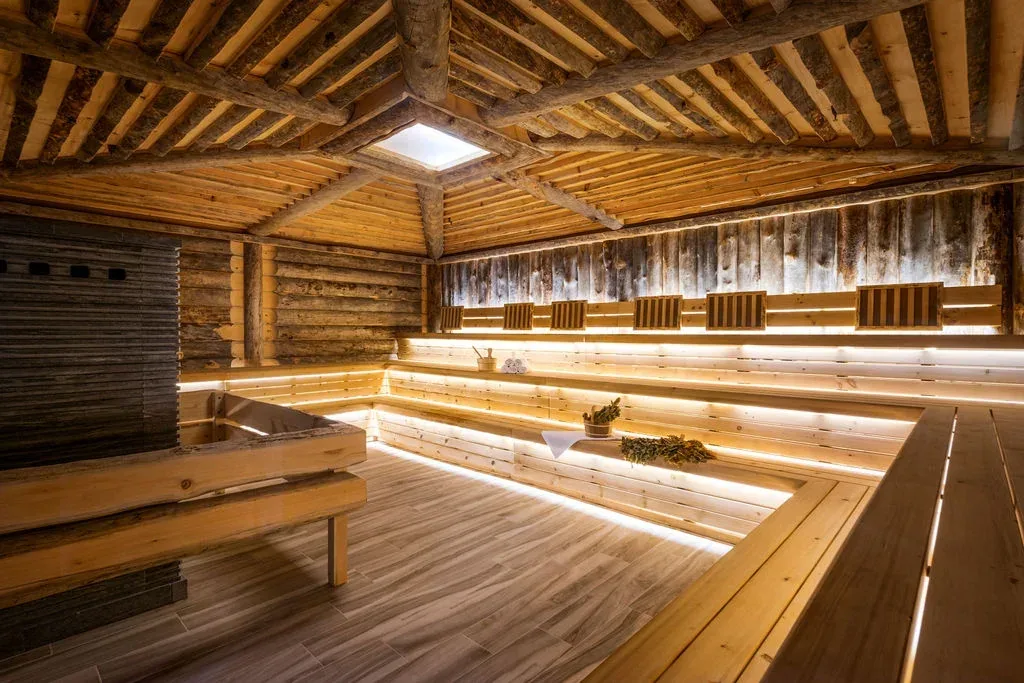
The thermometer on a sauna wall can say 90 °C, a number that would be dangerous in almost any other setting. Yet people sit there happily for ten minutes. Here's what's normal, why it's bearable, and when it's too hot.
The short answer
A traditional Finnish sauna is usually 70–100 °C (158–212 °F), with most public saunas around 80–90 °C (176–194 °F). Infrared saunas run much cooler at 45–60 °C (113–140 °F), and steam rooms at 40–50 °C (104–122 °F) but almost 100% humidity. The top bench can be far hotter than the bottom one. For beginners, a lower bench in an 80 °C sauna is a good start.
Temperatures by type
| Type | Celsius | Fahrenheit | Humidity |
|---|---|---|---|
| Finnish (traditional) sauna | 70–100 °C | 158–212 °F | Low, rising briefly with löyly |
| Infrared sauna | 45–60 °C | 113–140 °F | Low |
| Steam room | 40–50 °C | 104–122 °F | Close to 100% |
| Hammam | About 40–50 °C | About 104–122 °F | Very high |
| Russian banya | Often 70–90 °C | Often 158–194 °F | Higher than a Finnish sauna |
These are typical ranges, and individual venues vary. For more on the differences, see sauna vs steam room and what is an infrared sauna.
Why 90 °C is bearable
Water at 90 °C would scald you in seconds. Air at 90 °C doesn't, because air carries heat far less well than water. The thin layer of air right against your skin also stays a bit cooler, and as long as the air is dry, your sweat evaporates and cools you down.
That's also why a steam room feels so hot at only 45 °C. The air is soaked, your sweat can't evaporate, and your body loses its main way of cooling down.
Humidity and löyly
In a Finnish sauna, you throw water on the hot stones to make a burst of steam called löyly. The thermometer barely moves, but the room suddenly feels much hotter, often uncomfortably so for a minute. That's the humidity at work: for a short while, your sweat stops cooling you as well.
So the number on the wall only tells part of the story. A dry 90 °C sauna can feel gentler than a 75 °C sauna where someone keeps adding water. In German-style Aufguss sessions, a sauna master pours water and fans the hot air at you on purpose, and the heat can feel intense even for regulars.
The bench makes a big difference
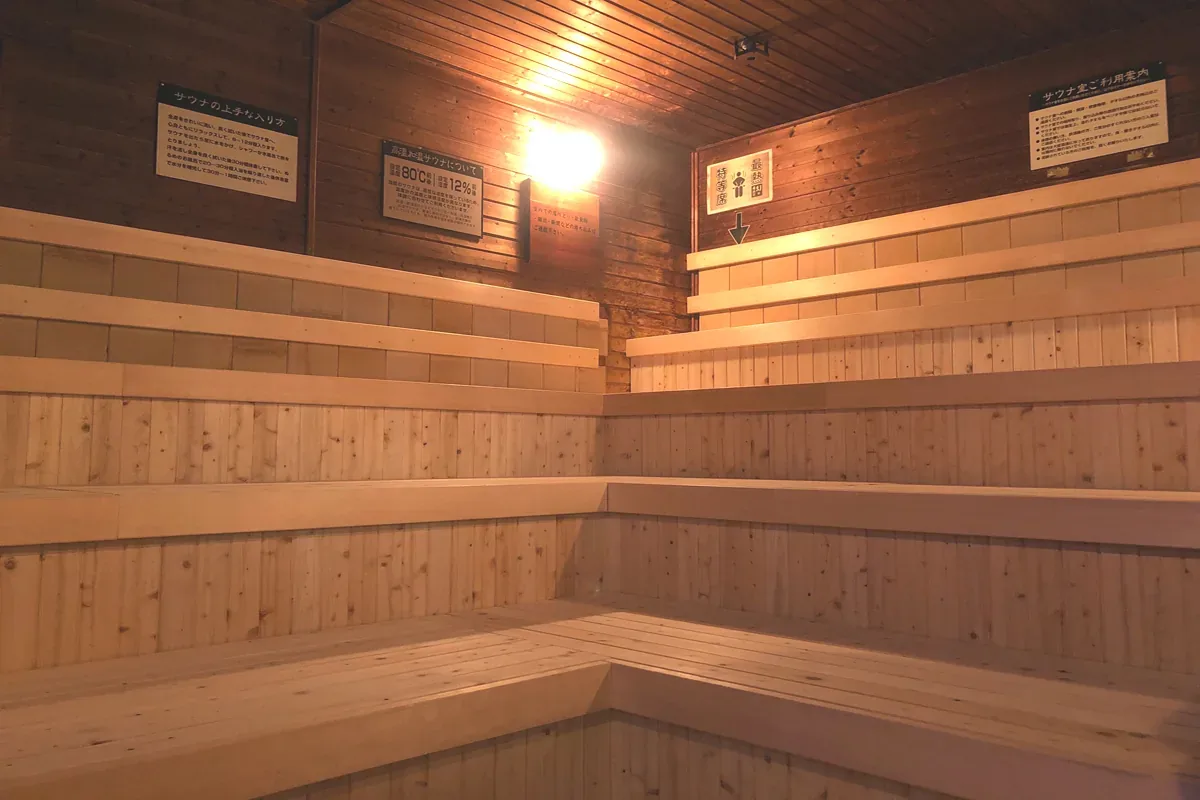
Hot air rises, so a sauna has layers. The top bench can be 20 degrees or more hotter than the floor, and your head is often much hotter than your feet. That's why benches are tiered, and why Finns like to sit high with their feet up on the bench rather than dangling into cooler air.
If a round feels too much, move down a level before you give up and leave. If you're comfortable after 15 minutes on the lowest bench, try one higher next time.
What temperature is best?
There's no single right answer. A few guidelines:
- First time: a sauna around 70–80 °C (158–176 °F), lower bench, 5–10 minutes.
- Regular use: most Finns are happy at 80–90 °C (176–194 °F).
- For the health research: the large Finnish studies linking saunas to better heart health were done in traditional saunas, typically around 80 °C. Read sauna benefits for the details.
- If heat makes you uncomfortable: try an infrared sauna, which is much milder.
How long you stay matters as much as the temperature. Our guide to how long to stay in a sauna has times for each type.
How hot is too hot?
Above 100 °C, very few people are comfortable for long, and the risk of burns from the wood, metal and air rises fast. The World Sauna Championships in Finland, a contest to see who could last longest at 110 °C, were stopped for good in 2010 after a finalist died. There's no prize for enduring extreme heat.
Whatever the temperature, leave if you feel dizzy, sick, get a headache or your heart is pounding. Don't use a sauna after drinking alcohol.
This guide is general information, not medical advice.
Home saunas and heaters
If you're buying a sauna, the heater sets the limit. In the United States, electric sauna heaters are commonly capped at about 90 °C (194 °F) at the thermostat, which is measured near the ceiling, so the benches will be cooler. European heaters often go a little higher. Wood-fired stoves have no thermostat at all, and you control the heat with how much wood you add and the vents.
Thinking about building one? See barrel saunas: cost, pros and cons.
Find a traditional sauna
Find My Sauna lists 2,311 places with a Finnish-style sauna. These cities have the most:

The SPA Club
New York · Saunas and steam
AUTM HAUS
London · Finnish sauna
Bathhouse Atlantic Avenue
New York · Saunas and banya
Frequently asked questions
What is the normal temperature of a sauna?
A traditional sauna is usually 70–100 °C (158–212 °F). Most public saunas are around 80–90 °C (176–194 °F).
What temperature is an infrared sauna?
About 45–60 °C (113–140 °F). It feels warmer because the heaters warm your body directly.
Is 100 °C too hot for a sauna?
It is at the very top of the normal range. Experienced users manage short rounds, but beginners should start lower.
Why is the top bench hotter?
Hot air rises, so the air near the ceiling is much hotter than near the floor.
What is a good sauna temperature for beginners?
Around 70–80 °C (158–176 °F), sitting on a lower bench, for 5–10 minutes.


