Should you use a sauna when you have a cold?
 By the Find My Sauna team·
Updated ·
7 min read

Some people swear by sweating out a cold. Others won't go near a sauna until they're well again. The sensible answer sits in between, and it depends mostly on two things: whether you have a temperature, and who you'd be sharing the bench with.
The short answer
If you have a fever, skip the sauna. Your body is already running hot, and more heat adds strain and dries you out. With a mild head cold and no fever, a short, gentle session is unlikely to do harm, and warm air may ease a blocked nose for a while. There's no good evidence that it cures a cold or makes it shorter. You're infectious until your symptoms have gone, so stay away from shared saunas until then.
The fever rule
The simplest test is your temperature. If you have a fever, aches all over, or the shivery, washed-out feeling that comes with flu, stay out of the sauna.
A fever means your body has already turned its own thermostat up to fight the infection. A hot sauna pushes your core temperature higher still, makes your heart work harder and makes you sweat out fluid you're probably already short of. That's a lot to ask of a body that's busy being ill, and it's how people end up dizzy or faint on the way out.
A rule of thumb that's often used for exercise works well here too. If your symptoms are all above the neck, like a runny nose, sneezing or a scratchy throat, something gentle is usually fine. If they're below the neck, like a chesty cough, aching muscles or an upset stomach, or you have a temperature, rest instead.

What heat does for a blocked nose
Warm air feels good when you're bunged up. Many people find that sitting in the heat, or breathing steam, loosens mucus and makes it easier to breathe through their nose for a while. The NHS suggests a home version of the same thing for colds: sit in the bathroom with a hot shower running to ease a blocked nose.
The relief is brief, and the stuffiness usually comes back once you've cooled down. A very hot, dry Finnish sauna can also feel harsh on a sore throat. If that's you, a lower bench or a cooler, more humid room may be more comfortable. Our guide to sauna vs steam room explains how the two differ.
Can a sauna cure or shorten a cold?
Not as far as anyone has been able to show. The idea of sweating out a virus is old, and there's a neat theory behind it: cold viruses are destroyed by heat in a lab dish. Your nose isn't a lab dish, though, and there's no good evidence that sitting in a sauna kills the virus there.
The closest thing to a proper test is breathing heated, humid air, which is roughly what you do in a steam room. A Cochrane review, last updated in 2017, pooled six trials with 387 people. It found no clear benefit or harm for cold symptoms, and no difference in how much virus people shed. The reviewers rated the evidence as low quality.
So a sauna might make you feel more comfortable for half an hour. It won't get you better any faster.
Regular saunas and catching fewer colds
In a study published in 1990, researchers in Vienna followed 50 volunteers for six months. Half took regular saunas and half didn't. The sauna group had significantly fewer colds, and in the last three months they had roughly half as many as the others. Once they did catch a cold, it lasted just as long and felt just as bad.
Fifty people is a small study, and we couldn't find a larger trial that repeated it. A much bigger Finnish study points the same way. It followed 2,210 middle-aged men for about 25 years and found that men who used a sauna 2–3 times a week had a 31% lower risk of pneumonia than men who went once a week or less, and those who went 4 or more times had a 44% lower risk.
That's a link, not proof, since regular sauna users may be healthier in other ways. Regular sauna use while you're well might help a little. It isn't a reason to sit in one while you're ill. Our guide to sauna benefits covers the wider research.
Colds and shared saunas
Even if the heat does you no harm, think about the person sitting next to you. Cold viruses spread easily through coughs, sneezes and hands. The NHS says you're infectious until all your symptoms have gone, which usually takes a week or two, and that germs from coughs and sneezes can survive on hands and surfaces for 24 hours.
A sauna is a small room where people sit close together, breathe the same air and touch the same benches, door handles and water buckets. The heat doesn't make it sterile. If you're sneezing and coughing, give public saunas a miss until you're better. A sauna at home, or a private session you book just for yourself, avoids the problem.
If you do go: a gentle routine
If you have a mild cold, no fever and the sauna to yourself, keep it easy:
- Check your temperature first. If it's raised, stay at home.
- Drink a big glass of water before you go in. A cold and a sauna both dry you out.
- Sit lower and stay in for less time than usual, 5–10 minutes rather than a full round. See how long to stay in a sauna for normal times.
- Skip the ice bath. A big cold shock is extra stress you don't need right now. A lukewarm shower is plenty.
- Get out straight away if you feel dizzy, your head starts pounding or you feel worse, and rest afterwards.
Once a fever has gone, give yourself a day or two of feeling normal before you go back.
Who should be careful
- Anyone with a fever, flu or COVID-19. Rest and drink fluids instead.
- Chest symptoms. With a chesty cough, wheezing or shortness of breath, stay out, and see a doctor if it doesn't settle.
- Vomiting or diarrhoea. You're already losing fluid.
- Cold and flu medicines. Some decongestants raise your heart rate and blood pressure, and some remedies make you drowsy. Ask a pharmacist.
- Heart conditions, pregnancy and children. Check with a doctor, and keep children with a cold or fever out of the sauna.
The NHS advises seeing a GP if you have a high temperature for more than 3 days, your cold hasn't improved after 10 days, or a cough lasts more than 3 weeks.
This guide is general information, not medical advice.
Saunas you can book for yourself
Once you're well, a private session means you know exactly who has shared the room. A few saunas you can book for yourself:

Saunos
Dublin · Private sessions
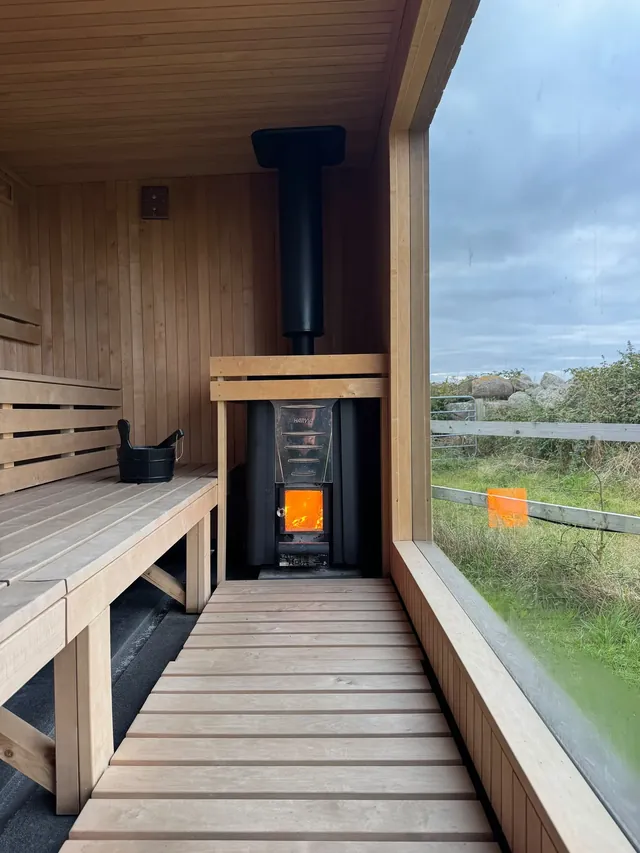
Power Saunas
Galway · Private sauna

Urban Heat Sauna
London · Private sauna
Frequently asked questions
Is it good to sit in a sauna when you have a cold?
It will not cure a cold. With mild symptoms and no fever, a short session may ease a blocked nose for a while. With a fever, stay out.
Can you sweat out a cold?
No. Sweating does not remove the virus, and there is no good evidence that heat makes a cold shorter.
Should you use a sauna with a fever?
No. Your body temperature is already raised, and the extra heat adds strain and dehydrates you.
Is a steam room better than a sauna for a cold?
Some people find moist heat kinder on a blocked nose, but trials of breathing heated, humid air found no clear benefit. Either way, do not use a shared one while you are infectious.
When can I go back to the sauna after a cold?
Once your symptoms have gone you are no longer infectious. Start with a shorter session than usual and see how you feel.


