Steam room benefits: skin, breathing and recovery
 By the Find My Sauna team·
Updated ·
7 min read

Steam rooms are in almost every spa and many gyms, often right next to the sauna. They feel gentler on the lungs for some people and leave your skin soft. Here's what they actually do for you, and what they don't.
The short answer
A steam room warms you up in humid air at about 40–50 °C (104–122 °F). People use them to relax, loosen stiff muscles, soften the skin and ease a blocked nose for a while. Those effects are real but short-lived. Steam rooms have been studied far less than saunas, so the long-term health benefits linked to saunas haven't been shown for steam. Ten to twenty minutes is plenty.
How a steam room works
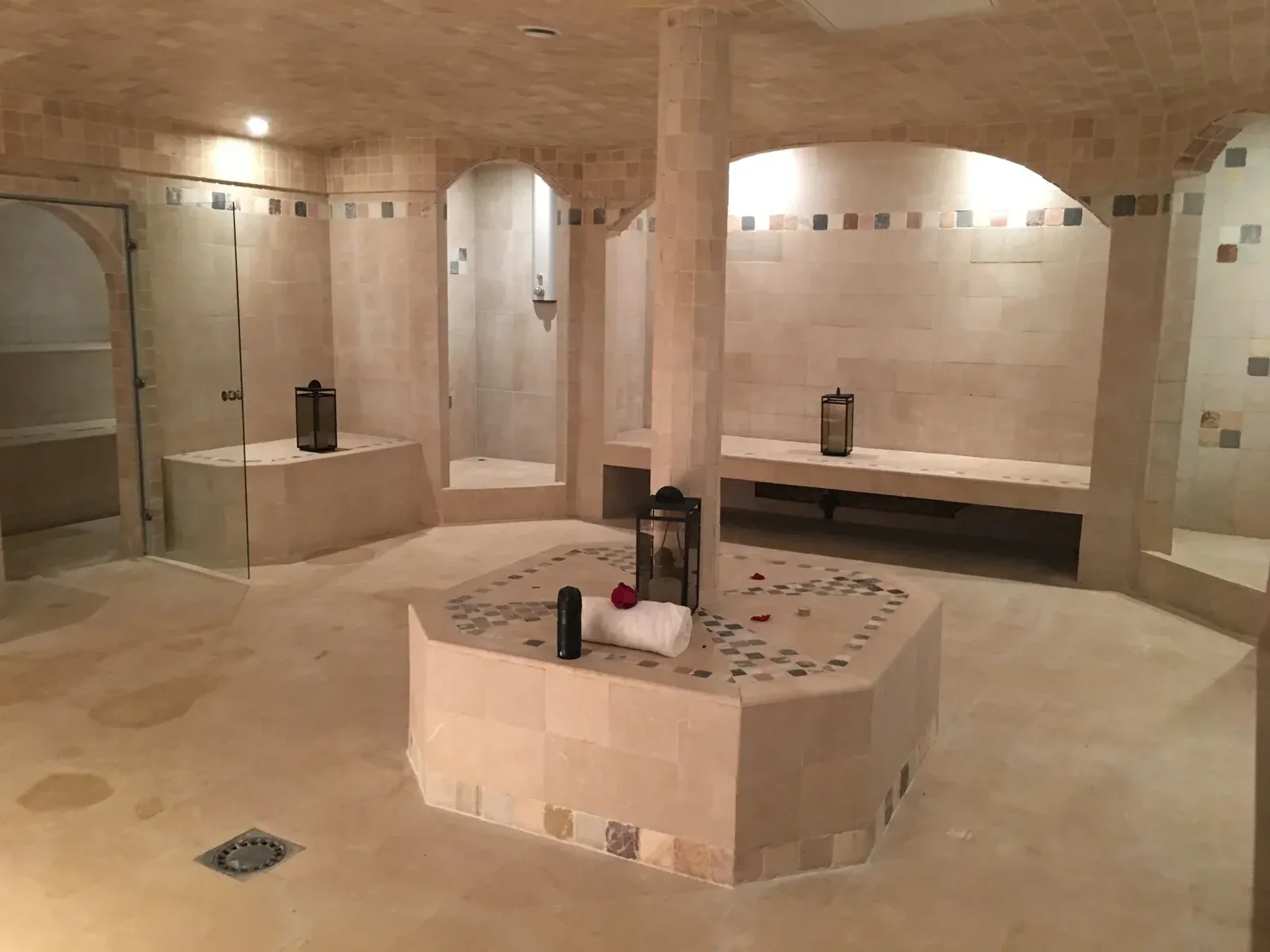
A generator pumps steam into a sealed, tiled room until the air is close to 100% humid. The temperature is much lower than in a sauna, but it feels just as hot because your sweat can't evaporate in air that wet, and evaporating sweat is how your body cools itself. So your skin and core warm up quickly, your heart speeds up and you sweat heavily, even though the thermometer only says 45 °C.
If you're deciding between the two rooms, sauna vs steam room compares them side by side. The Turkish hammam is a close relative, built around steam, warm marble and a scrub.
Relaxation
Warm, quiet and a bit cut off from the world: for most people that's reason enough. The heat relaxes your muscles, the steam softens sounds and you can't look at your phone. Lots of people use a steam room as the calm end to a gym session or the start of a spa visit.
Muscles and stiffness
Moist heat gets into tight muscles well, which is why heat packs and hot baths help with stiffness. A steam room after exercise can make you feel looser and less sore. The research here is mostly on heat in general rather than steam rooms in particular, and the effects are modest. If it feels good, it's a fine part of your routine.
Skin
This is where steam stands out. The warm, wet air softens the outer layer of your skin and increases blood flow, which leaves you looking flushed and feeling smooth. That's why a hammam pairs steam with scrubbing: dead skin comes off much more easily once it's soft.
What steam doesn't do is "open your pores" in any lasting way or cure acne. Some people with acne or rosacea find heat makes their skin worse. Wash your face afterwards and use a light moisturiser if your skin feels tight.
Breathing and blocked noses
Warm, moist air can make a blocked nose feel clearer for a while, the same way a hot shower does. Some people with mild congestion find it soothing. The relief fades once you're back in dry air, and steam doesn't treat colds or sinus infections.
Not everyone finds steam easy to breathe. If you have asthma, some people find warm humid air helps and others find it triggers symptoms, so start with a short session near the door. Stay out entirely if you have a fever.

Heart and circulation
Heat makes your heart beat faster and your blood vessels widen, much as light exercise does. In a sauna, that response has been linked to better heart health in long-term Finnish studies. A steam room produces a similar response, so similar benefits are plausible, but they haven't been studied. Read sauna benefits for what the sauna research found.
What steam rooms do not do
- Weight loss. You lose water, which comes straight back when you drink. See does a sauna help you lose weight?
- Detox. Your liver and kidneys remove waste. Sweat is almost all water and salt.
- Curing colds. Steam can ease a stuffy nose briefly. It doesn't kill viruses.
How to use a steam room
- Shower first. It's polite and it's hygienic.
- Sit on a towel and wear flip-flops. Warm, wet rooms suit bacteria and fungi, so keep a layer between you and the bench.
- Stay 10–20 minutes. Start with 5–10 if it's your first time. Sit low if the steam feels too thick.
- Cool down and drink water. A cool shower and a glass of water before you go back in.
Timings for all kinds of heat are in how long to stay in a sauna.
Who should be careful
Check with a doctor before using a steam room if you're pregnant, have a heart condition or low blood pressure, or take medicine that affects blood pressure. Don't go in after drinking alcohol, and get out straight away if you feel dizzy, sick or short of breath.
This guide is general information, not medical advice.
Where to find a steam room
Find My Sauna lists 1,564 places with a steam room. These cities have the most:

Southampton Spa
Philadelphia · Steam, sauna and hammam

Sofiebadet
Copenhagen · Historic bathhouse

Rudas Gyógyfürdő és Uszoda
Budapest · Thermal bath
Frequently asked questions
How long should you stay in a steam room?
Around 10–20 minutes. Start with 5–10 minutes on your first visit and leave if you feel dizzy.
Is a steam room good for your skin?
It leaves skin soft and flushed for a few hours and makes scrubbing easier. It does not cure acne, and heat can make rosacea worse.
Is a steam room good for a cold?
It can ease a blocked nose while you are in it, but it does not treat the cold. Do not use one if you have a fever.
Can you use a steam room every day?
Most healthy adults can, as long as they keep sessions short and drink water.
Is a steam room or a sauna better?
Saunas have much more research behind them. Steam rooms can feel easier on the skin and nose. Many people use both.


