What is a hammam? A first-timer's guide
 By the Find My Sauna team·
Updated ·
7 min read
A hammam is part bath, part scrub, part afternoon off. If you've never been, the first visit can feel a bit mysterious: where do you go, what do you wear, and who's going to scrub you? This guide walks you through it.
The short answer
A hammam is a steam bath that comes from the Ottoman and North African bathing tradition. You move from a warm room to a hot, humid one, lie on heated marble to sweat, then get scrubbed with a rough mitt and washed with soap and warm water. A visit usually takes one to two hours. You wear a cotton wrap, or a swimsuit or underwear, depending on the venue.
What a hammam is
The hammam grew out of Roman bathing and became a central part of daily life across the Ottoman Empire, the Middle East and North Africa. For centuries it was where people washed, met friends, celebrated weddings and caught up on news. Many cities still have historic public hammams, and today you'll also find modern ones in spas all over Europe and North America.
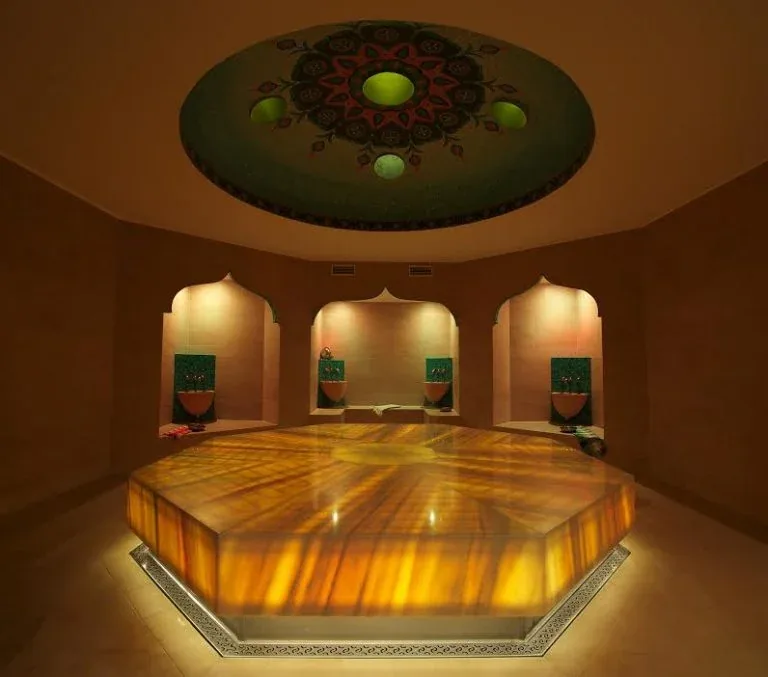
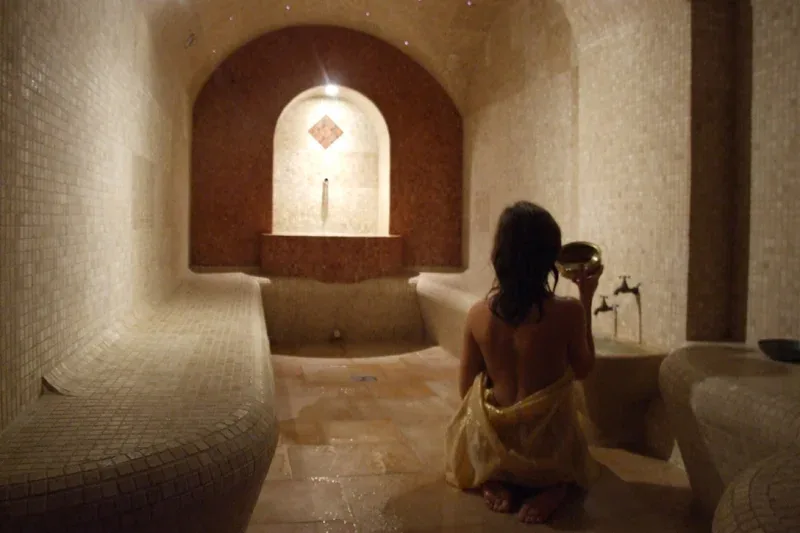
Unlike a Finnish sauna, which is hot and dry, a hammam is built around warm, wet heat. The rooms are usually marble or stone, often under a dome with small glass openings that let in spots of light. It's closer to a steam room than a sauna: our guide to steam room benefits explains what the humid heat does.
Turkish vs Moroccan hammam
The two best-known styles share the same idea but feel different.
- Turkish hammam. Usually has a large central marble platform, the göbek taşı, heated from below. You lie on it to sweat, and an attendant scrubs you with a coarse mitt called a kese, then covers you in soap foam for a wash and massage. You'll be given a thin cotton cloth called a peştemal to wrap around yourself.
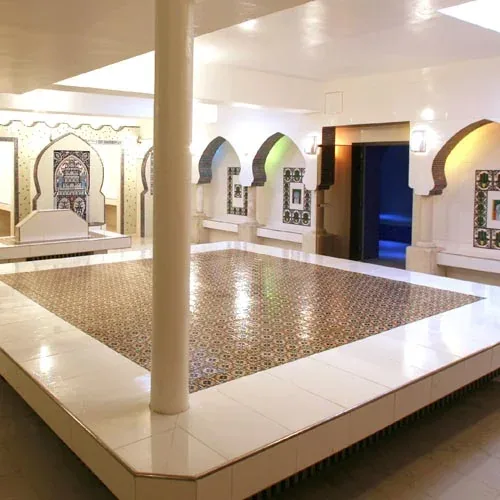
- Moroccan hammam. Often a series of steamy rooms rather than one big platform. The ritual uses black soap, a soft paste made from olive oil, which is spread on your skin and left for a few minutes before a vigorous scrub with a kessa glove. Some places finish with a clay mask called rhassoul.
Many modern spas mix the two, so check what's included before you book.
What happens, step by step
- Change and wrap up. You'll get a locker, a wrap or towel and often slippers.
- Warm up. Start in the warm room for 10–15 minutes to get used to the heat. Pour warm water over yourself from the basins.
- Hot room. Move to the hottest room or onto the heated stone. Lie or sit and let yourself sweat. This softens your skin for the scrub.
- The scrub. An attendant, or you yourself, scrubs your whole body with the rough mitt. It's firm, and grey rolls of dead skin coming off is completely normal.
- Soap and wash. A soap wash, sometimes a foam massage, then buckets of warm water to rinse.
- Rest. Cool down slowly in a resting room with tea or water. Don't rush back outside.
What to wear and bring
Most hammams give you a peştemal or towel to wrap around yourself. Underneath, people wear anything from nothing to a swimsuit or disposable underwear, depending on the venue and the country. Women-only hammams are common, and in mixed spas a swimsuit is usually expected. When in doubt, wear a swimsuit and follow the people around you. Our guide to what to wear in a sauna covers customs by country.
Bring flip-flops if they're not provided, a change of underwear, a comb and moisturiser for afterwards. Leave jewellery at home.
Etiquette
- Keep your wrap on in shared areas unless the hammam is clearly a nude, single-sex space.
- Don't splash others when pouring water, and keep your voice down.
- Don't shave or dye your hair in the hammam.
- If the scrub is too rough, say so. Attendants are used to it.
- Tipping the attendant is customary in Turkey and Morocco.
Benefits
The big one is your skin. Warm steam followed by a thorough scrub removes dead skin far better than a shower, and most people leave with skin that feels softer than it has in months. Beyond that, a hammam is deeply relaxing: warm, slow and quiet. The heat loosens your muscles much as any steam room does.
As with all heat bathing, the weight you lose is water, and sweat doesn't "detox" you. Your skin will thank you, though.
Who should be careful
The heat and humidity put some strain on your heart and lower your blood pressure. Check with your doctor first if you're pregnant, have a heart condition or very low blood pressure. Skip the scrub if you have sunburn, broken skin, a skin infection or have just shaved or waxed. Drink water and leave the hot room if you feel faint.
This guide is general information, not medical advice.
Where to find a hammam
Find My Sauna lists 289 places with a hammam. These cities have the most:

Les Cent Ciels
Paris · Hammam and spa

The Arlington Baths Club
Glasgow · Victorian baths

Porchester Spa
London · Historic baths
Frequently asked questions
What do you wear in a hammam?
Usually a cotton wrap provided by the venue, with a swimsuit or underwear underneath. Some single-sex hammams are nude. Follow the house rules.
How long does a hammam take?
Allow one and a half to two hours, including warming up, the scrub and time to rest afterwards.
Is a hammam the same as a steam room?
A hammam uses the same kind of humid heat, but it is a whole ritual with a scrub, soap wash and rest.
Does the hammam scrub hurt?
It is firm and can feel rough, but it should not hurt. Ask the attendant to go gentler if needed.
How often should you go to a hammam?
Once every week or two is plenty for most skin. More often can leave skin irritated.