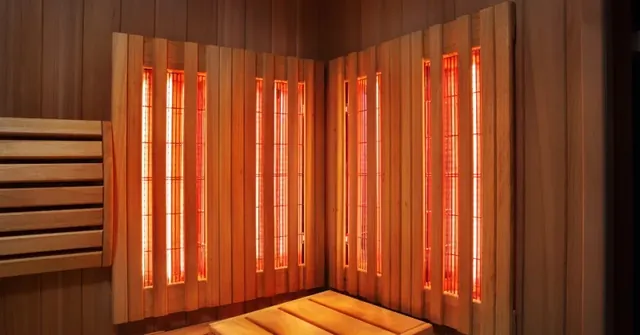
Full-spectrum vs far-infrared saunas
 By the Find My Sauna team·
Updated ·
6 min read
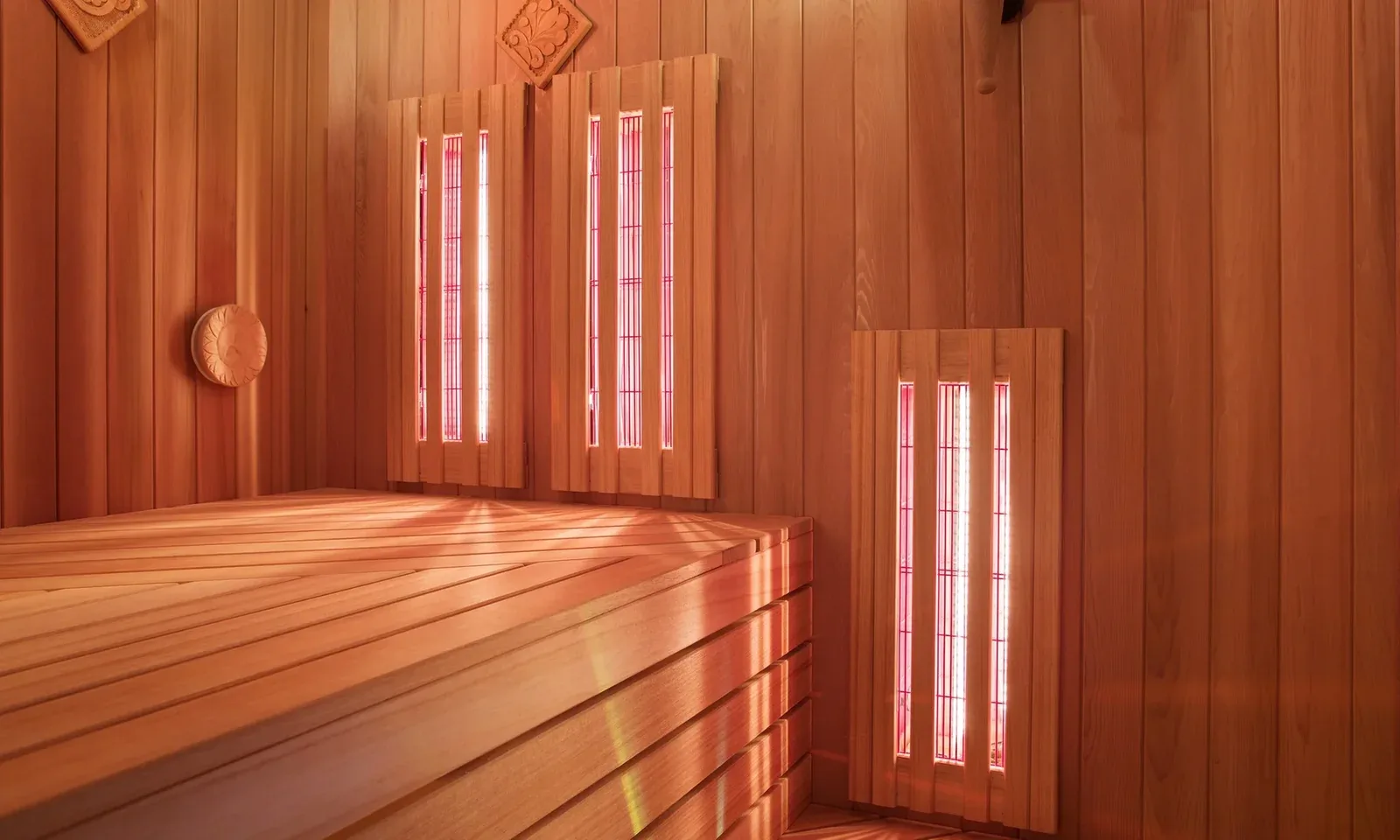
Shop for an infrared cabin, or compare studios, and you'll soon hit "full spectrum". It usually costs more, and it comes with a neat story about three kinds of infrared doing three different jobs. The physics behind the label is real. The health story is mostly marketing.
The short answer
A far-infrared sauna uses heaters that give off mostly long-wave infrared, which warms your skin. A full-spectrum sauna adds hotter heaters, usually glowing lamps, that also give off near and mid infrared. Sellers say near infrared helps skin, mid helps circulation and far helps "detox", but no study we could find has compared full-spectrum and far-infrared saunas on any health outcome. Both make you hot and sweaty. Choose on comfort, build quality and price, not on wavelength claims.
New to infrared altogether? Start with what is an infrared sauna, then come back here.
Near, mid and far: the ranges
Infrared starts just past red light, at about 780 nanometres (0.78 micrometres), and runs up to 1 millimetre. The trouble is that nobody agrees where to draw the lines inside it:
| CIE / ICNIRP bands | ISO 20473 | A common sauna-seller split | |
|---|---|---|---|
| Near | IR-A: 0.78–1.4 µm | 0.78–3 µm | 0.7–1.4 µm |
| Mid | IR-B: 1.4–3 µm | 3–50 µm | 1.4–3 µm |
| Far | IR-C: 3 µm–1 mm | 50 µm–1 mm | 3 µm and up |
Some sellers use other splits again, putting mid infrared at 1.4–5.6 µm and far at 5.6–15 µm. By the international standard, almost everything a so-called far-infrared panel gives off would count as "mid" infrared. So treat the labels as loose, and ask what a heater actually emits.
What the heaters actually give off
Anything warm gives off infrared, and the hotter it is, the shorter the wavelength. Your own skin, at about 35 °C, radiates most strongly at around 9.4 µm. A carbon sauna panel running at 60–95 °C peaks at around 8–9 µm, not far from you. Ceramic heaters run hotter and peak a little shorter.
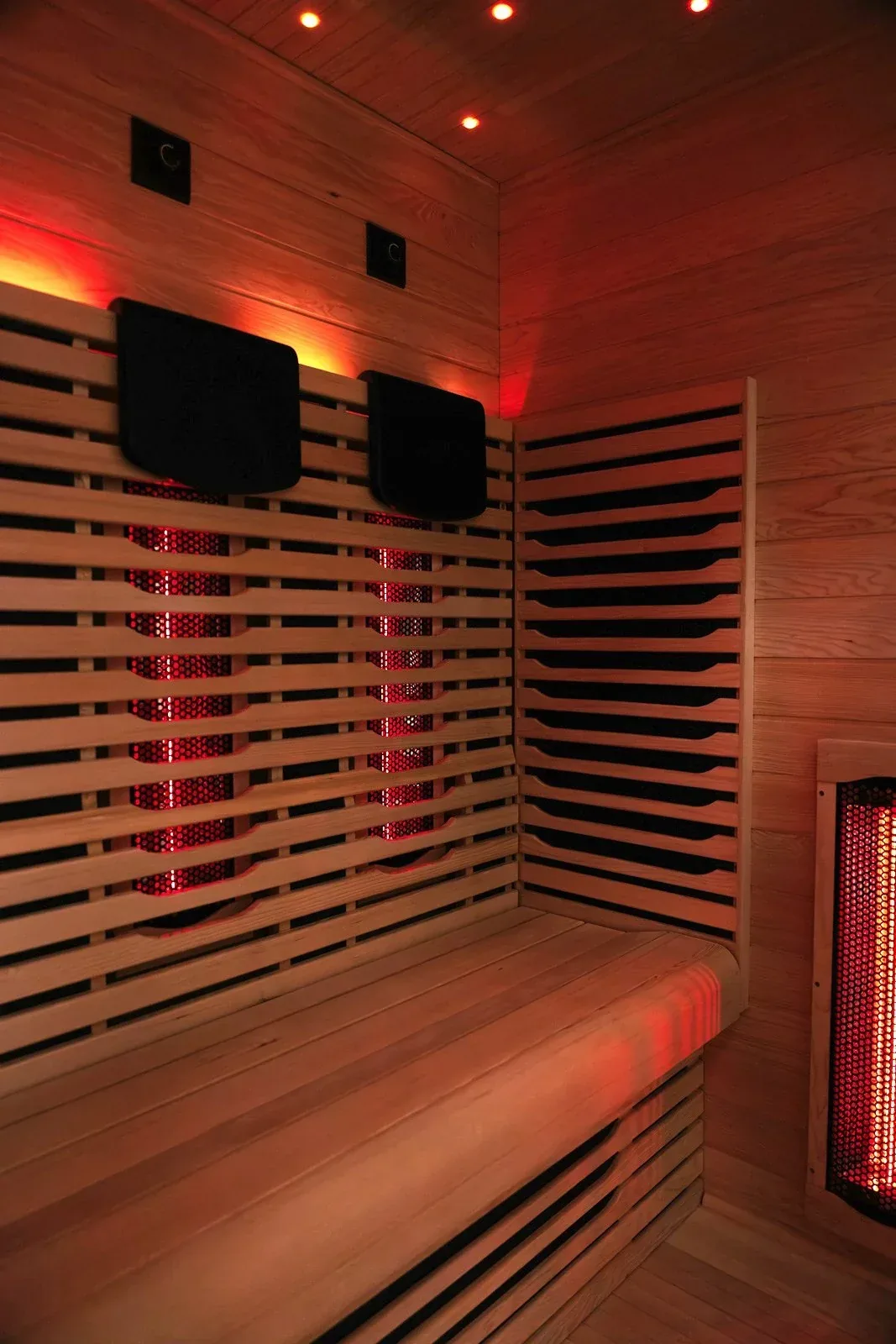
To get real near infrared, you need something glowing: a halogen or incandescent lamp with a filament thousands of degrees hot. Full-spectrum cabins typically keep carbon or ceramic panels for the far infrared and add hotter heaters, such as halogen lamps, for the near and mid bands. The cabin used in a small Cardiff Metropolitan University study is a good example: two 700-watt full-spectrum heaters on the front wall, with carbon and ceramic far-infrared heaters behind, beside and under the bench.
What makers claim
The usual pitch splits the bands into jobs:
- Near infrared: skin renewal, collagen, wound healing
- Mid infrared: circulation, sore joints and muscles
- Far infrared: deep heat, heavy sweating, "detox"
One large maker says its far-infrared wavelength of 9.4 µm is "absorbed by water cells" and produces a "deep detoxifying sweat". The same company also notes that its saunas are general wellness products, not medical devices.
What the evidence says
Some of the physics holds up. Near infrared does reach deeper: the International Commission on Non-Ionizing Radiation Protection describes it penetrating several millimetres into skin, while far infrared is absorbed at the surface. That's why near infrared is used in light therapy research.
But the skin studies behind the near-infrared claims use LED panels and lasers at narrow wavelengths and measured doses, not a sauna lamp aimed at your back. That research is covered in red light therapy vs infrared sauna, and even there the results for skin are mixed.
The infrared sauna studies themselves, including Japan's Waon therapy for heart patients and a Finnish study on recovery after exercise, used far-infrared heat. The Cardiff study did use a full-spectrum cabin, but it measured heat strain, not anything specific to near infrared. We couldn't find a single trial comparing full-spectrum and far-infrared saunas on health. As for "detox": sweat is almost all water and salt, and your liver and kidneys do the clearing.

Living with glowing lamps
Near-infrared lamps feel different from carbon panels. The heat is concentrated on whatever faces them, so you may find yourself turning to warm your back, then your front. Some people love the intensity. Others find it uneven compared with large panels that spread warmth over the whole cabin.
Don't stare into the lamps. Very high infrared exposure over years is linked to cataracts in glass and steel workers, according to ICNIRP. A sauna is nowhere near that, but there's no reason to look straight at a bright heater.
How to choose
- Try both first. Many studios use full-spectrum cabins, so book a session before paying extra for one at home.
- Ask where the heaters are. Heaters by your calves and under the bench make a bigger difference to comfort than the spectrum.
- Check the temperature range. A cabin that can't get the air to 55–60 °C (131–140 °F) will feel tame. See infrared sauna temperature.
- Pay for build quality, not for wavelength claims. Solid wood, good door seals and a decent warranty matter more.
- Be wary of health promises. If a seller quotes specific medical benefits for each band, ask for the studies.
Who should be careful
Full-spectrum or not, an infrared sauna raises your heart rate and body temperature. Check with a doctor first if you are pregnant, have a heart condition, or take medicine that affects blood pressure or sweating, or that makes your skin sensitive to light. Skip it with a fever or after drinking, and leave if you feel dizzy or sick.
This guide is general information, not medical advice.
Where to try one
Find My Sauna lists 699 places with an infrared sauna. These cities have the most:
ONE8T Wellness Marda Loop
Calgary · Full-spectrum suites
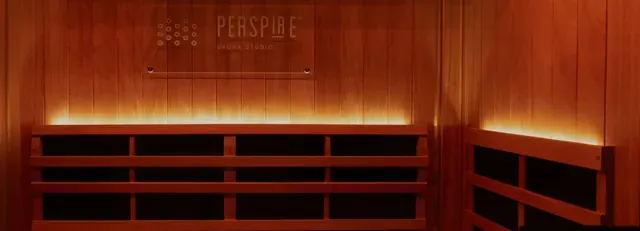
Perspire Sauna Studio Paradise Valley
Phoenix · Full-spectrum cabins

The Sanctuary Hobart
Hobart · Private infrared room
Frequently asked questions
Is a full-spectrum sauna better than far infrared?
There is no good evidence that it is. Both heat you up. Full spectrum feels more intense on the side facing the lamps, and usually costs more.
What wavelength is near infrared?
Usually about 0.78–1.4 micrometres (780–1,400 nanometres), just beyond visible red light.
Do full-spectrum saunas give you the benefits of red light therapy?
Not reliably. Red light studies use LED panels at set wavelengths and doses. A sauna lamp is a different device.
Are near-infrared lamps safe?
For normal sauna use, yes. Do not stare into them, and follow the maker’s guidance on distance and session length.
Does far infrared detox the body?
No. Sweat is mostly water and salt. Your liver and kidneys remove waste.