Red light therapy vs infrared sauna
 By the Find My Sauna team·
Updated ·
7 min read
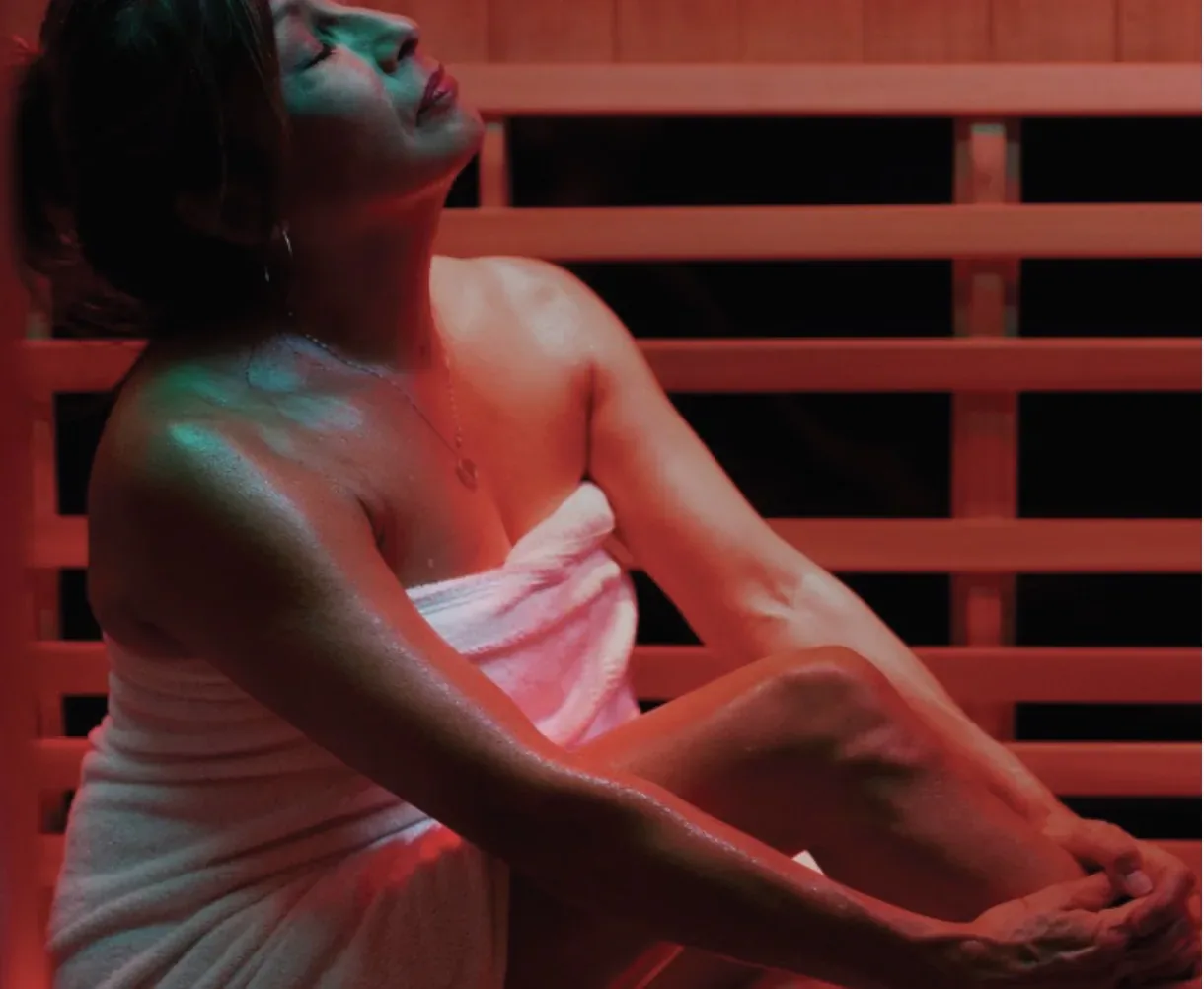
Red light therapy and infrared saunas are often sold side by side, sometimes in the same cabin, and both glow red. That makes them easy to mix up. They're different machines, built for different jobs, with different research behind them.
The short answer
Red light therapy shines a measured dose of red and near-infrared light, roughly 600–1,000 nanometres, onto your skin from LEDs or lasers. It barely warms you. An infrared sauna is a heater: its job is to make you hot and sweaty. Red light research on skin is promising but mixed, and much of it is small or funded by device makers. The best-established use is preventing mouth sores in some cancer patients, done in clinics. Sauna research is about heat. If you want both, do both, but don't expect a sauna to give you a red light dose.
Two different devices
A red light therapy device is a panel, mask, wand or bed packed with LEDs, or sometimes a low-power laser. It gives off narrow bands of light, usually red (around 600–700 nanometres), often with near infrared up to about 1,000. The idea, called photobiomodulation, is that cells absorb the light and respond to it. The main candidate for doing the absorbing is an enzyme in mitochondria, cytochrome c oxidase.
An infrared sauna uses heaters, mostly carbon or ceramic panels, that give off long-wave far infrared peaking around 8–9 micrometres. That's more than ten times the wavelength of red light. The point isn't a reaction in your cells. It's heat: your skin warms, your heart speeds up and you sweat. How that works is covered in what is an infrared sauna.
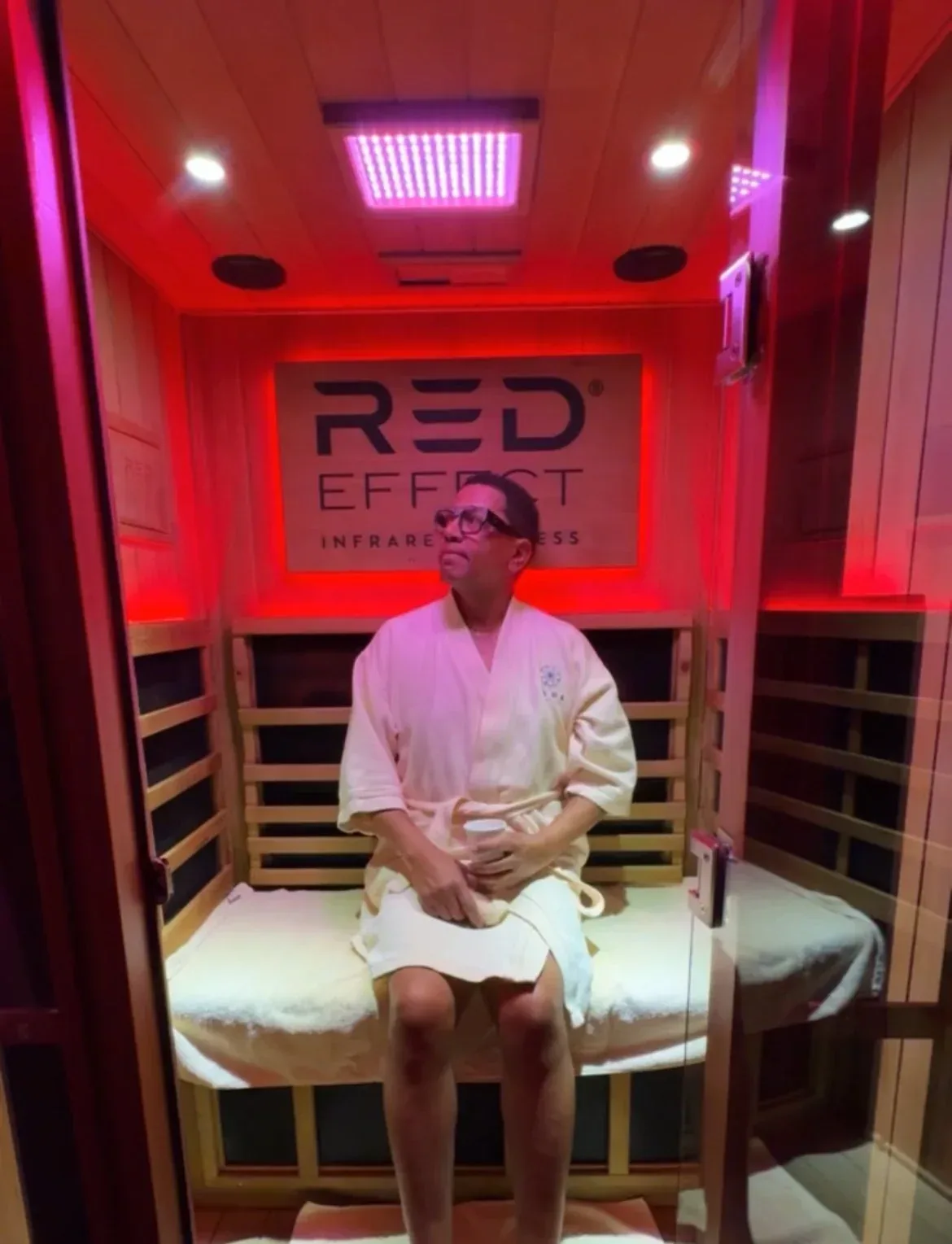
Side by side
| Red light therapy | Infrared sauna | |
|---|---|---|
| What it is | LEDs or low-power lasers | Heated cabin |
| Wavelengths | Narrow bands, about 600–1,000 nm | Broad, mostly far infrared, about 6–14 µm |
| Feels like | Slightly warm, bright | Hot, sweaty |
| Measured by | Dose of light on the skin | Air temperature and time |
| Usual aim | Skin, hair, healing | Relaxation, recovery, heat |
| Strongest evidence | Preventing mouth sores during some cancer treatments | Relaxation; small trials on recovery and heart patients |
Why dose matters for red light
Red light is measured in joules per square centimetre: how much light energy lands on each bit of skin. That depends on the device's power, how far away you are and how long you stay. Move a panel twice as far away and the dose falls sharply.
More isn't better. A 2009 review from Michael Hamblin's group in the journal Dose-Response described a "biphasic" response: low doses often work better than high ones, and large doses can lose the effect altogether. That's very different from a sauna, where the main dials are temperature and minutes.
What red light research shows
Skin. The study most often quoted is a 2014 trial of 136 volunteers, published in Photomedicine and Laser Surgery. After 30 sessions, twice a week, at about 9 J/cm², the people treated showed improvements in their skin and in collagen density measured by ultrasound, compared with 23 untreated controls. A broader spectrum added nothing over red light alone. The trial was fully funded by a company connected to the devices, and the lead investigator was paid by the sponsor. Cleveland Clinic sums up red light for wrinkles, scars, acne and hair loss as having "some potential" but not enough evidence for most uses.
Mouth sores in cancer treatment. This is where the evidence is strongest. In 2019, the MASCC/ISOO guideline recommended light therapy inside the mouth to prevent oral mucositis in some patients having stem cell transplants or head and neck radiotherapy, following tested protocols.
No good support: weight loss, cellulite and depression, according to Cleveland Clinic. In the US, many home LED masks are "cleared" by the FDA for wrinkles. Clearance means a device is similar enough to one already on the market. It isn't proof that it works well.
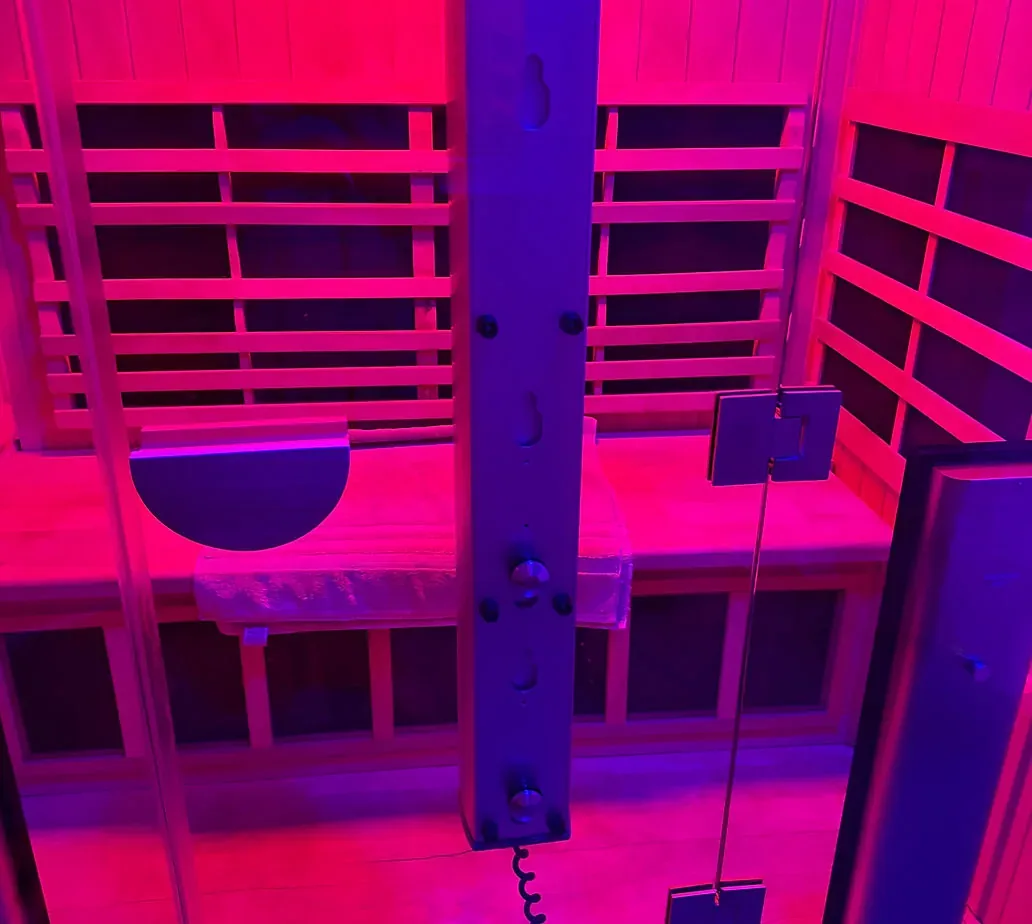
What infrared sauna research shows
Infrared sauna studies are about heat, not light. The best findings are relaxation, a little help with recovery after endurance exercise in one small Finnish study, and encouraging results from supervised Waon therapy for heart patients in Japan. The details are in infrared sauna benefits. Skin claims for saunas mostly borrow from red light research, which used different devices and doses.
Red light inside a sauna cabin
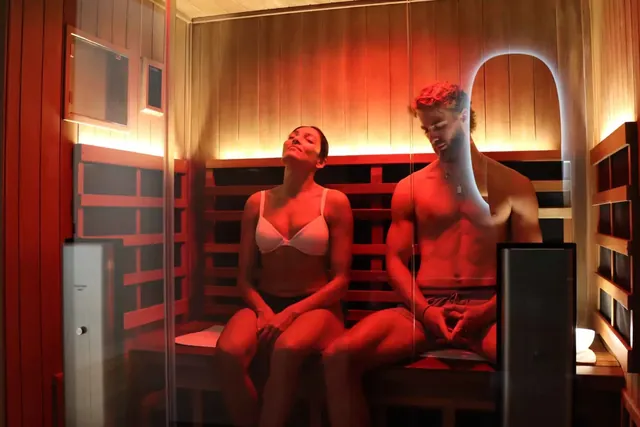
Many studios now fit LED panels inside infrared cabins, or sell "infrared plus red light" sessions. That's a reasonable way to do both in one booking. Two things to keep in mind:
- Mood lighting isn't red light therapy. Coloured cabin lights, often sold as chromotherapy, are a different thing. A therapy panel is built to put a measured amount of light on your skin.
- The combination is untested. We couldn't find any trial of red light given in a hot sauna. Distance matters for the dose, so if you're sitting a metre from a panel, you're getting much less than someone up close.
"Full-spectrum" saunas, which add near-infrared lamps, aren't red light therapy either. See full-spectrum vs far-infrared saunas.
If you want to use both
- Decide what each is for. Use the sauna for heat and relaxation, red light for a specific skin goal.
- Follow the device's guidance on distance and time, and don't stack extra sessions on the idea that more is better.
- Give red light a fair trial. Studies ran for weeks to months, not a handful of sessions.
- Protect your eyes. Use the goggles provided and don't look into the LEDs.
Who should be careful
Ask a doctor or dermatologist first if you take medicine that makes your skin sensitive to light, have a skin condition, or have a history of skin cancer. Cleveland Clinic warns that misusing red light devices can harm your skin and eyes. For the sauna side, check with a doctor if you are pregnant, have a heart condition or take medicine that affects blood pressure, and skip it after alcohol.
This guide is general information, not medical advice.
Where to try them
Find My Sauna lists 699 places with an infrared sauna. These cities have the most:
These studios offer infrared with red light:
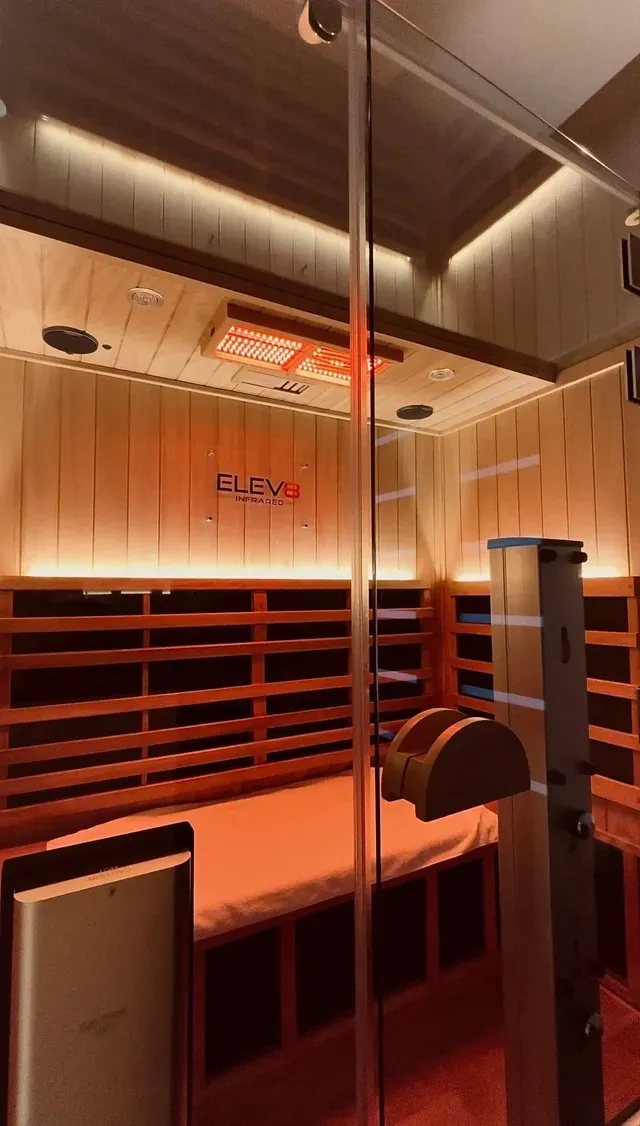
Elev8 Infrared
Los Angeles · Infrared with red light panel
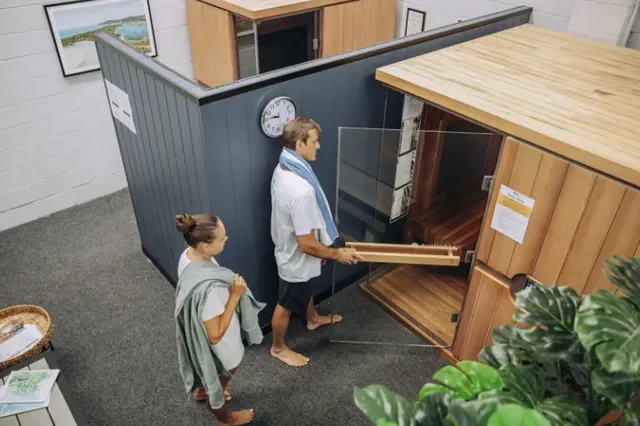
TLC Recovery
Sunshine Coast · Cabin with red light
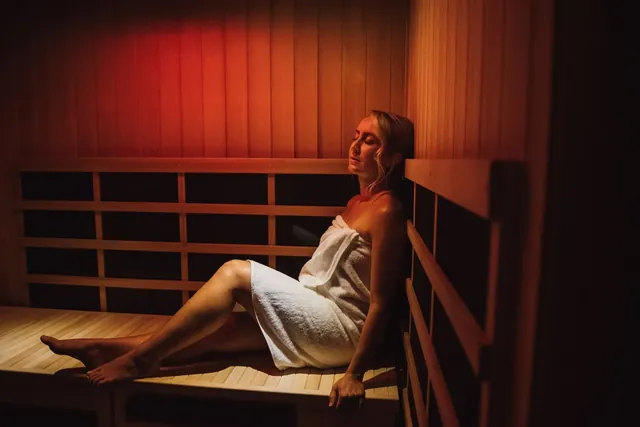
Rē Sauna
Winnipeg · Red light in every cabin
Frequently asked questions
Is red light therapy the same as an infrared sauna?
No. Red light therapy uses LEDs at set wavelengths and doses. An infrared sauna is a heater designed to make you hot.
Which is better for skin, red light or infrared sauna?
Red light has the more relevant research, though it is mixed and often industry-funded. A sauna leaves you flushed for a few hours.
Can you do red light therapy and an infrared sauna together?
Yes, many studios combine them. We could not find any study of whether the combination adds anything, and distance from the panel affects the dose.
Does red light therapy help you lose weight?
There is no good evidence that it does. The same goes for infrared saunas.
Do you need goggles for red light therapy?
Eye protection is recommended. The LEDs are bright, and near-infrared light is hard to see even when it is strong.