What temperature is an infrared sauna?
 By the Find My Sauna team·
Updated ·
7 min read
Step into an infrared cabin and the display might say 50 °C, which sounds tame next to a Finnish sauna. Ten minutes later you're dripping. The number on the wall is only one of three temperatures that matter, and it tells you the least.
The short answer
The air in most infrared saunas sits at about 45–60 °C (113–140 °F), and some studios run their cabins up to 65–70 °C (149–158 °F). The thermometer reads lower than in a traditional sauna because the heaters warm your skin directly rather than the air. In one lab study, skin temperature jumped by more than 7 °C within five minutes. Beginners should start low, around 43–50 °C (110–122 °F), and most regulars are comfortable at 50–60 °C (122–140 °F).
Three temperatures, not one
When people talk about how hot an infrared sauna is, they can mean three different things:
- Air temperature. What the display or thermometer shows. Usually 45–60 °C.
- Skin temperature. How hot you actually get on the surface. From around 35 °C at rest, it can climb to about 43 °C in a hot cabin.
- Heater temperature. How hot the panels themselves run. This decides the kind of infrared they give off and how intense they feel up close.
Then there's your core temperature, the one your body works hardest to protect. That's what the research on heat and health mostly tracks. For how infrared compares with other saunas overall, see sauna temperature: how hot is a sauna?
Why the thermometer reads low
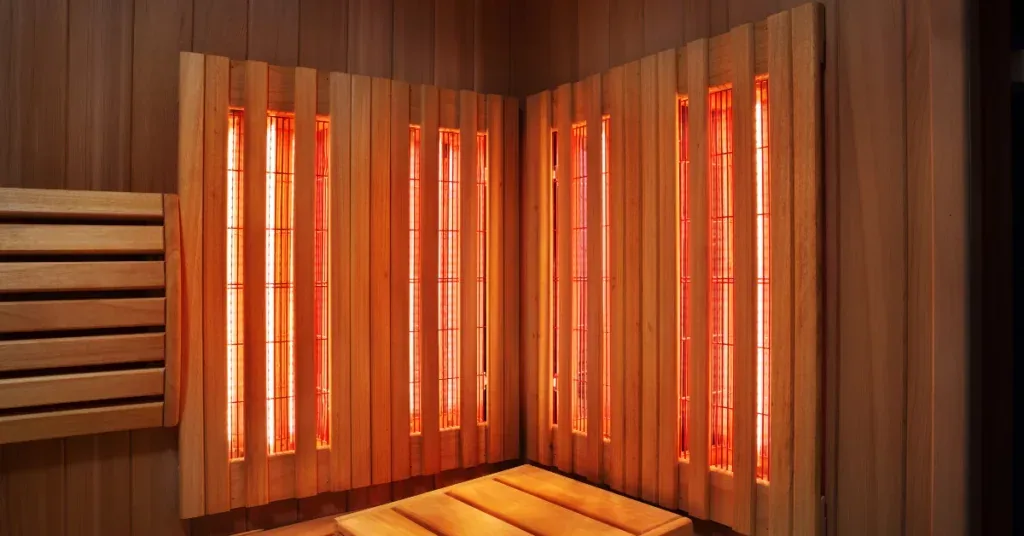
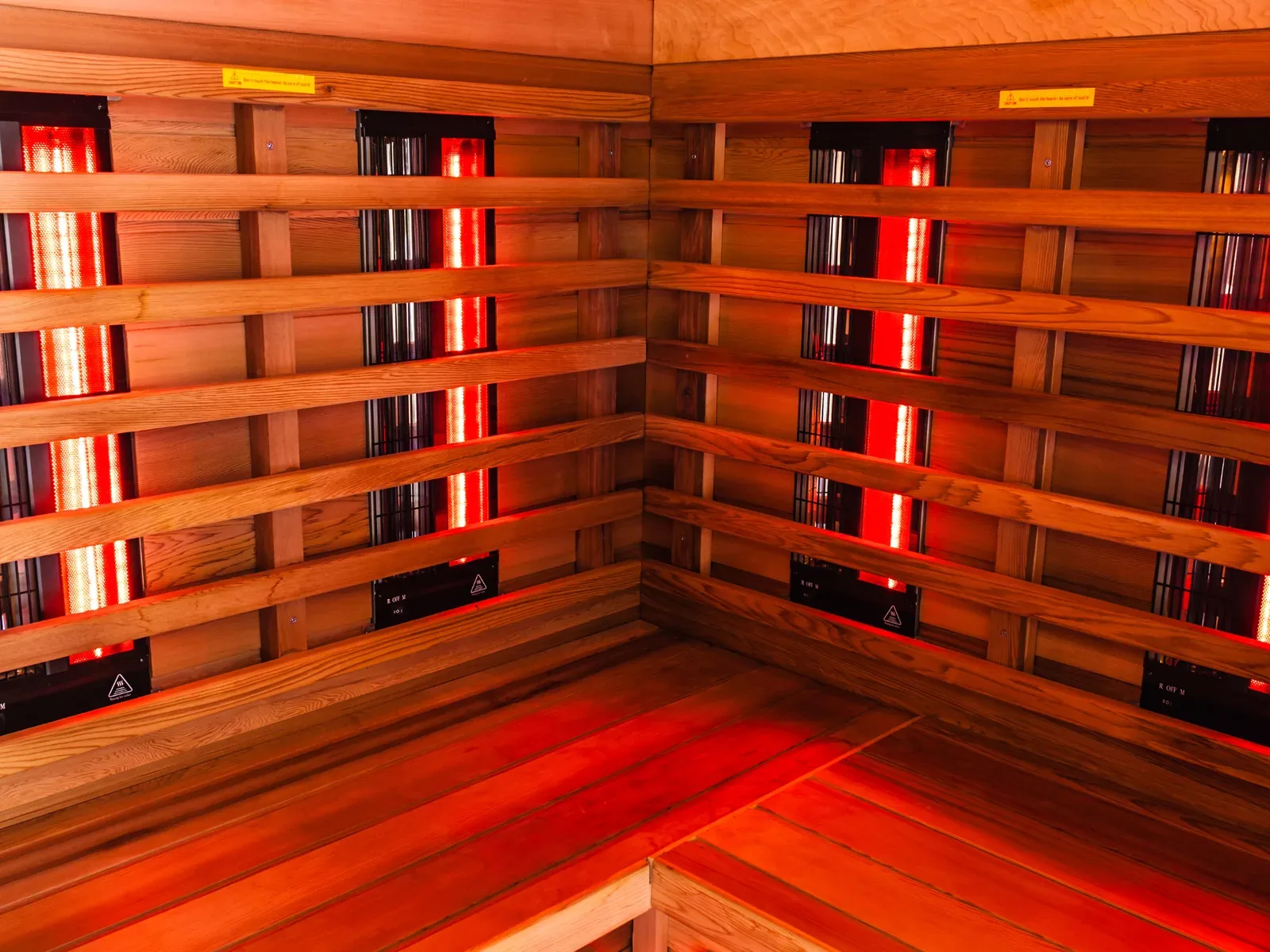
A traditional sauna heats the air, and the air heats you. An infrared heater mostly skips the air. Its energy travels in straight lines and is absorbed by whatever it hits: your skin, the bench, the walls. The thermometer only measures the air around it, so it misses most of what's landing on you.
A small study from Cardiff Metropolitan University, shared online by the maker of the cabin it used, shows the gap clearly. Twelve healthy adults sat in a far-infrared cabin with the air at about 61–65 °C. Their average skin temperature rose from 35.5 °C to 42.9 °C in the first five minutes and then stayed there. Over 45 minutes their core temperature rose by 1.4 °C.
Far infrared is absorbed in the outer layer of the skin, so the heat still reaches your core the ordinary way, through your blood. The air staying relatively cool and dry (humidity in that study was only 12–23%) is what lets your sweat evaporate and makes the room feel bearable.
Settings in °C and °F
Most cabins let you set the air temperature. As a rough guide:
| Setting | Celsius | Fahrenheit | Suits |
|---|---|---|---|
| Gentle | 40–45 °C | 104–113 °F | First sessions, people who struggle with heat |
| Moderate | 45–55 °C | 113–131 °F | Most studio sessions |
| Warm | 55–60 °C | 131–140 °F | Regulars |
| Hot | 60–65 °C | 140–149 °F | Experienced users, shorter sessions |
| Very hot | 65–70 °C | 149–158 °F | Short sessions only |
Studios quote similar ranges. O-Studio in Auckland runs its private infrared rooms at 50–70 °C, and Zadig in Newcastle, New South Wales, at 45–65 °C.
How the heater type changes the feel
The hotter a surface is, the shorter the wavelength of the infrared it gives off. That's basic physics (Wien's law), and it explains why cabins at the same air temperature can feel different.
- Carbon panels are large and flat and run relatively cool. Sellers usually quote surface temperatures of around 60–95 °C (140–200 °F), which puts their output mostly in the far infrared, peaking at around 8–9 micrometres. The heat feels soft and even.
- Ceramic heaters are smaller rods or plates that run hotter, often quoted at about 150–200 °C (300–400 °F). They feel more intense close up, and you'll notice hot and cooler spots.
- Glowing lamps, the halogen or incandescent kind used for near infrared, have a filament thousands of degrees hot. They feel strong on the side of you facing them while the air may stay cooler.
With hotter heaters, the side of you facing the panel will feel warmer than the number on the display suggests. Turn round now and then to heat evenly. More on the bands in full-spectrum vs far-infrared saunas.
Settings for your first sessions
Start lower than you think you need. Cleveland Clinic's advice for beginners is around 110 °F (43 °C) for 5–10 minutes. If you're at a studio and the cabin is already preheated to 55 °C, ask if they can turn it down, or sit further from the heaters and keep the first session short.
Over a few weeks, raise the temperature or the time, not both at once. If you start feeling unwell the day after, you've gone up too fast. Our guide to how long to stay in an infrared sauna has session plans.
Settings for regulars
Most regulars settle at 50–60 °C. Going hotter makes a real difference to how hard your body works. At around 45 °C, recent studies found little or no rise in core temperature. In Japan, doctors running Waon therapy for heart patients use 60 °C for 15 minutes, which raises core temperature by about 1.0–1.2 °C. In the Cardiff study at 65 °C, heart rates climbed from 74 to 153 beats a minute, people rated the heat "extremely uncomfortable" by the end, and two of the twelve left early.
So hotter isn't automatically better. If you like a high setting, shorten the session.
Warming up the cabin
Infrared cabins still need time to warm the air, the wood and the bench. In the Cardiff study the cabin was switched on an hour before each session, and nobody went in until the air passed 60 °C. Studios usually preheat for you. At home, follow the maker's guidance, and remember that the display shows air temperature: the heaters are already working on you before it reaches its target.
Who should be careful
A lower air temperature doesn't mean low strain. Talk to a doctor first if you are pregnant, have a heart condition, very high or low blood pressure, or take medicine that affects blood pressure or sweating. Skip it if you've been drinking or have a fever, drink water before and after, and get out at the first sign of dizziness, nausea or a headache.
This guide is general information, not medical advice.
Where to try an infrared sauna
Find My Sauna lists 699 places with an infrared sauna. These cities have the most:
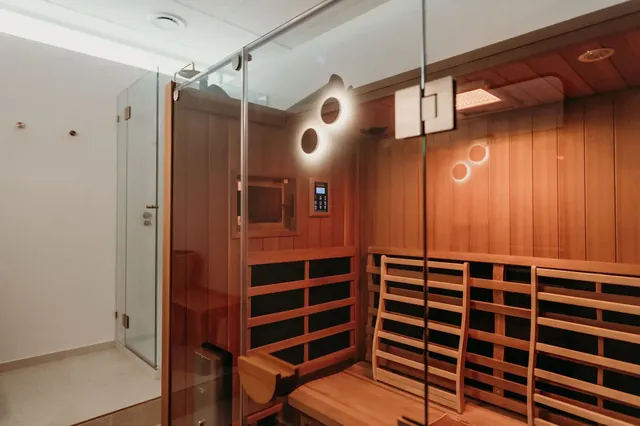
Zadig Infrared Sauna Studio
Newcastle · Private infrared rooms
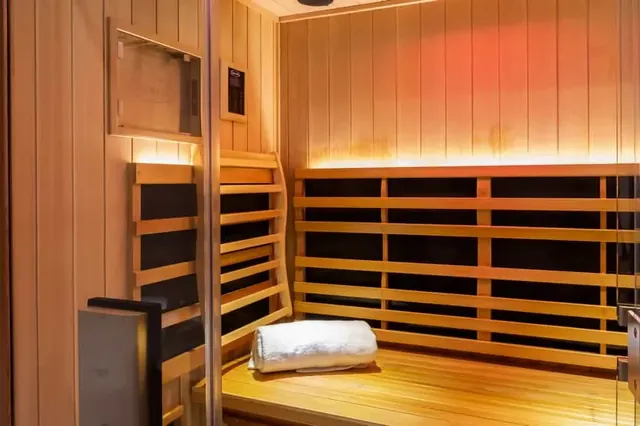
Sauna Float ACT
Canberra · Infrared and Finnish
LUMEN Optimal Wellness
Albuquerque · Private infrared sauna
Frequently asked questions
What temperature should an infrared sauna be?
Most people are comfortable with the air at 45–60 °C (113–140 °F). Beginners should start at the low end.
Why does an infrared sauna feel hotter than the thermometer says?
The heaters warm your skin directly. The thermometer only measures the air, which stays cooler.
Is 150 °F too hot for an infrared sauna?
At 150 °F (about 65 °C) the strain on your body is similar to a traditional sauna. Keep sessions short and stop if you feel unwell.
How hot does your body get in an infrared sauna?
Skin can reach about 43 °C within minutes. In a hot cabin, core temperature can rise by 1 °C or more over 15–45 minutes.
How long does an infrared sauna take to heat up?
It depends on the cabin. In one research lab, a two-person cabin was switched on an hour before use. Studios usually preheat for you.