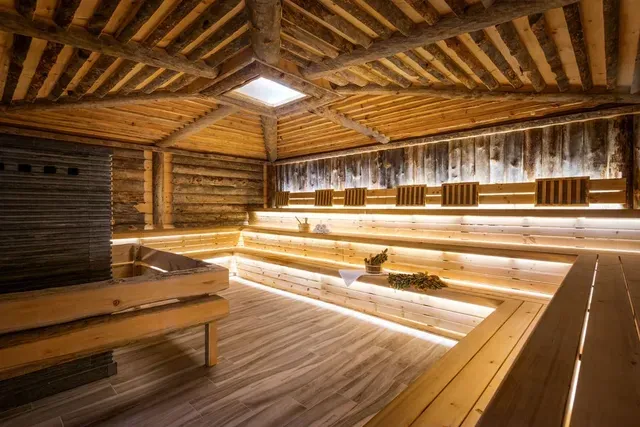
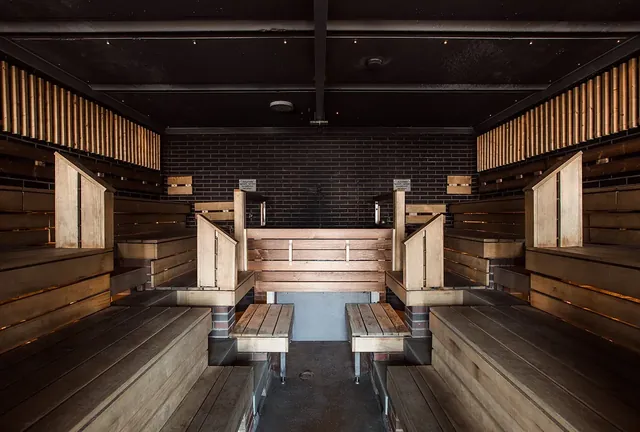
What is a smoke sauna (savusauna)?
 By the Find My Sauna team·
Updated ·
7 min read
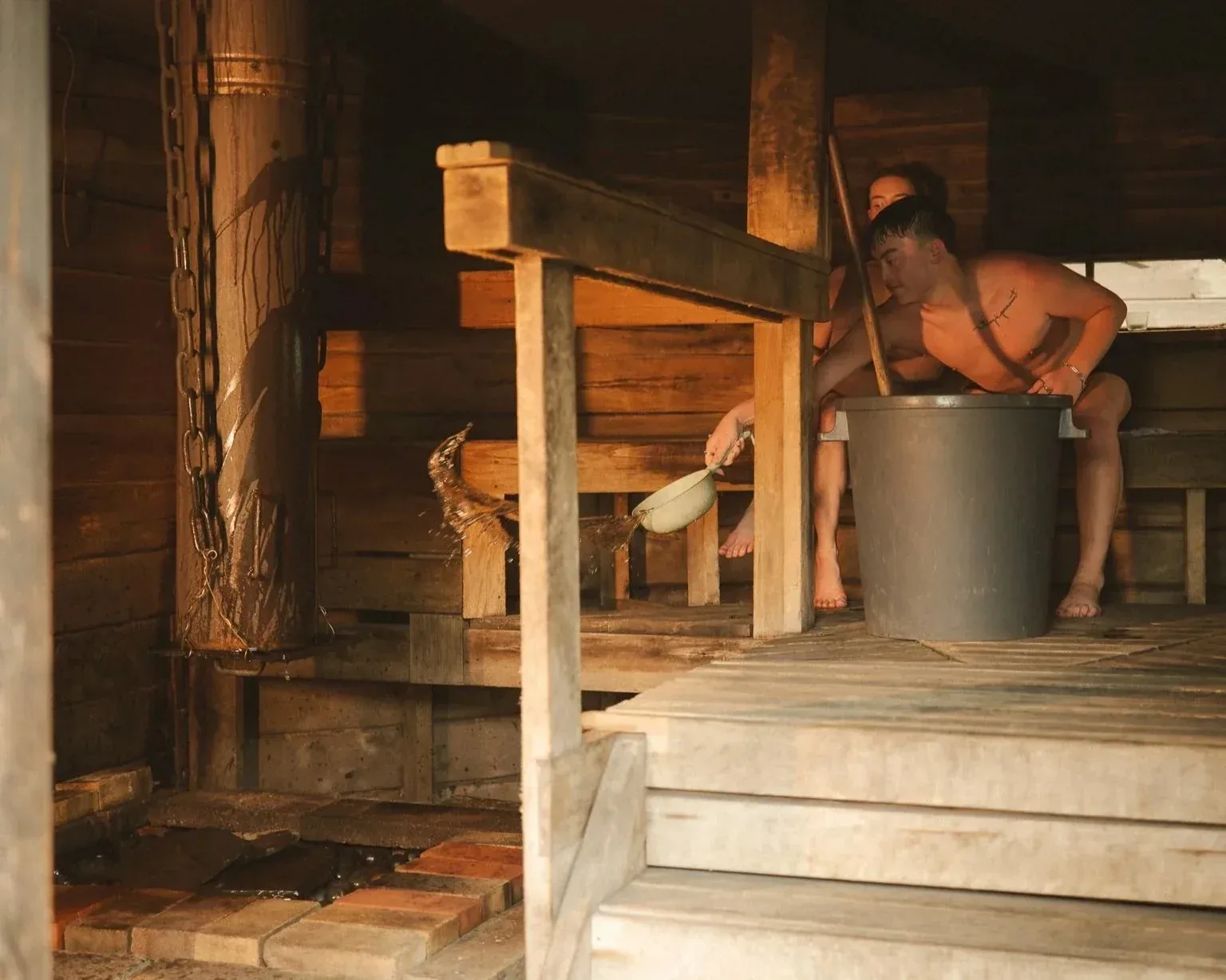
The smoke sauna is the oldest kind of sauna in Finland, and many sauna lovers say it's still the best. It takes hours to heat, there's soot on the walls, and the people who love it say no electric heater can match its soft, deep heat.
The short answer
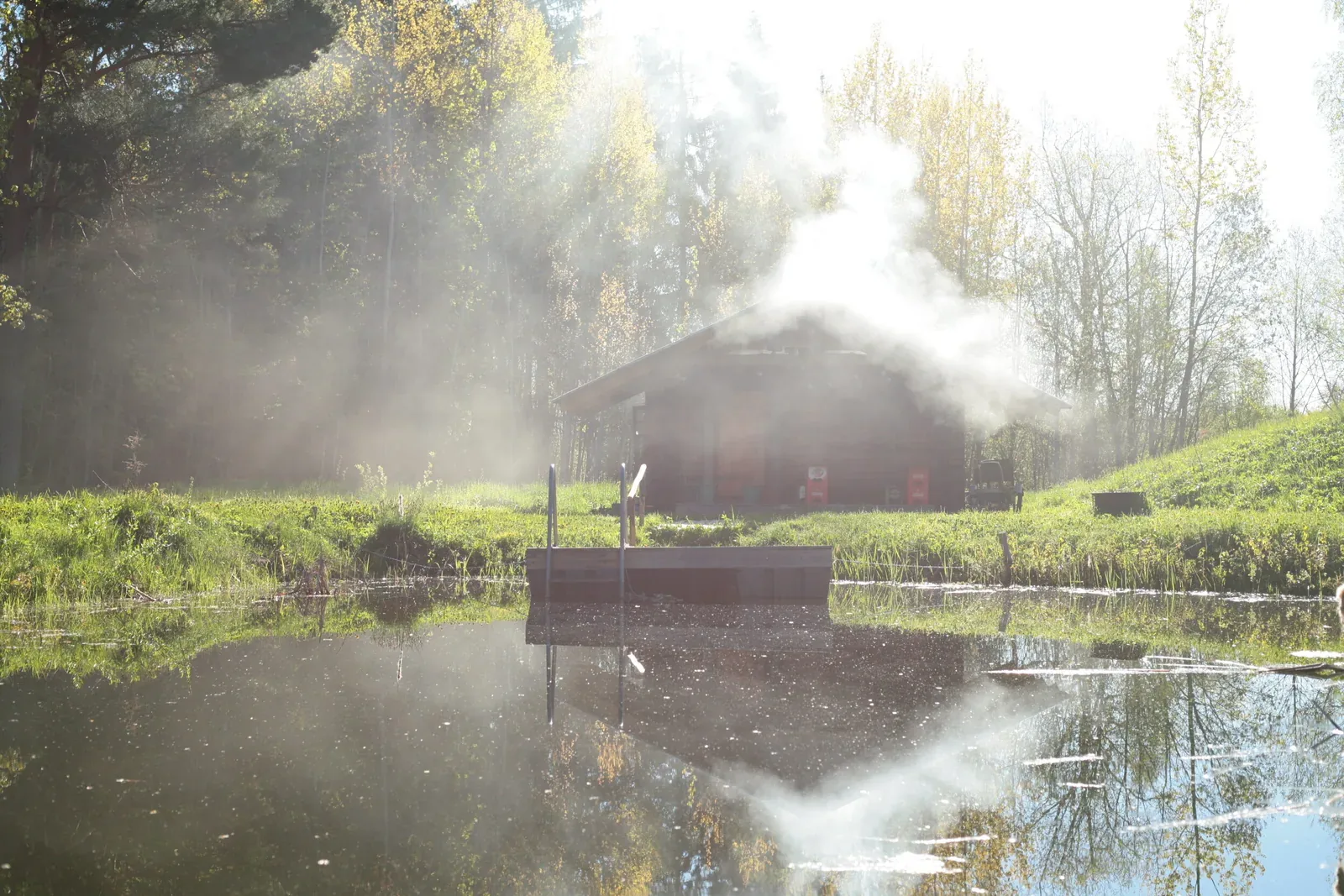
A smoke sauna (savusauna in Finnish, suitsusaun in Estonian) has a wood-burning stove but no chimney. While the fire burns, the smoke fills the room and slowly escapes through a hatch or the door, heating the stones, walls and benches. Heating takes a few hours, sometimes much longer. When the fire is out and the room has been aired, you bathe in a soft, even heat that smells of wood smoke. Because burning wood gives off carbon monoxide, a smoke sauna must be heated and aired by someone who knows how.
What a smoke sauna is
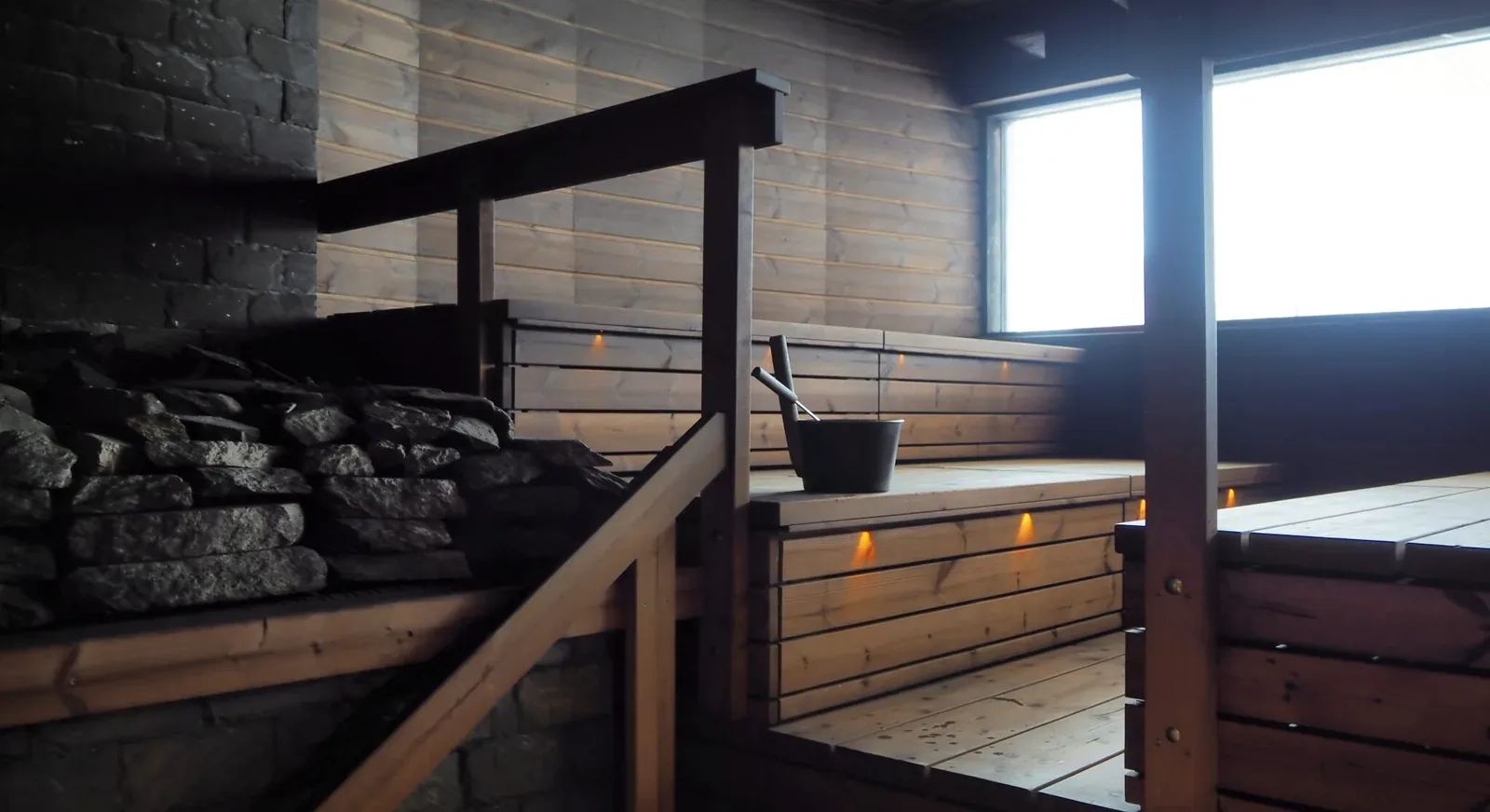
Most wood-fired saunas have a stove with a flue: the fire burns in a closed box, the smoke goes up a chimney, and the stones on top get hot. A smoke sauna has no chimney. The fire burns under a large pile of stones, and the smoke rises into the room itself.
That changes everything about how it works. Instead of a stove that keeps burning while you bathe, a smoke sauna is heated first and used afterwards, once the fire has died. The stones, the log walls and the benches all store the heat and give it back slowly. The Finnish Sauna Society describes the warmth as constant, radiating from the walls and ceiling as well as the stove.
How it's heated
- Lighting the fire. Dry wood, split small, is burned in the stove under the stones. The Finnish Sauna Society recommends pieces of just 2–5 cm, because small, dry wood burns cleaner.
- Letting the smoke out. At first the smoke escapes through the open door. Later it leaves through a hatch near the ceiling or a funnel in the roof, and the person heating it adjusts the openings so the smoke drifts out calmly rather than being sucked through.
- Keeping it going. More wood goes on until the stones and walls are hot through. This takes a few hours and sometimes several. Jantsu talu, a farm near Tartu in Estonia, starts heating its smoke sauna early in the morning and keeps the fire going for six to eight hours.
- Letting it settle. When the last wood has burned down, the embers are left to go out and the room is aired until the smoke is gone. The Sauna Society says to allow at least an hour for this.
- The first throws. The first ladles of water drive out the last of the smoke and gases. After that the steam turns soft, and the sauna is ready.
A bit of history
The earliest Finnish saunas were all smoke saunas. They weren't only for washing: Finns also lived, ate and gave birth in their saunas. According to the Finnish Sauna Society, chimneys were added to saunas only a couple of centuries ago, and stoves with flues slowly replaced the old design.
The tradition survived in the countryside and is now coming back. In south-east Estonia, the smoke sauna tradition of Võromaa was added to UNESCO's list of intangible cultural heritage in 2014, six years before Finland's sauna culture as a whole followed in 2020. Our guide to the Finnish sauna covers the wider tradition.
What it feels like
The first thing you notice is the colour. Years of smoke turn the inside black and give the wood a faint smoky smell. The Sauna Society credits the layer of charcoal that builds up on the surfaces with keeping the air clean.
The heat is the reason people make the effort. Because it comes from everywhere at once rather than from a single hot stove, it feels even and enveloping, and the löyly is soft and lasts a long time. A smoke sauna isn't meant to be scorching: the Sauna Society recommends around 60–80 °C (140–176 °F) and warns that overheating spoils a smoke sauna. Compare that with the figures in our sauna temperature guide.
Carbon monoxide and safety
Burning wood produces carbon monoxide (häkä in Finnish), a gas you can't see or smell, and in a smoke sauna it ends up in the room you're about to sit in. This is why smoke saunas are heated by experienced people and why the waiting time matters.
The Finnish Sauna Society's guidance explains where the danger comes from. Carbon monoxide is highest when the fire is first lit and peaks again every time wood is added. Closing the hatch to smother glowing embers makes the level rise and stay very high. Throwing water on the stones while embers are still glowing can also raise it. The fix is to burn small, dry wood, clear out the embers and ash, and let the room air properly before anyone goes in.
- Never bathe while the fire is still burning or embers are still glowing.
- Leave immediately if you get a headache, feel dizzy or sick. These are early signs of carbon monoxide poisoning.
- If you're new, go to a public smoke sauna or one heated by an experienced host rather than heating one yourself.
- Avoid alcohol before and during, and ask your doctor first if you have a heart or lung condition or are pregnant.
This guide is general information, not medical advice.
How to bathe in one
Bathe the same way as in any Finnish sauna: shower, sit on a towel, sweat, cool off, rest and repeat. A few things are different. Soot can rub off, so leave your best white towel at home and expect a grey mark or two on your skin. Throw water gently, a ladle at a time. And give yourself time: a smoke sauna is at its best over a long, slow evening, ideally with a lake to swim in. See how long to stay in a sauna for timings.
Where to try one
Public smoke saunas are rare, and most of the ones we list are in Finland and Estonia. A few to start with:

Kuusijärven saunat
Helsinki · Several public smoke saunas

Löyly
Helsinki · Smoke sauna on the Helsinki shore

Tallinn Viimsi SPA
Tallinn · Smoke sauna in a spa
Frequently asked questions
What is a smoke sauna?
A sauna with no chimney. The fire heats the stones and the smoke fills the room, and you bathe once the fire is out and the room has been aired.
How long does it take to heat a smoke sauna?
A few hours at least, and often six to eight hours for a large traditional one.
Is a smoke sauna safe?
Yes, when heated and aired properly. The risk is carbon monoxide, so never bathe while embers are still glowing, and leave if you feel a headache or dizziness.
Why are smoke saunas black inside?
Smoke from the fire leaves soot on the walls, ceiling and benches each time the sauna is heated.
Is a smoke sauna hotter than a normal sauna?
Usually not. It is often kept at around 60–80 °C, but the heat feels soft and comes from all sides.