Turkish bath vs sauna: what's the difference?
 By the Find My Sauna team·
Updated ·
7 min read
A Turkish bath and a sauna both make you sweat, but they're very different ways to spend an afternoon. One is a slow, wet ritual that ends with someone scrubbing you clean. The other is short bursts of fierce dry heat with cold water in between. This guide is about choosing between them.
The short answer
Pick a Turkish bath (hammam) if you want gentle, humid heat, a full-body scrub and a couple of quiet hours of being looked after. Pick a sauna if you like intense dry heat, want to go at your own pace and fit a visit into an hour, or care about the health research, which is far stronger for saunas. A hammam usually costs more, because the scrub is a paid treatment. A sauna is usually cheaper and more social.
At a glance
| Turkish bath (hammam) | Sauna | |
|---|---|---|
| Heat | Around 40–50 °C (104–122 °F), very humid | 70–100 °C (158–212 °F), dry |
| What you do | Warm up, sweat on hot stone, get scrubbed and soaped | Rounds of heat, cold water and rest, repeated |
| Who's in charge | Often an attendant | You, or a sauna master during a ceremony |
| Time | 1½–2 hours | An hour is enough, longer if you like |
| Price | Usually sold as a package with the scrub | Usually sold by entry or by the hour |
| Feel | Slow, quiet, pampering | Intense, brisk, often chatty |
How the heat feels
A sauna is hot. The air is usually somewhere between 70 and 100 °C, but it's dry, so your sweat evaporates and you can take it for 10 minutes or so. When someone throws water on the stones, a wave of heat rolls down from the ceiling, then fades.
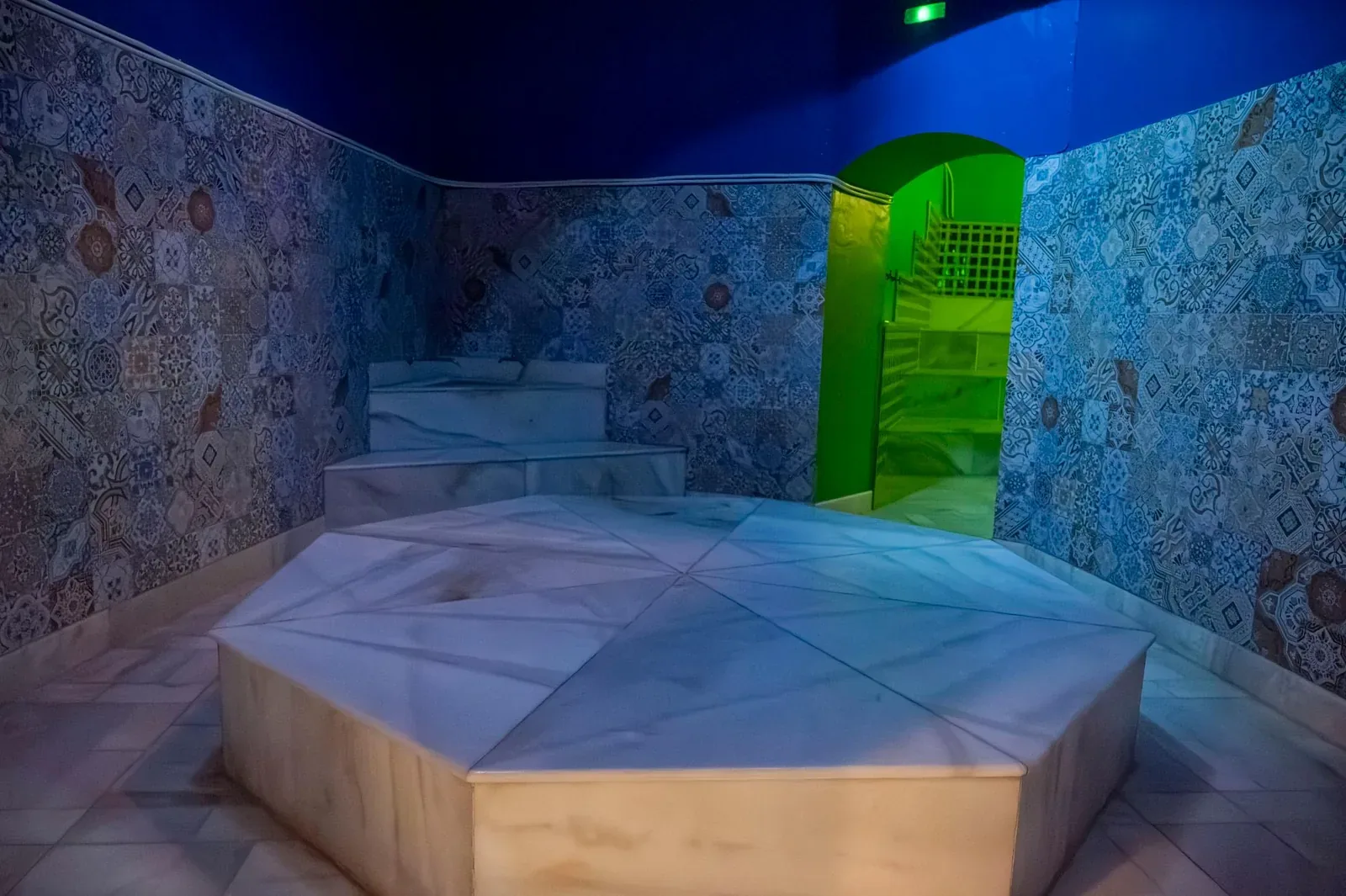
A hammam is far cooler on the thermometer. The hot room is usually around 40–50 °C, but the air is thick with moisture and the marble under you is warm. Nothing hits you suddenly. You just get warmer and wetter. Some people who find a sauna too much love a hammam, and plenty feel the other way round. Our guide to sauna vs steam room explains why wet heat feels hotter than it is.
What you actually do
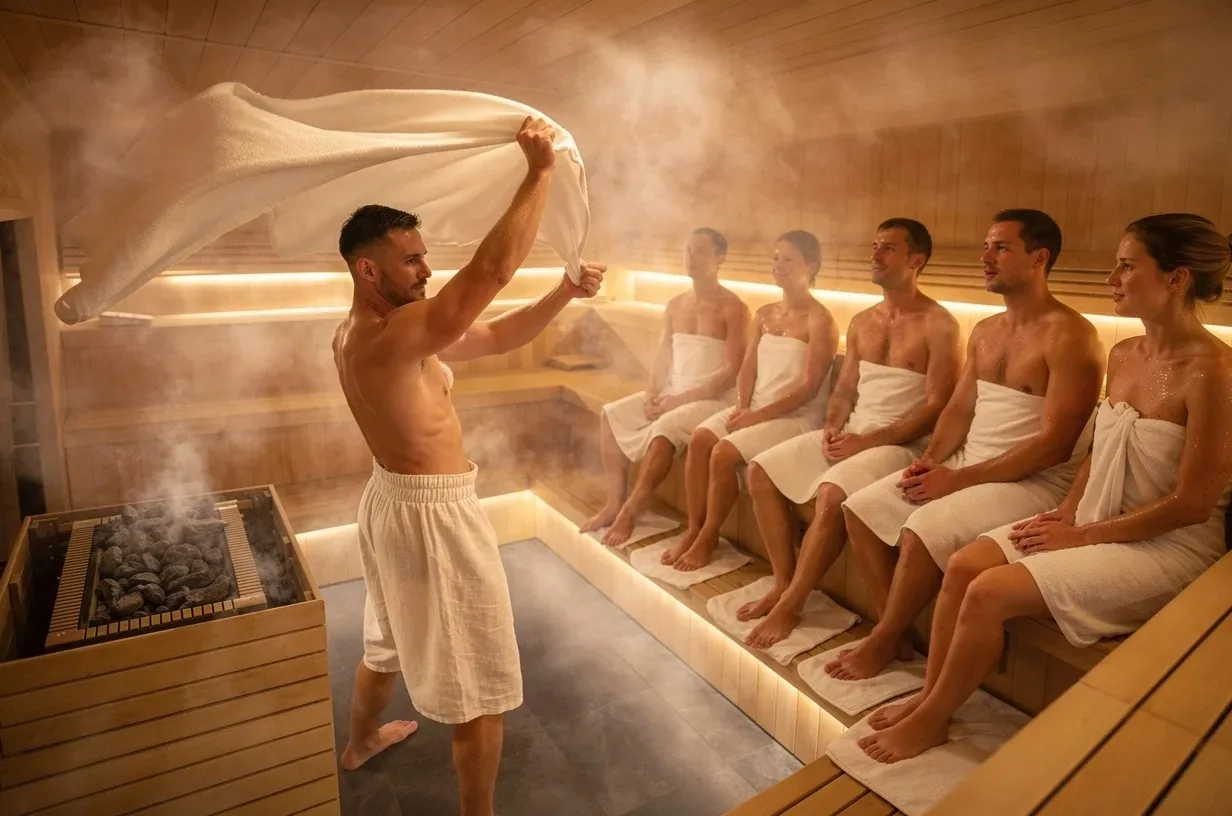
In a sauna, you run the show. You sit in the heat until you've had enough, cool off in a cold shower, a plunge pool or a lake, rest for a while, then go back in. Most people do two or three rounds. Many saunas also hold scheduled ceremonies, where a sauna master pours scented water on the stones and wafts the heat around with a towel.
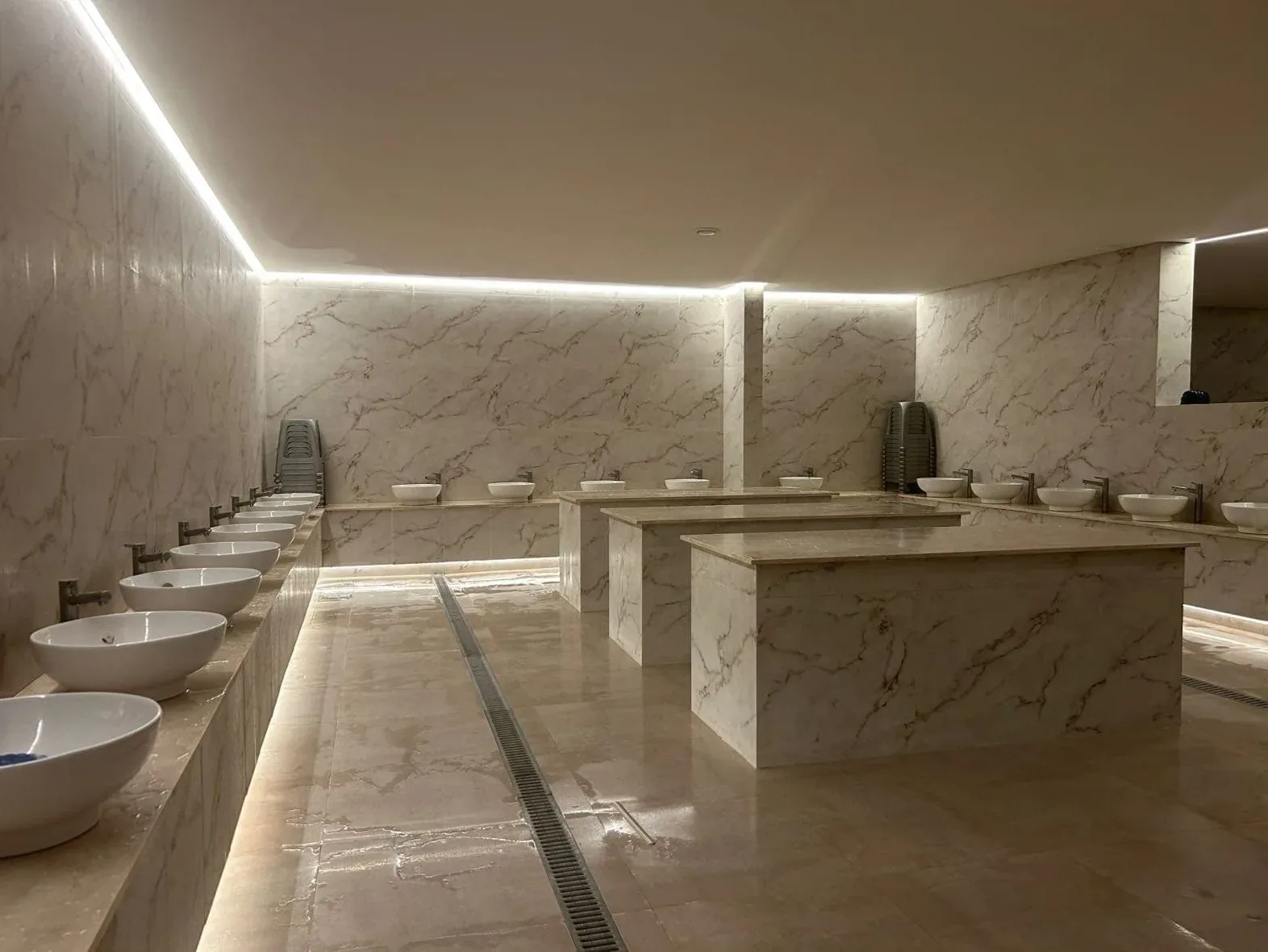
A hammam is more of a set sequence that builds towards the scrub. You warm up in the outer room, move to the hot room, lie on the stone and sweat, then you're scrubbed, soaped and rinsed. In many places an attendant takes you through it, so you spend much of the time lying still with your eyes closed. If you want to switch off completely, that's a big point in the hammam's favour. Our first-timer's guide to the hammam goes through each step.
The scrub
The scrub is the reason many people choose a hammam. Once the steam has softened your skin, a coarse mitt takes off a layer of dead skin you didn't know was there, and your skin feels smoother than any shower can manage. It's firm rather than painful.
A sauna has nothing quite like it. The nearest thing is whisking in Finnish and Russian saunas, where you're beaten gently with a bundle of leafy birch twigs, but that's about heat and circulation, not exfoliation. If smooth skin is what you're after, the hammam wins easily.
How much time you need
A hammam isn't something to squeeze in. Between changing, warming up, the scrub, the wash and a proper rest afterwards, plan on one and a half to two hours.
A sauna is more flexible. A single round is about 8–15 minutes, and two or three rounds with breaks fit into an hour. Many city saunas sell time in 60- or 90-minute blocks for exactly that reason. See how long to stay in a sauna for timings.
What it costs
Saunas are usually sold by entry or by the hour. Hammams are usually sold as packages, because the scrub and wash involve someone's time. A few published prices, checked in October 2026:
- Kotiharjun sauna, Helsinki: a wood-heated public sauna, €16 for adults.
- Termy Krakowskie Sodowa, Kraków: 60 zł for an hour or 110 zł with no time limit. It has a marble hammam as well as its saunas.
- Le Petit Palais des Gratte-Ciel, Villeurbanne (Lyon): €30 for the hammam with a gommage scrub, €43 with a clay wrap and a 15-minute massage added.
Prices vary a great deal by city, so treat these as examples only. Our guide to how much a sauna session costs covers what pushes prices up and down.
The social side
In Finland the sauna is where families, friends and colleagues talk, and UNESCO added Finnish sauna culture to its list of intangible cultural heritage in 2020. Public saunas in Europe and the UK are often lively, especially during ceremonies, and many are mixed. Depending on the venue that means swimsuits or no clothes at all, so check first. Our guide to what to wear in a sauna has the rules by country.
Hammams tend to be calmer and more private. Many are single-sex or set aside women-only hours. Le Petit Palais in Lyon, for example, is open to women most of the week and to men only on Thursday and Sunday evenings. If you'd rather not sit near strangers of the other sex, a hammam is often the easier choice.
Which one suits you
Choose a hammam if you:
- find dry heat hard to breathe or too intense
- want your skin properly cleaned and softened
- like being looked after and don't mind paying for it
- have a free afternoon and want a treat
Choose a sauna if you:
- like strong heat and the rush of cold water afterwards
- want something you can do every week without spending much
- have an hour, not an afternoon
- are going for the health research, which is much stronger for saunas (see sauna benefits)
Plenty of spas have both. A good way to use them is to do your sauna rounds first, then finish in the hammam with the scrub, when you're warm, relaxed and ready to rest.
Who should be careful
Both put strain on your heart and lower your blood pressure, and the humid heat of a hammam can make you feel faint if you stand up quickly. Ask your doctor first if you're pregnant or have a heart condition or very low blood pressure. Skip the scrub on sunburnt, broken or freshly waxed skin. Drink water in both, and never go in after alcohol.
This guide is general information, not medical advice.
Where to try both
Find My Sauna lists 308 places with a hammam, and most of these cities have plenty of saunas too. These have the most hammams:
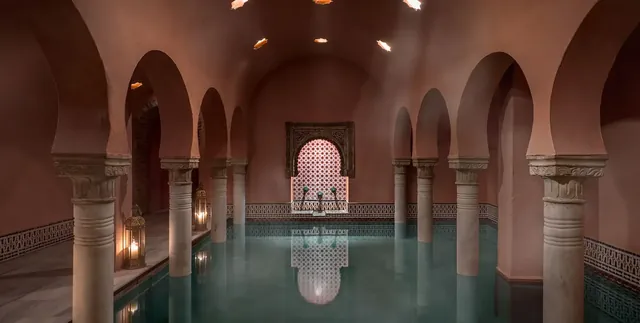
Hammam Al Ándalus Granada
Granada · Andalusian hammam

Termy Krakowskie Sodowa
Kraków · Saunas and a hammam
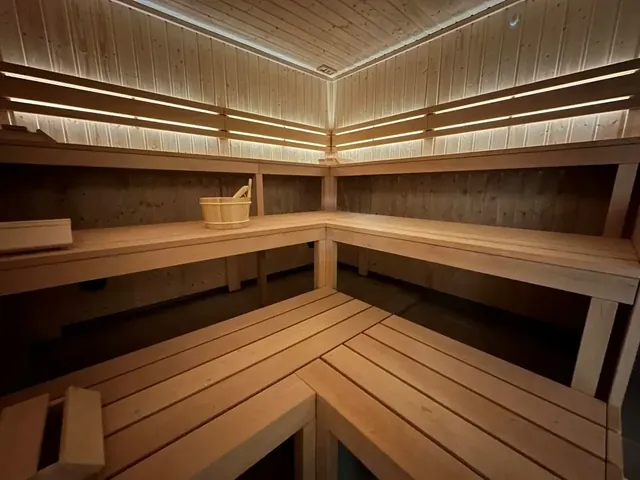
SaunaRelaxBar – Sauna Sokol Poruba
Ostrava · Finnish sauna
Frequently asked questions
Is a Turkish bath hotter than a sauna?
No. A sauna is usually 70–100 °C, a Turkish bath around 40–50 °C. The hammam can feel just as hot because the air is so humid.
Is a Turkish bath better for your skin than a sauna?
For how your skin feels straight afterwards, yes. The steam and the scrub remove dead skin and leave it soft. A sauna does not exfoliate.
Is a Turkish bath the same as a steam room?
It uses the same kind of humid heat, but a hammam is a whole ritual with heated stone, a scrub, a soap wash and a rest.
Which is better for relaxing, a hammam or a sauna?
Many people find the hammam more relaxing because it is gentler and someone else does the work. Others find the sauna and cold water routine leaves them calmer. It comes down to how you like your heat.
Can you do a sauna and a Turkish bath on the same day?
Yes. Many spas have both. Do your sauna rounds first, finish with the hammam and its scrub, then rest and drink water.