Does sauna help sore muscles?
 By the Find My Sauna team·
Updated ·
7 min read

The worst of it usually turns up the day after tomorrow. You tried a new class, went on a long hike or ran for the first time in months, and now the stairs are a problem. Plenty of people head for the sauna at this point. Heat can help a bit, but the research is thinner than the confident claims suggest.
The short answer
A sauna may ease muscle soreness a little and makes most people feel looser, but there are very few studies of saunas themselves. Reviews of heat in general, mostly hot packs and wraps, find it reduces the pain of delayed onset muscle soreness (DOMS) about as well as cold does, especially when used soon after exercise. Heat doesn't repair muscle, and the soreness fades on its own within a few days. Light movement helps too.
Why your muscles ache a day later
The ache that builds a day or so after hard or unfamiliar exercise is called delayed onset muscle soreness, or DOMS. According to the American College of Sports Medicine, it usually starts 12–24 hours after exercise and is at its worst between 24 and 72 hours, then fades.
Researchers have proposed several causes, including small amounts of muscle damage and the inflammation that comes with repairing it, and the answer is probably a mix. What's well established is what brings it on. Eccentric movements, where a muscle lengthens under load, cause the most soreness: running downhill, lowering a weight slowly, landing from jumps. It's also most common at the start of a season or whenever you try something new.
What the research says about heat
A large review published in 2021 pooled 32 randomised trials with 1,098 people. It found that both cold and heat reduced DOMS pain. Cold applied within an hour of exercise helped over the first 24 hours. Heat helped both within the first day and after it, and hot packs had the clearest effect. When the researchers compared heat and cold directly, there was no significant difference between them. They said better-quality studies were still needed.
One of the larger single trials, from the US in 2013, had 100 young people do 15 minutes of squats and then tested heat wraps. Moist heat applied straight after exercise gave the biggest reduction in pain, and dry heat helped too, to a lesser extent.
Saunas in particular
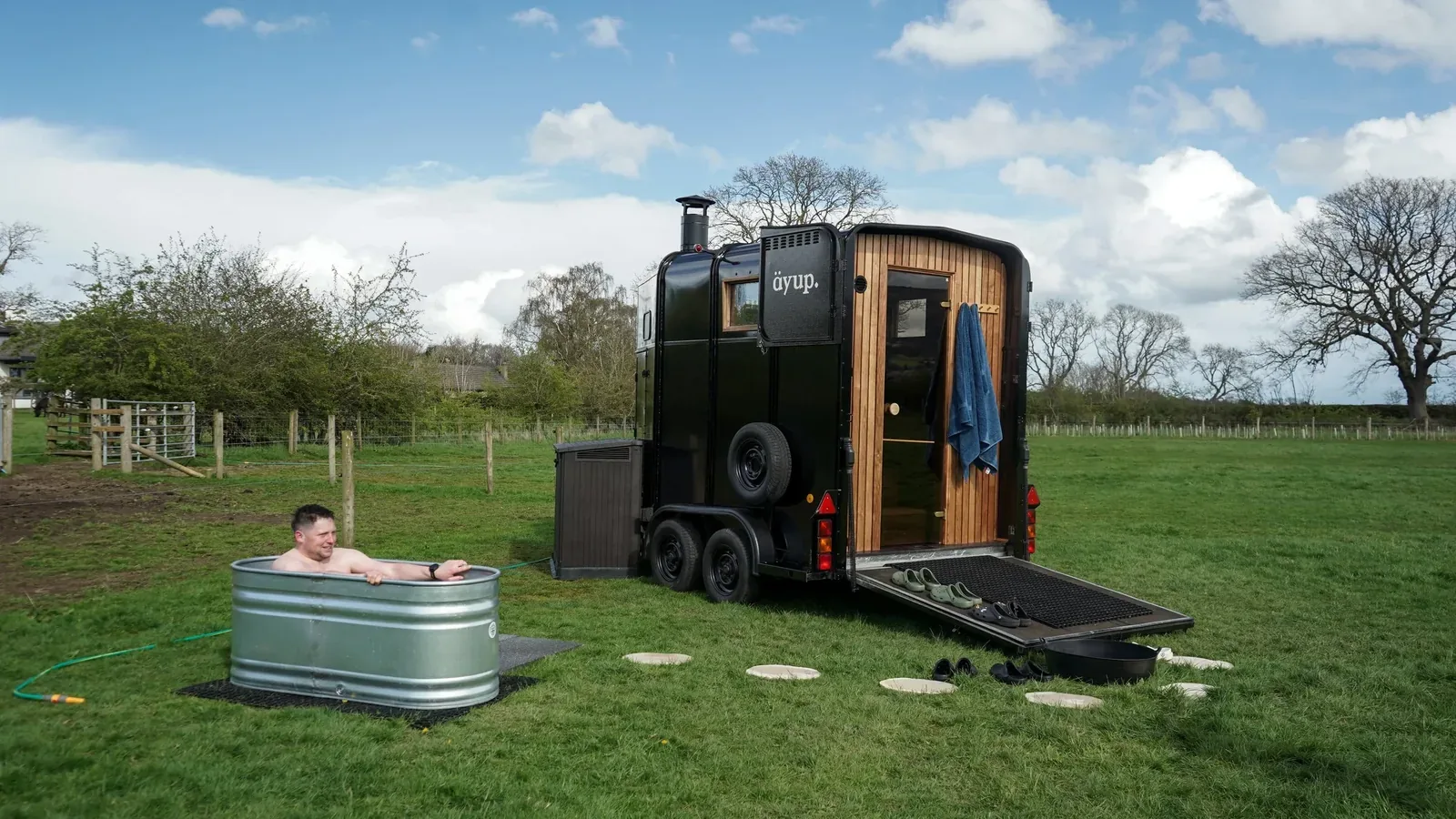
Most of that research used hot packs, wraps or warm water rather than saunas. Trials with real saunas are rare.
A 2025 review comparing physical therapies for DOMS found that sauna reduced soreness at 48 hours compared with a placebo. Look closer, though, and the sauna result rests on a single Thai study of 28 students, in which the sauna was used before the exercise rather than after. In a small Finnish study of 10 men, an infrared sauna seemed to help recovery after endurance training but made no difference after strength training.
So the idea is plausible and there's a little evidence for it, but nothing solid. If sitting in the heat makes you feel less stiff, that's a perfectly good reason to do it.
Heat or cold?
Cold has more research behind it. A Cochrane review of 17 small trials with 366 people found that cold water immersion after exercise reduced muscle soreness compared with resting, though the reviewers rated the studies as low quality.
There's a catch for anyone trying to build muscle. In a 2015 study, men who sat in cold water after each strength session for 12 weeks gained less muscle and strength than men who did an easy cool-down instead. Our guide to cold plunge benefits explains it. There's no similar evidence against heat, so if you lift weights, the sauna is the safer choice straight after training.
After running, team sports or a long hike, either works. Many people use both, in rounds.
When and how to use the sauna
- Soon after training seems best. In the reviews, heat and cold worked best when used within about an hour of exercise. Cool down for a few minutes, drink some water and have a shower first.
- Keep it moderate. One or two rounds of 10–15 minutes is enough. There's no evidence that longer is better, and our guide to how long to stay in a sauna has normal times.
- The next day is fine too. If you're already stiff, a sauna can still make you feel looser, even if the trials suggest earlier is better.
- Drink water before and after, especially after a sweaty session.
Our guides to sauna before or after a workout and sauna after a workout cover routines in more detail.
Other things that help
- Gentle movement. A 2003 review of DOMS treatments found that exercise is the most effective way to ease the pain, though the relief only lasts while you're moving. An easy walk, swim or spin works.
- Go easier for a day or two. The same review suggested cutting back intensity for one or two days after a session that left you very sore, or training other muscle groups.
- Build up gradually. New activities cause the worst soreness, so add them over a week or two rather than all at once.

When soreness is something else
DOMS is a dull, general ache in the muscles you worked, and it eases after a few days. Some pain needs different treatment:
- Sudden or sharp pain during exercise, swelling or bruising suggests a strain or sprain. The NHS advises avoiding heat, including hot baths, for the first couple of days after an injury like this.
- Pain in a joint rather than a muscle, or pain that gets worse instead of better, is worth getting checked.
- Extreme muscle pain with weakness or very dark urine after hard exercise needs urgent medical help.
Skip the sauna if you're dizzy, dehydrated or have been drinking, and check with a doctor first if you're pregnant or have a heart condition.
This guide is general information, not medical advice.
Saunas to try
A sauna after a hard session or on a rest day is easy to fit in if there's one near your gym or running route. A few listed on Find My Sauna:

Sauna + Stretch
Brighton · Finnish sauna
Leeds Community Sauna
Leeds · Community sauna

Ardagh Community Sauna
Bristol · Community sauna
Frequently asked questions
Is a sauna or ice bath better for sore muscles?
Reviews find heat and cold ease soreness by a similar amount. Cold straight after strength training may reduce muscle gains, so heat may suit lifters better.
Should I use a sauna the day after a hard workout?
Yes, if it makes you feel better. Keep it moderate and drink water. Gentle movement helps too.
How long should I stay in a sauna for sore muscles?
One or two rounds of 10–15 minutes is enough for most people. There is no evidence that longer is better.
Does a sauna help muscle recovery?
It may ease soreness a little and help you feel recovered. There is no good evidence that it repairs muscle faster.
Is an infrared sauna better for sore muscles?
There is not enough research to say. A small Finnish study found an infrared sauna helped recovery after endurance training but not after strength training.