Salt rooms and halotherapy: do they work?
 By the Find My Sauna team·
Updated ·
7 min read

Glowing walls of pink salt bricks are now a fixture in spas, Korean bathhouses and recovery studios. Some are quiet rooms where a machine puffs fine salt into the air. Others are hot saunas that happen to be lined with salt. They get sold with the same breathing claims, but they aren't the same thing.
The short answer
Halotherapy means breathing in tiny particles of dry salt, usually in a room where a machine called a halogenerator grinds salt into the air. A Himalayan salt sauna is different: a hot room with salt brick walls and no machine putting salt into the air. The evidence for halotherapy is thin. A review of COPD research found only one randomised trial, and a Cochrane review of salt caves for asthma found too little evidence to judge. Two small asthma trials found some benefit for airway sensitivity but none for lung function. Enjoy it as a calm, pretty room. Don't use it in place of your inhalers.
What halotherapy is
Halotherapy is the inhalation of very fine dry salt. The idea comes from speleotherapy, spending time in real salt mines and caves. In the 19th century, a doctor at the Wieliczka salt mine near Kraków, Feliks Boczkowski, began treating patients with the mine's salt. The mine stopped producing salt in 1996, but it still runs an underground health resort, mostly for people with breathing problems.
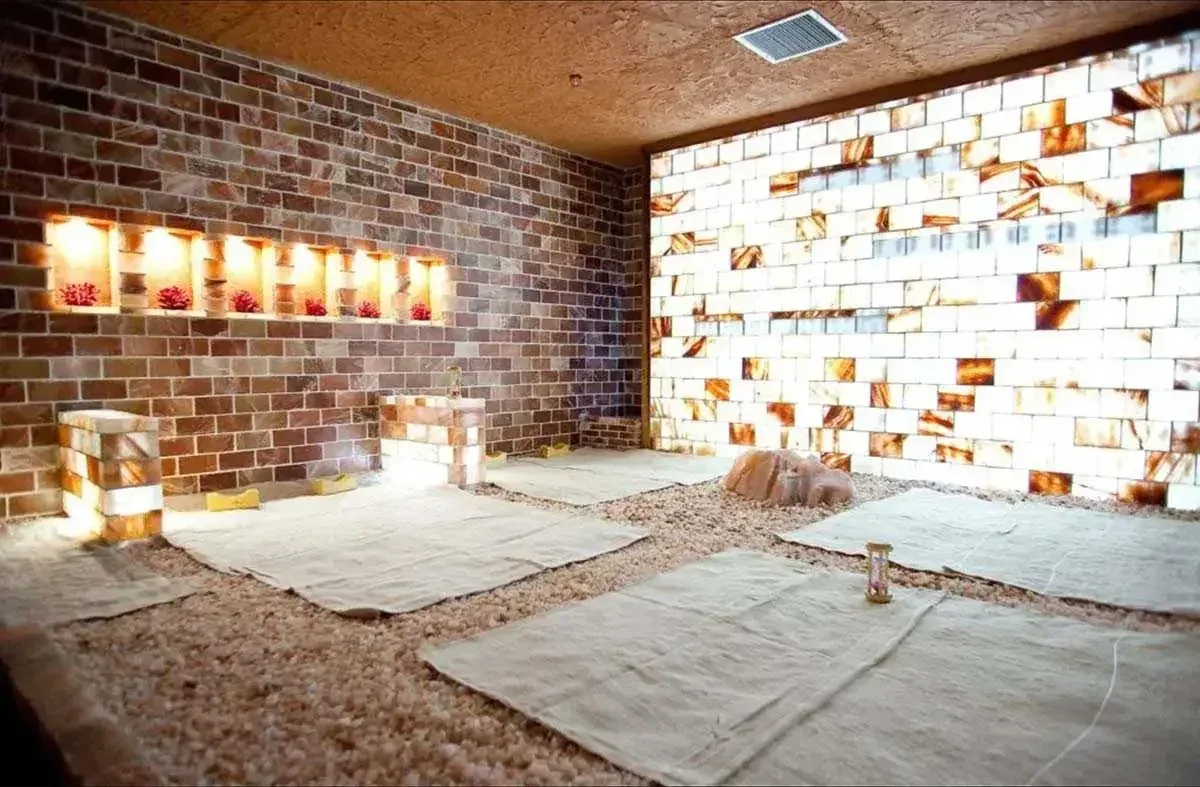
Modern halotherapy recreates the cave above ground. A halogenerator grinds salt and blows the particles into a room, where you sit or lie for a session. The theory is that the salt draws water into the lining of your airways and loosens mucus. The American Lung Association says the effect may be more than placebo, but that there are no evidence-based findings to base guidelines on.
Salt caves, salt rooms and salt saunas
What you'll find under the "salt" label:
- Salt mines and caves. Real underground chambers, like Wieliczka. This is speleotherapy, which has a long tradition in Eastern Europe.
- Halotherapy rooms. Often called salt caves, though they're built indoors. Walls of salt blocks, often a floor of loose salt, loungers and a halogenerator.
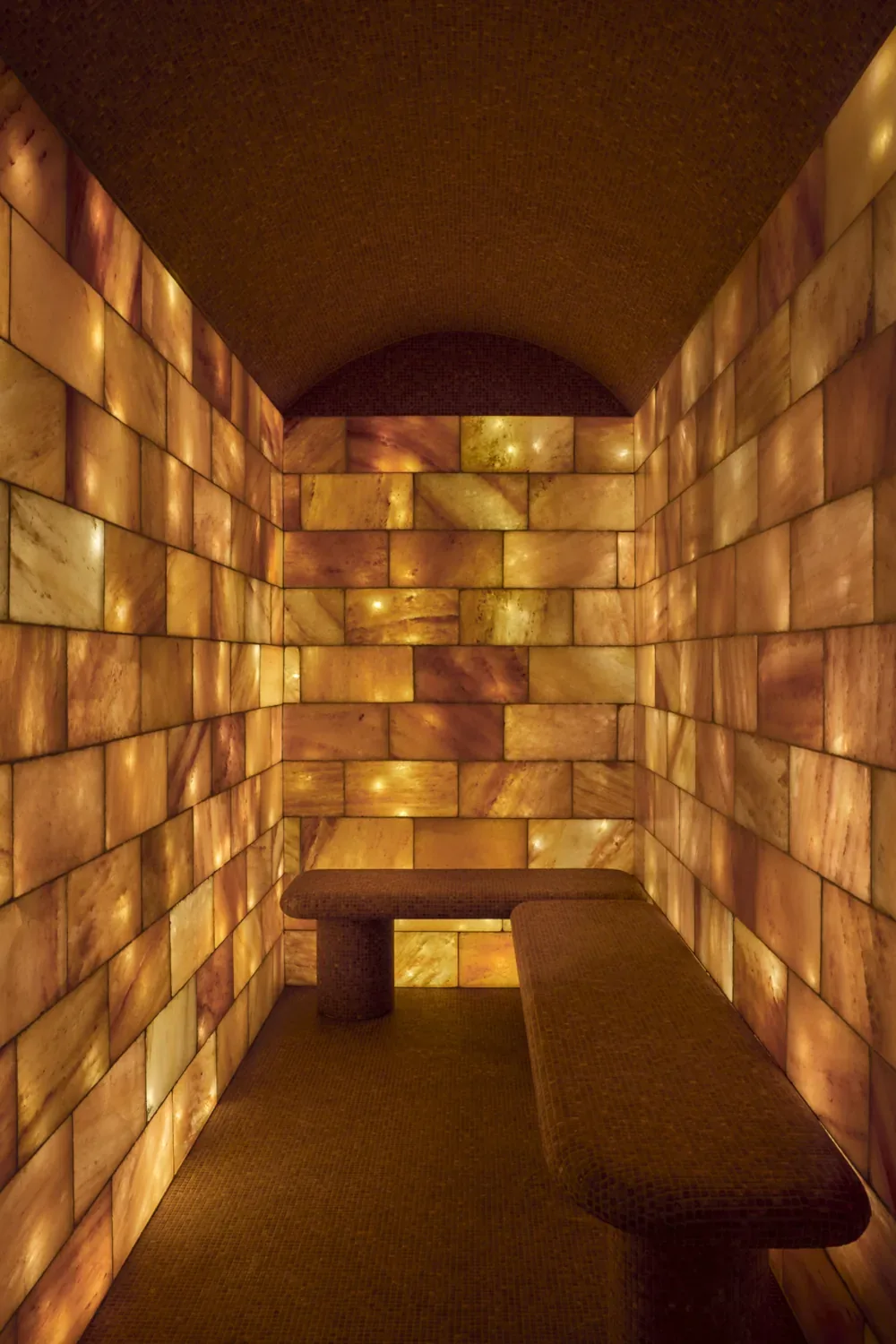
- Himalayan salt saunas. A hot sauna with salt brick walls, usually lit from behind. Without a halogenerator, you're breathing hot, dry air. Claims that salt lamps and bricks give off health-giving ions have no scientific foundation.
- Salt rooms in Korean bathhouses. Jjimjilbang usually have several heated rooms, and many include a salt room. You use them in the T-shirt and shorts the spa gives you.
If breathing is why you're going, ask the venue whether the room has a halogenerator. If it doesn't, think of it as a sauna with nice walls. For how dry and wet heat compare, see sauna vs steam room.
What Himalayan salt is
Despite the name, it doesn't come from the Himalayas. Most is mined in the Salt Range of Punjab, Pakistan, around the Khewra mine. Analyses of Khewra salt find it is 96–99% sodium chloride, the same compound as table salt. Traces of other minerals give it the pink to red colour. It makes a beautiful wall. It has no proven health benefits over other salt.
The evidence: COPD
In 2014, a team of researchers reviewed halotherapy for chronic obstructive pulmonary disease in the International Journal of COPD. Of 151 articles they found, just one randomised controlled trial met their criteria, and it mainly measured immune markers in the blood. Their conclusion: halotherapy can't be recommended for COPD until there are high-quality studies.
The evidence: asthma and other conditions
- Cochrane review, salt caves for asthma. It found three trials with 124 children, only one of reasonable quality. Two reported short-term improvements in lung function, but the reviewers said the evidence couldn't support a reliable conclusion. Searches up to 2006 found nothing new.
- Adults with asthma, 2006. A small trial in the journal Allergy gave 32 people already on inhaled steroids either a salt chamber or a placebo room, 40 minutes five times a week for two weeks. Airway sensitivity improved in the salt group. Peak flow and FEV1, a standard lung function test, didn't change.
- Children with mild asthma, 2017. A double-blind pilot with 55 children aged 5–13 compared a salt room with a halogenerator against the same room without one, over 14 sessions. Airway sensitivity and quality of life improved with salt; spirometry and airway inflammation didn't. The authors called for larger trials.
- Bronchiectasis. A small before-and-after study published in 2013 found no change in lung function, walking distance or quality of life after two months, though about two thirds of patients were satisfied and wanted to do it again.
That last point sums up a lot of the research. People often enjoy halotherapy and feel better, but measurable changes in breathing are small or absent.
What a session is like
In a halotherapy room you sit or lie in dim light, often with music, while fine salt drifts through the air. In a Himalayan salt sauna, it's a normal sauna session: rounds of 10–15 minutes with breaks. Circle Wellness on Granville Island in Vancouver, for example, keeps its salt-walled sauna around 50 °C as part of a private circuit with a cold plunge.
Who should be careful
- Asthma. Inhaled concentrated salt can make the airways tighten in some people with asthma. Labs that use salty mists for testing give patients a reliever inhaler first. Take your reliever with you, never stop your usual medicines, and leave if you start to wheeze.
- Other lung conditions. Talk to your doctor before trying halotherapy for COPD, bronchiectasis or cystic fibrosis. The American Lung Association suggests discussing it with your doctor first.
- Infections and fever. Stay home. The American Lung Association also warns that warm, poorly kept salt rooms could encourage bacteria, so choose a clean, well-run venue.
- Hot salt saunas. The usual sauna rules apply: check with a doctor if you are pregnant, have a heart condition or take blood pressure medicine, and skip it after alcohol.
- Children. Ask your child's doctor first, especially if they have asthma.
This guide is general information, not medical advice.
Where to find a salt sauna
Find My Sauna lists 108 places with a Himalayan salt sauna or salt room. These cities have the most:
Yu Spa
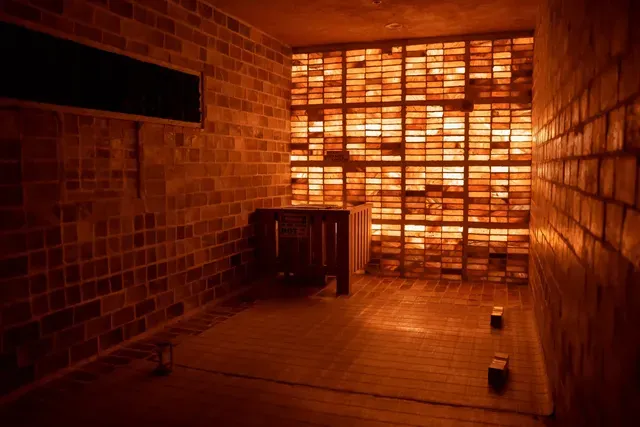
San Diego · Korean spa with salt sauna
AetherHaus
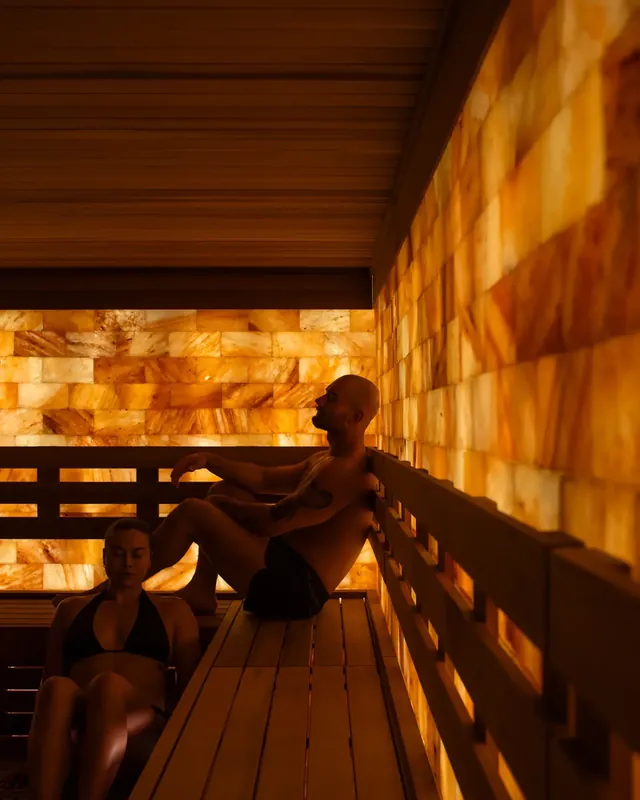
Vancouver · Salt sauna with Aufguss
Cedar & Steam South
Calgary · Salt sauna and steam
Frequently asked questions
Does halotherapy actually work?
The evidence is weak. Small trials suggest it may reduce airway sensitivity in some people with asthma, but it has not been shown to improve lung function, and there is no good evidence for COPD.
Is a Himalayan salt sauna the same as halotherapy?
No. A salt sauna is a hot room with salt walls. Halotherapy uses a machine to put fine salt into the air you breathe.
Is a salt room good for asthma?
It may help a little with airway sensitivity, but it can also trigger symptoms in some people. Take your reliever inhaler and keep using your usual medicines.
How long is a salt room session?
Sessions vary by venue. In one adult asthma trial they lasted 40 minutes. In a hot salt sauna, stick to normal sauna rounds of 10–15 minutes.
Do Himalayan salt lamps release healthy ions?
Claims that they do have no scientific foundation. A salt lamp is a light inside a hollowed-out block of salt.