Sauna then cold plunge: the right order
 By the Find My Sauna team·
Updated ·
6 min read
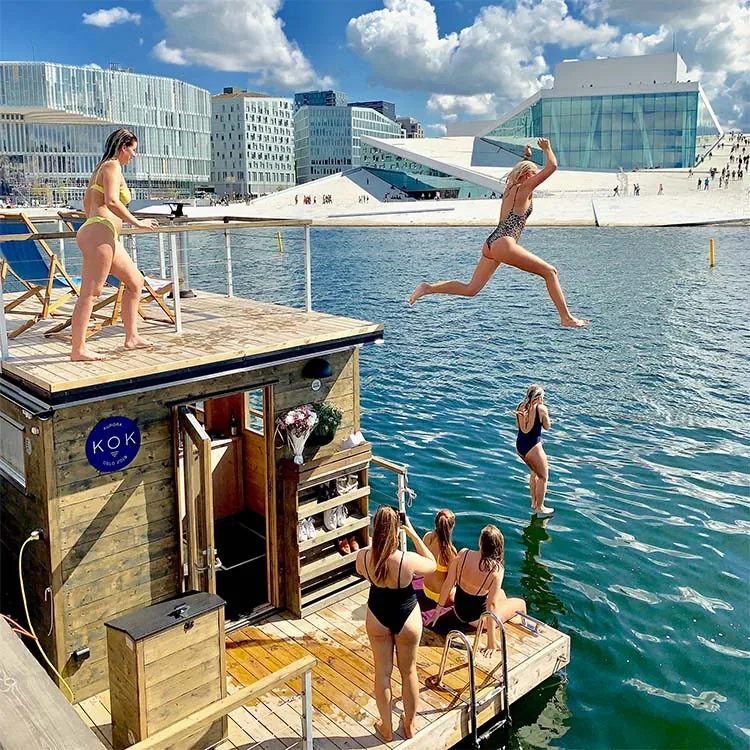
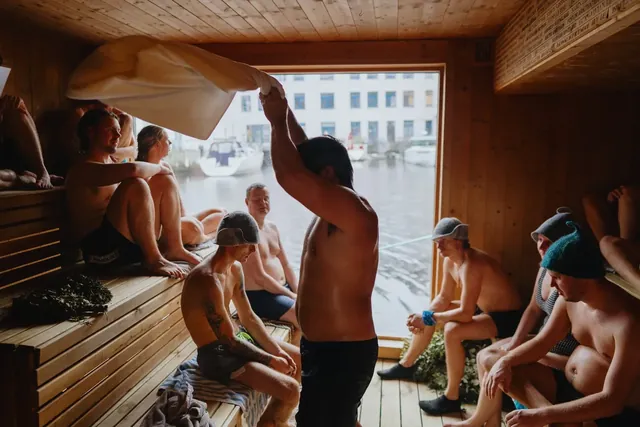
At a Nordic harbour sauna the routine looks effortless: out of the heat, down the ladder, back up, sit on a bench grinning. There's more to it than that, and a few small habits make the cold part easier and safer. Here's the order regulars follow, step by step.
The short answer
Heat first, then cold, then rest. Spend 8–15 minutes in the sauna, step outside for a few breaths of fresh air, rinse off under a shower, then lower yourself into the cold water for 30 seconds to 2 minutes. Rest for 10–20 minutes with some water before the next round. Two or three rounds is a full session. Never go into cold water head first straight from the sauna, and skip the cold if you've been drinking.
Why heat comes first
Getting into cold water when you're already chilly is miserable. After ten minutes in a sauna at 80 °C (176 °F), your skin is hot and your body is working to shed heat, so the cold feels like relief for the first few seconds rather than an attack. That's why many people who'd never take an ice bath on its own happily use a plunge pool between sauna rounds.
It's also simply how saunas have always been used across Finland, the Baltics and Scandinavia: a sauna by a lake or the sea, with a swim between rounds. If you want the research on switching between hot and cold, read contrast therapy.
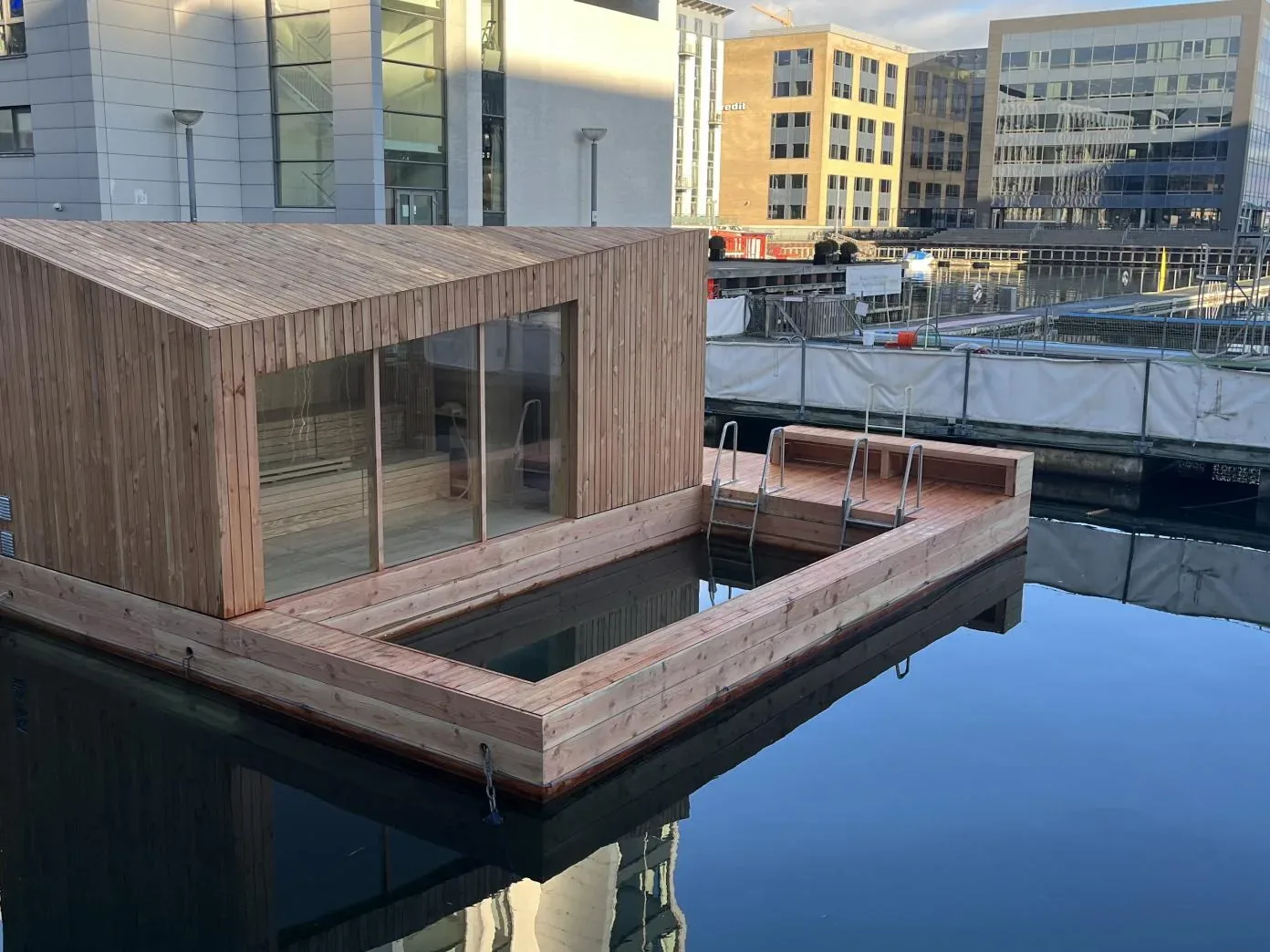
One round, step by step
- Shower and dry off. Before your first round, wash and dry yourself properly.
- Sauna: 8–15 minutes. Stay until you feel properly warm, not until you feel unwell. Beginners should keep it to 5–10 minutes. Our guide to how long to stay in a sauna goes into timings.
- Fresh air: half a minute. Germany's sauna association suggests stepping outside and breathing cool air for about 30 seconds before you cool your body. The idea is to cool your airways before the rest of you.
- Rinse off. A quick shower washes off sweat before you share a plunge pool or the sea, and it starts the cooling gently. Many people start with the cold on their feet and arms before their chest.
- Into the cold: 30 seconds to 2 minutes. Go in feet first, using the ladder or steps. Breathe out slowly until the gasping passes. Get out before your hands start to go numb.
- Rest: 10–20 minutes. Wrap up, sit or lie down and drink some water. In German spas people often put their feet in a warm footbath at this point to help the body even out.
The rest is part of the routine, not a break from it. Your heart rate and blood pressure swing a lot between the hot and cold steps, and they need time to settle before the next round.
How many rounds
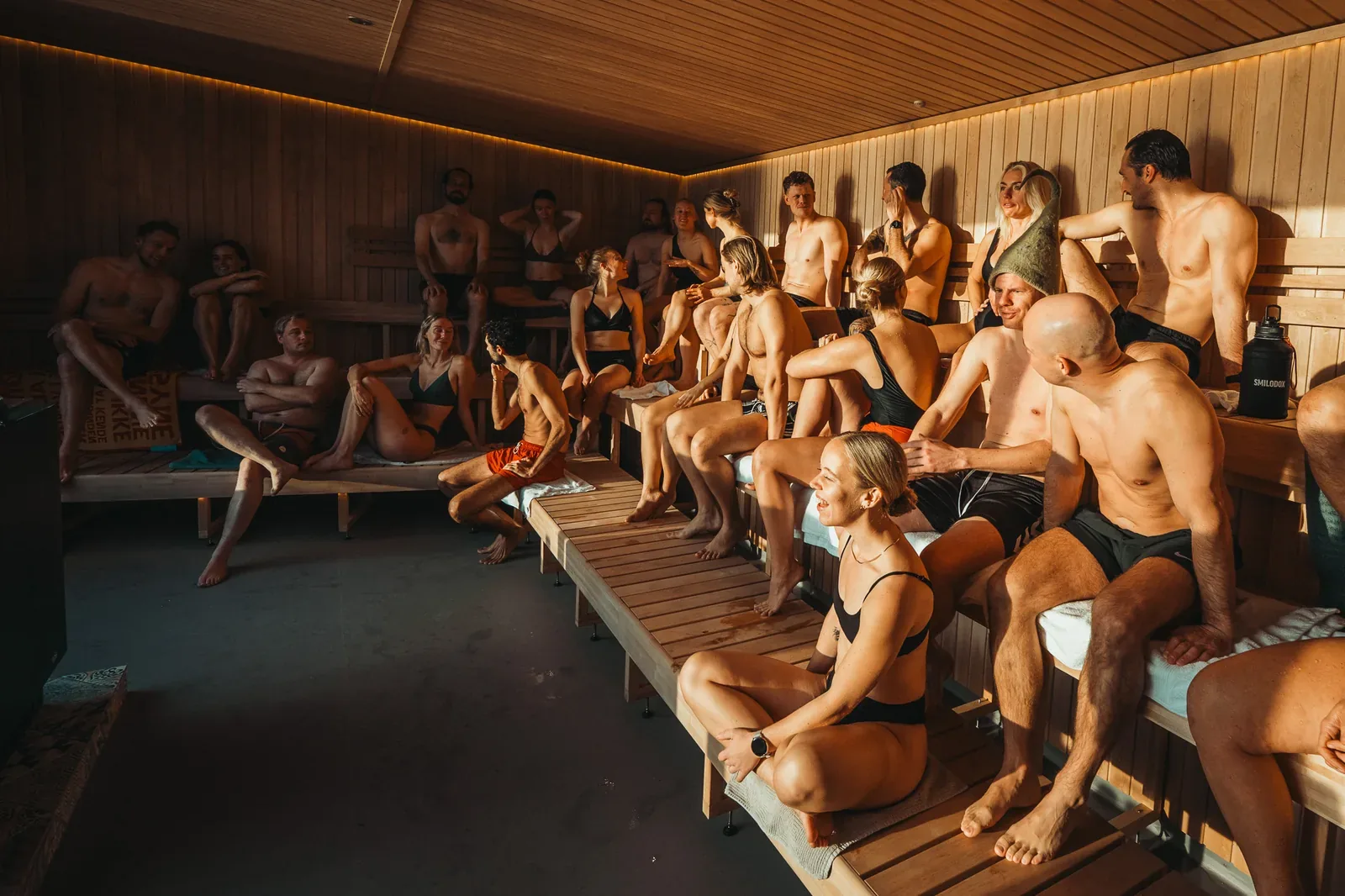
Two or three is the usual answer. Germany's sauna association advises up to three rounds and says more doesn't add anything. The Danish winter swimmers studied at the University of Copenhagen in 2021 averaged two sauna sessions and two or three cold dips per visit, about 1.4 minutes per dip.
If you're new, one round with a short cold rinse is a perfectly good first visit. Add a second round next time if you feel fine.
Finishing warm or cold
People argue about this more than it deserves. Susanna Søberg, the Danish researcher who led the winter swimming study, recommends ending on cold so your body has to warm itself back up. Others prefer to end with a last short round in the sauna so they leave warm.
No study has compared the two. Go by the situation: on a summer evening, a last dip in the sea feels great. If you're cycling home in January, end warm, dress in layers and have a hot drink.
No plunge pool? Other ways to cool
- Cold shower. The standard option in most gyms and spas. Stay under it for 30–60 seconds.
- Bucket shower. A bucket on a rope that tips cold water over you. You'll find them at many Nordic public saunas.
- Snow. In Finland people famously roll in it. It's colder than it looks, so keep it short.
- Just air. Sitting outside in a towel cools you more slowly, but it still works.
Not sure what the difference is between a plunge pool and an ice bath? See ice bath vs cold plunge.
Shared plunge etiquette
- Always rinse sweat off before getting into a shared plunge pool or tub.
- No soap, oils or scrubs in the plunge.
- If there's a queue, take your minute and get out.
- Don't splash people who are lowering themselves in slowly. They're doing it right.
- Follow local rules on swimming: some harbour saunas allow it, some don't.
Who should be careful
- Never go in head first. A 2018 review of sauna research in Mayo Clinic Proceedings notes deaths in people who plunged head first into cold water straight after a sauna.
- Heart disease. The same review says quick heat-to-cold switches are generally safe for healthy people but can trigger irregular heart rhythms in people with heart disease. Ask your doctor.
- Alcohol. According to the Finnish Sauna Society, as many as half of the people who die in saunas had been drinking, by some studies' counts. Don't mix alcohol with heat or cold water.
- Pregnancy, blood pressure medicine or Raynaud's. Check with a doctor or midwife first.
This guide is general information, not medical advice.
Where to try it
Many saunas on Find My Sauna sit right by the water or have a plunge pool. A few with good cold options:

Sagene Folkebad
Oslo · Bucket showers and plunge pools
Laugaren
Bergen · Floating sauna on the fjord

Inipi Amagerstrand
Copenhagen · Saunagus with cold dips
Frequently asked questions
Should you do the sauna or the cold plunge first?
Sauna first. The heat makes the cold much easier to face, and that is how sauna rounds have always worked in the Nordic countries.
How long should you wait after the sauna before a cold plunge?
Not long. Take half a minute of fresh air and a quick rinse in the shower, then go in. The rest comes after the cold, not before it.
How many rounds of sauna and cold plunge should you do?
Two or three. Germany's sauna association advises no more than three, and beginners can stop at one.
Should you end a sauna session with the cold plunge?
Either is fine. Ending cold feels fresh. Ending warm is more comfortable if you are heading out into a cold evening.
Should you shower before a cold plunge?
Yes. A quick rinse removes sweat before you share the water and starts cooling you more gently.


