Sauna heaters: electric vs wood-fired
 By the Find My Sauna team·
Updated ·
7 min read
The heater decides how a sauna feels: how fast it warms up, how hot it gets and what the steam is like when you throw water. Choosing one comes down to two questions. Electric or wood? And how big?
The short answer
Electric heaters are the easy choice: switch on, set the temperature, done. Wood-burning stoves need no power and give the crackle and ritual many sauna lovers want, but they need a chimney and firewood. For size, Harvia's rule of thumb is about 1 kW of heater per cubic metre of sauna, adding 1.2 m³ for every square metre of glass, stone or other uninsulated surface. Then pick a heater whose rated room volume covers your figure, and have it installed exactly as the manual says.
The kinds of heater
The Finnish Sauna Society calls the heater the heart of a sauna. Most run on electricity or wood, though special models burn gas or oil.
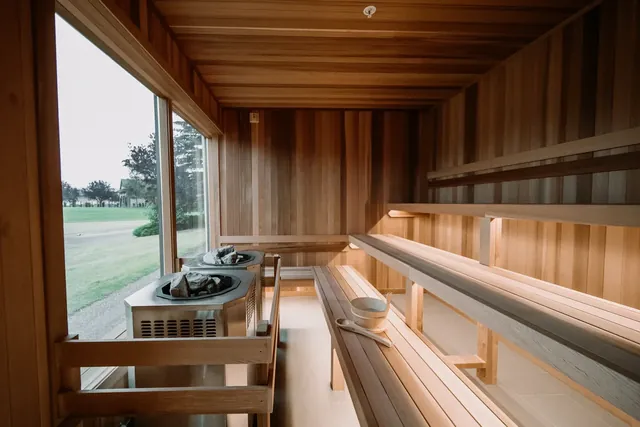
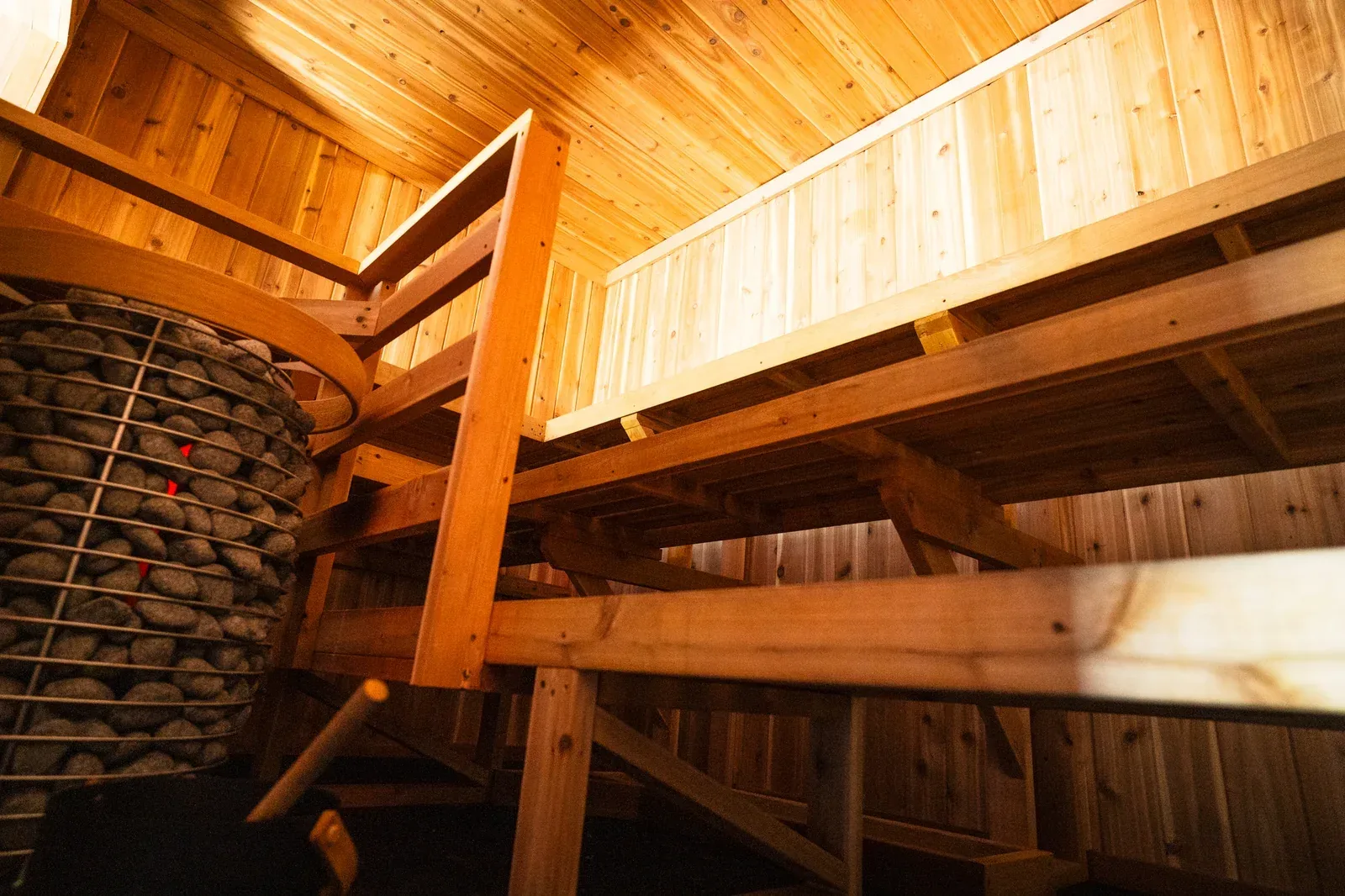
- Electric heaters are the most common kind. Elements heat a basket of stones, and air rises through them to warm the room. Some are closed and insulated, storing heat until you open a hatch.
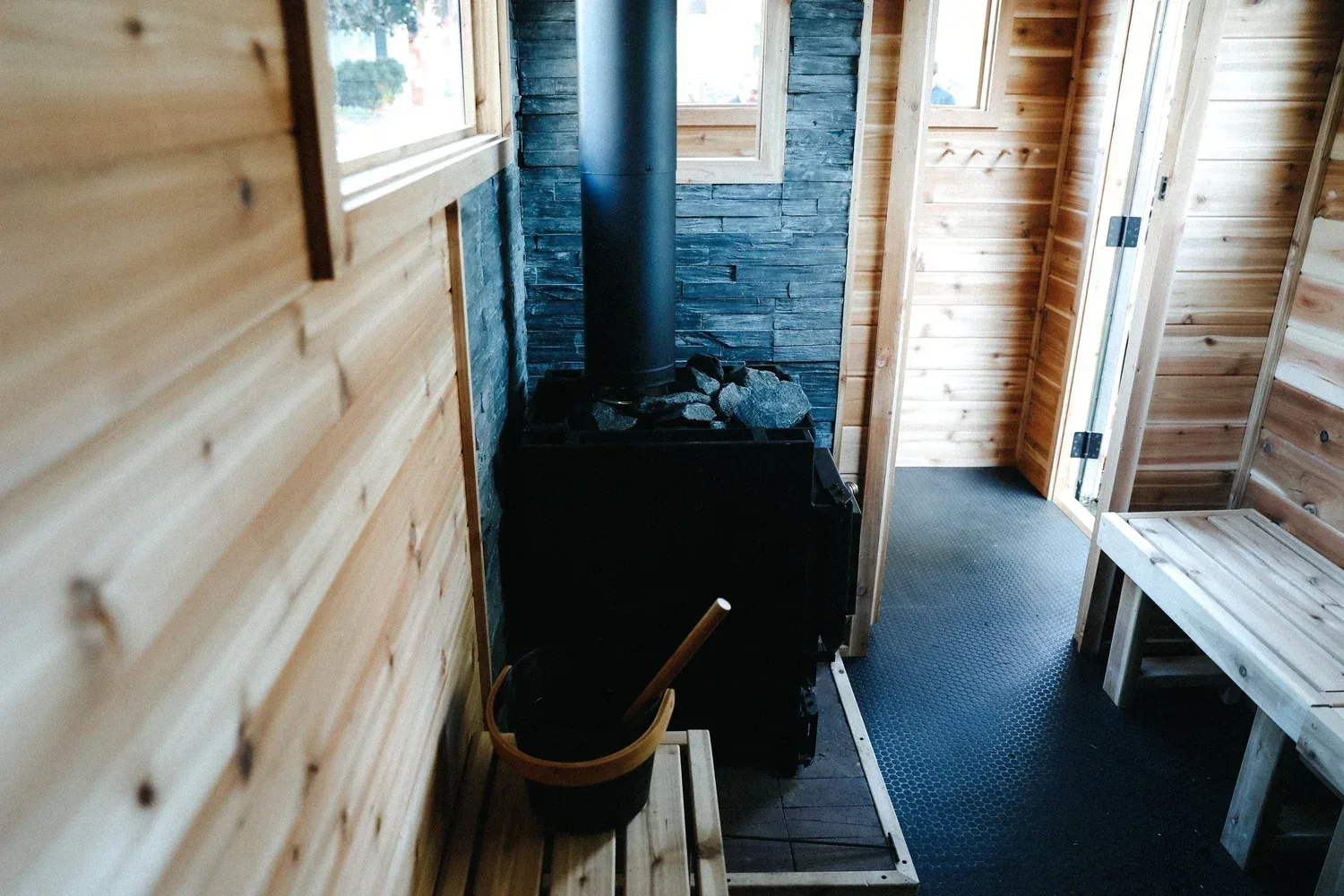
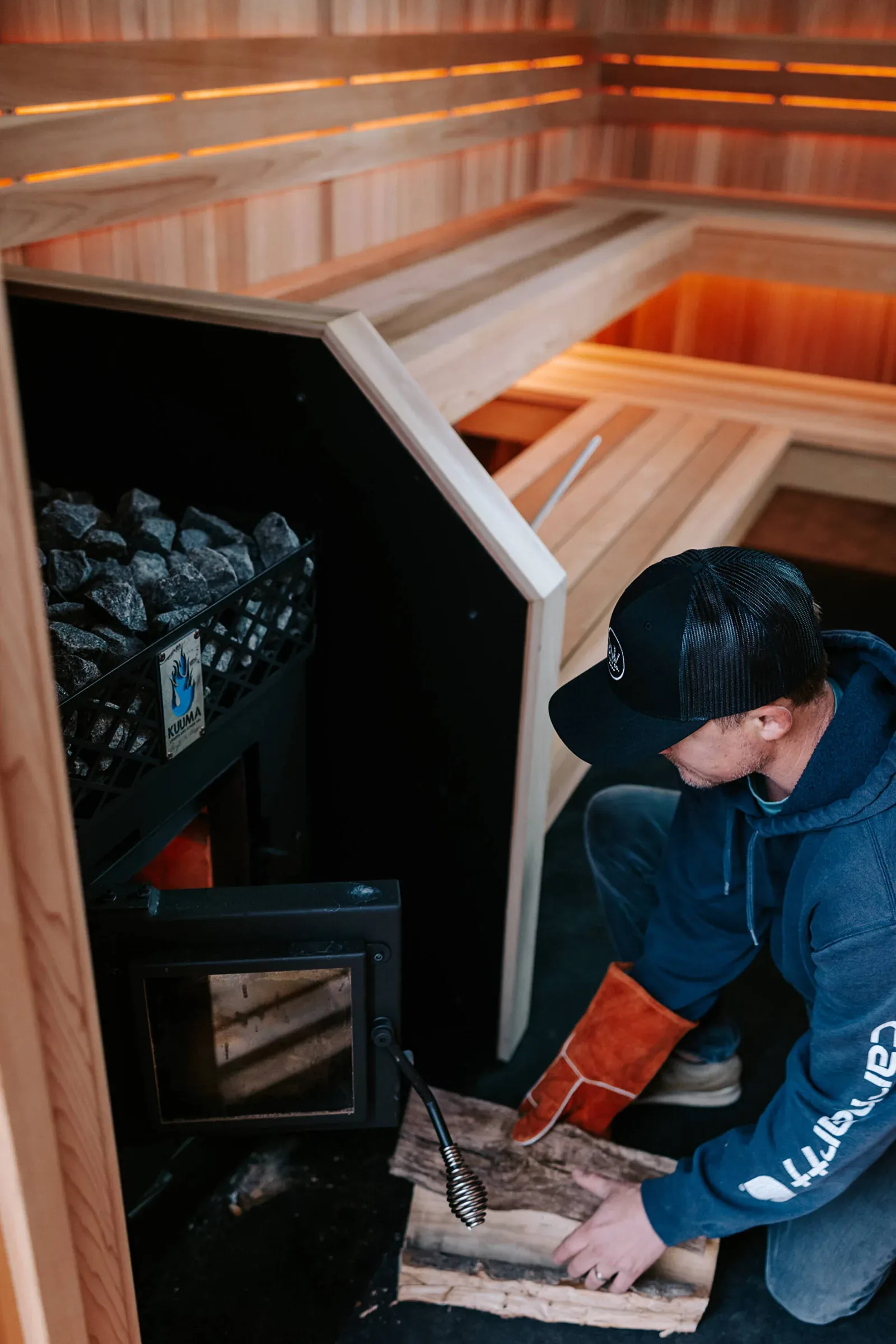
- Wood-burning stoves have a firebox below a stone compartment and a chimney to take the smoke away.
- Smoke sauna stoves have no chimney at all. A huge pile of stones is heated for hours, then the smoke is let out before bathing. Our guide to smoke saunas explains the tradition.
- Infrared panels aren't heaters in this sense. They warm your body directly, with no stones and no steam. See what is an infrared sauna.
Sizing: the kilowatt rule
An undersized heater struggles to reach temperature and goes cold when you throw water. An oversized one costs more to buy and wire than it needs to. Harvia's catalogue gives the classic rule of thumb:
- about 1 kW per cubic metre of sauna room
- add 1.2 m³ to the room's volume for every square metre of glass, stone, tile or other uninsulated surface
Then look at the heater's rated room volume, which every manufacturer lists. Harvia's 6 kW Vega BC60, for example, is rated for rooms of 5–8 m³, and its 9 kW Cilindro PC90E for 8–14 m³.
A worked example: a room 2.0 m long, 1.8 m wide and 2.1 m high is about 7.6 m³. Add a glass door of 0.7 by 1.9 m, which is about 1.3 m² of glass, so 1.3 × 1.2 = 1.6 m³ more. That makes 9.2 m³. The 6 kW heater is now too small, and the 9 kW one fits.
Other makers use slightly different adjustments, and log walls, high ceilings and cold outdoor saunas all change the answer. Use the rule to narrow your choice, then follow the heater maker's own table.
Stone capacity
Heaters differ a lot in how many stones they hold. Harvia lists 20 kg of stones for the 6 kW Vega, but 90 kg for the 9 kW Cilindro PC90E. A big stone mass takes longer to heat but stores more heat, so the room doesn't cool as much when you throw a lot of water. Our guide to sauna stones covers which stones to use and when to change them.
Controls and temperature
Electric heaters have a thermostat that cuts the power when the room reaches the set temperature, and a separate temperature limiter that shuts the heater off if something goes wrong. Smaller heaters often have the controls built in. Larger ones use a separate control panel outside the hot room, usually with a timer, and many can now be switched on from a phone.
In the United States, electric sauna heaters are commonly capped at about 90 °C (194 °F) at the thermostat, which sits near the ceiling. European heaters often go a little higher. Wood stoves have no thermostat: you control the heat with how much wood you add and how you set the air vents.
Wood stoves: continuous or heat-storing
The Finnish Sauna Society divides wood-burning heaters into two kinds:
- Continuously heated stoves are what most people picture. The fire is separated from the stones, and hot gases pass through channels around them. You can keep feeding the fire while people bathe. This is the usual garden and cabin stove.
- Heat-storing stoves have the stones in the path of the flames and smoke. They take a few hours to heat and hold anywhere from a few dozen to several hundred kilos of stone. Once the fire is out, the stones keep giving heat for the whole session.
Some modern stoves sit in between: one load of firewood, then they keep going on stored heat. Wood stoves are rated in kilowatts too, often higher than electric heaters for a similar room. Harvia's M3, for instance, is rated at 16.5 kW for rooms of 6–13 m³. Some models are fed from outside the hot room, through the wall, which keeps ash and wood out of the sauna.
Electric or wood: how to choose
Choose electric if you want to use the sauna often and at short notice, it's indoors or close to the house, or burning wood is restricted where you live.
Choose wood if the sauna is far from a power supply or off the grid, you enjoy tending a fire, and you have space to store dry logs. Check local rules first: in the UK's smoke control areas, for example, wood can only be burned in a Defra-exempt appliance.
For outdoor saunas the choice is often made by the site. Our outdoor sauna guide covers cable runs, chimneys and permits.
Installation and safety
- Follow the manual's safety distances. Each heater lists minimum distances to walls, benches and ceiling. For the 6 kW Vega, Harvia gives 30 mm at the front, 50 mm at the sides and 1.1 m to the ceiling from anything that can burn, in a room at least 2 m high. Other heaters differ a lot.
- Use a qualified electrician for any electric heater. Most need their own circuit, sized for the heater's power.
- Use the chimney the stove maker specifies, with the clearances it gives, and have it swept regularly.
- Fill the stone compartment properly. Too few stones lets the elements overheat. Too many tightly packed ones does the same.
- Fit a guard rail around the heater if the maker offers one, so nobody falls against it.
- Never cover the heater or dry towels on it.
Where to try different heaters
A session or two in a sauna with a wood stove, and one with a big electric heater, will tell you more than any spec sheet. Many saunas rent private sessions.
Saunic Stafford
Winnipeg · Finnish sauna
Sauna Public
Salt Lake City · Finnish sauna
NRG Haus
Toronto · Finnish sauna
Frequently asked questions
What size sauna heater do I need?
Allow about 1 kW per cubic metre of room, adding 1.2 cubic metres for each square metre of glass or other uninsulated surface. Then choose a heater rated for that volume.
Is a wood-burning or electric sauna heater better?
Neither is better for everyone. Electric is more convenient. Wood needs no power and many people love its heat, but needs a chimney, firewood and more effort.
How long does a sauna heater take to heat up?
A home electric sauna often takes 30–60 minutes. Large heaters with a lot of stone, and heat-storing wood stoves, take longer.
Can I install a sauna heater myself?
You can often build the sauna yourself, but an electric heater should be wired by a qualified electrician, and a wood stove fitted with an approved chimney.
Why does my sauna not get hot enough?
The heater may be too small for the room, the stones may be old and tightly packed, or the room may lose heat through glass or poor insulation.