Best essential oils for the sauna
 By the Find My Sauna team·
Updated ·
7 min read
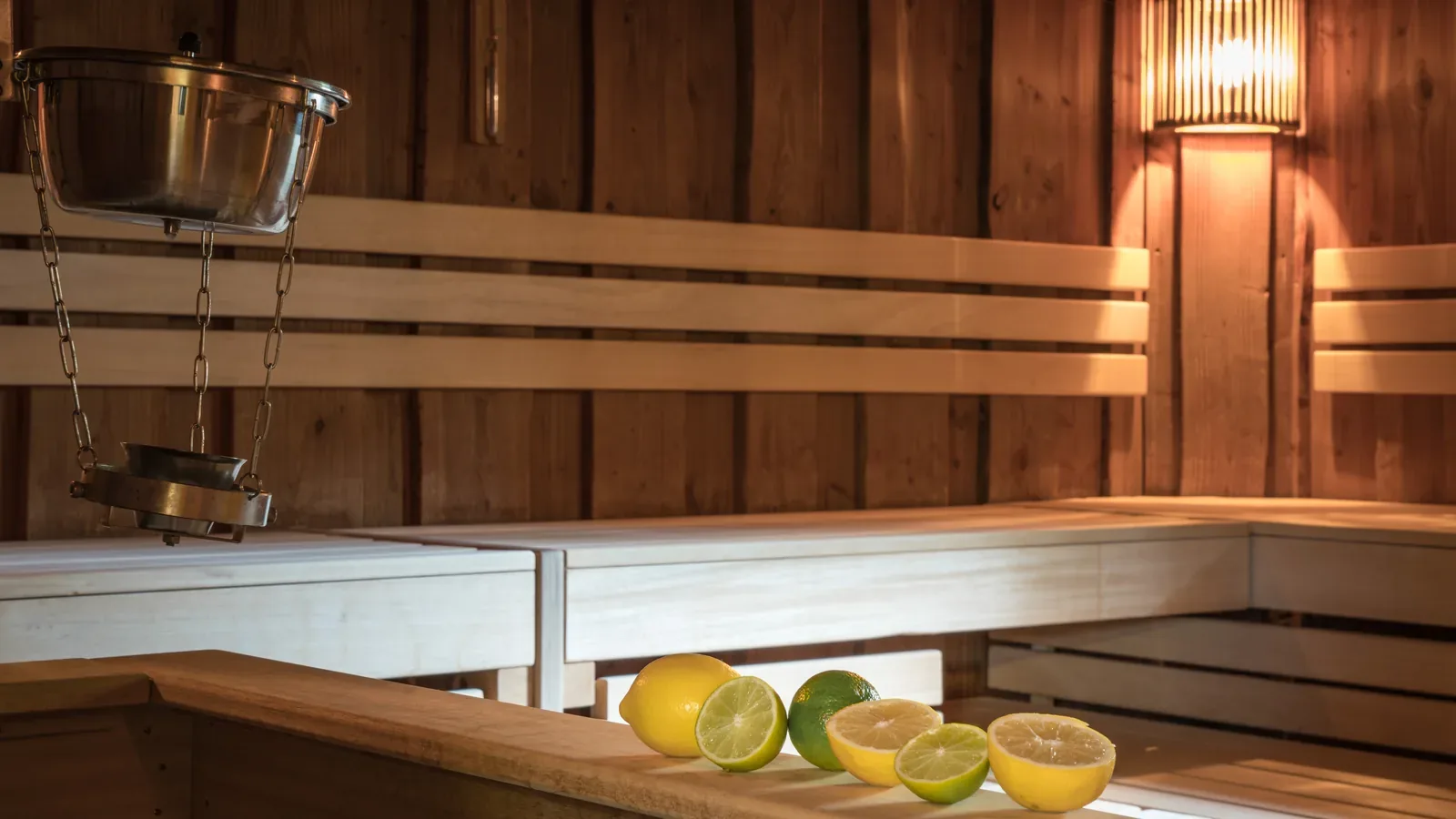
Walk into a German spa during an Aufguss and the room might smell of orange, mint or pine. In a Finnish cottage sauna it's more likely to be birch leaves or wood tar. Scent is half the pleasure of a sauna for many people. Below are the classic choices, how to use them without starting a fire, and what aromatherapy can honestly claim.
The short answer
The classic sauna scents are birch, pine and fir, eucalyptus, peppermint, tar and citrus, with lavender as a gentler option. Use a sauna fragrance made to mix with water, or put a few drops of pure essential oil on an ice ball or in a bowl of water, never straight onto hot stones: the oils are flammable. In an infrared cabin, put a drop on a damp towel instead. Scents make a sauna more pleasant, but the evidence that they improve health is thin.
The classic sauna scents
- Birch. The smell of the Finnish sauna. Fresh birch whisks, the vihta or vasta, perfume the air with a soft, green, woody smell, and birch scent captures the same thing in a bottle.
- Pine and fir. Resinous and forest-like. A good choice if you like a sauna to smell like a sauna, only more so.
- Tar. Smoky and a little medicinal, an old Finnish favourite. Not for everyone.
- Eucalyptus and peppermint. Cool and sharp. They make your nose feel clearer, though they don't really open it. We cover both in detail in our guide to eucalyptus in the sauna.
- Citrus. Orange, lemon and grapefruit smell fresh and light, and suit people who find pine too heavy.
- Lavender, mint and rosemary. Herbal and gentler. The British Sauna Society names these three as herbs for infusions.
Harvia, the Finnish heater maker, sells its own range in exactly five scents: eucalyptus, peppermint, birch, pine and tar. That's a good snapshot of Finnish taste. Spas that run Aufguss sessions often use a much wider range. Our guide to what an Aufguss is explains the ritual.

Essential oil or sauna fragrance?
They're not the same thing, and it matters for how you use them.
Sauna fragrances are sold specifically for saunas, usually in larger bottles. They contain essential oils, but they're made to mix into the water in your bucket. You add a little to the water and pour it on as normal.
Pure essential oils are concentrated and don't mix with water. Add them to a bucket and they float on top, so the first ladle carries most of the oil onto the stones. The British Sauna Society warns that this is a fire hazard and leaves residue on the stones and benches.
Whichever you use, the British Sauna Society's guidelines say to choose 100% natural oils with the plant's botanical name on the label, and to avoid synthetic "essences". Never use carrier oils like almond, coconut or jojoba in the sauna: they're for skin, not stones.
How to use oils safely
- Never put oil straight on hot stones. Most essential oils give off flammable vapour below 60 °C (140 °F), and sauna stones are far hotter.
- Mix outside the sauna. Dilute your fragrance in the bucket before you bring it in. One Austrian maker, Styx, prints this warning on its sauna oils, with a dose of 15–25 drops per litre of water. Other products differ, so follow the label.
- Try an ice ball. Cool the stones with a ladle of plain water, then put a ball of ice with a few drops of pure oil on top. The scent comes off slowly as it melts. This is the method the British Sauna Society recommends.
- Or skip the stones. A few drops in a bowl of water under the benches, away from the heater, give a gentle scent with no risk.
- Keep glass out of the sauna. Prepare your water outside and leave the bottle there.
- Less is more. A strong dose stings eyes and throats. Start small and air the sauna out afterwards.
In a shared or public sauna, don't add scents yourself. That's the staff's job, and not everyone wants your lavender.
Oils in an infrared sauna
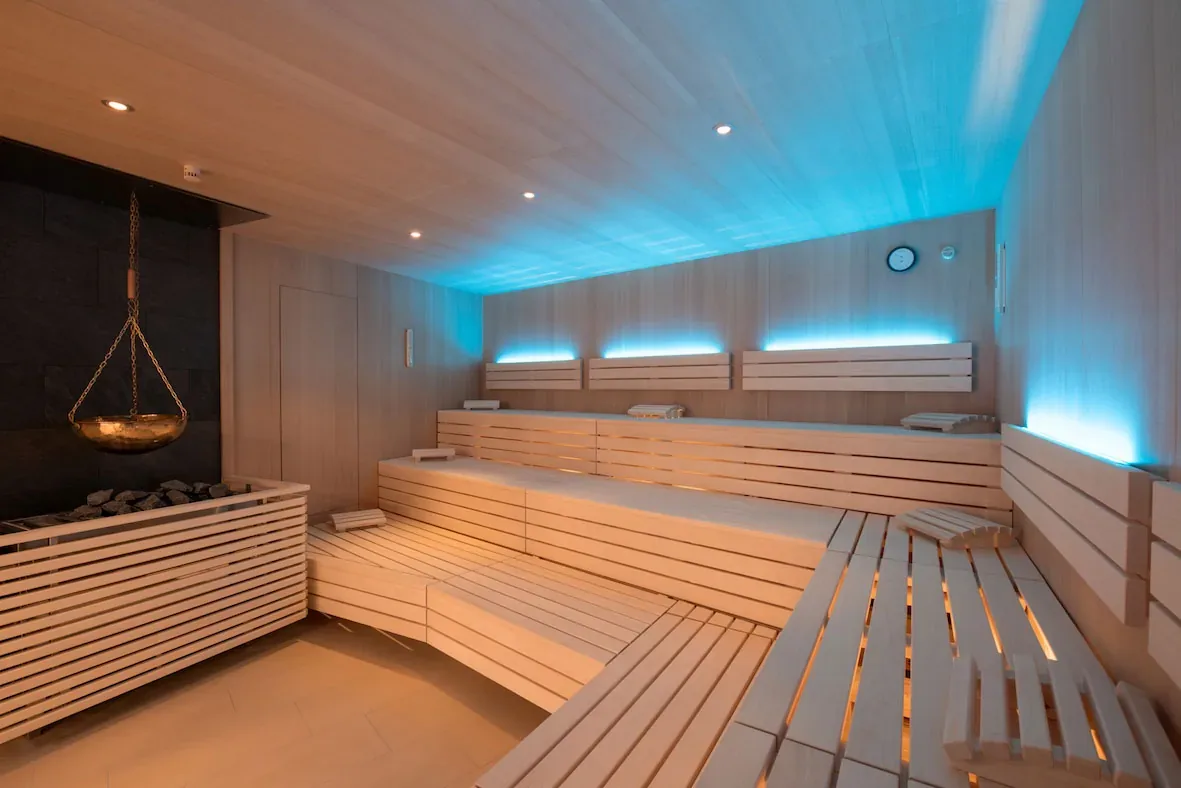
Infrared cabins have no stones and no water, and the heat comes from panels in the walls. Never put oil on the panels or let it soak into the wood. Instead, put a drop or two on a damp flannel or towel before you go in and keep it beside you, or use a small diffuser if the studio allows it. Sunlighten, an infrared maker, suggests leaving the bottle outside the cabin and avoiding warming oils such as ginger and black pepper. More on the cabins themselves in what is an infrared sauna.

What aromatherapy can and can't do
The honest answer: not much has been proven. The US National Center for Complementary and Integrative Health says little rigorous research has been done on aromatherapy for sleep, for example. In one study it describes, lemon scent improved people's mood, but neither lemon nor lavender changed measurable signs of stress or helped with pain.
That doesn't make scents pointless. A smell you like makes a sauna more enjoyable, and if a familiar scent helps you switch off, that's worth something. Just treat oils as a pleasure, not a medicine. They don't "detox" you, and they don't add to the benefits of the heat itself.
Who should be careful
- People with asthma. Asthma Australia and the American Lung Association both warn that strong scents, essential oils included, can irritate the airways and trigger symptoms. Check with your doctor.
- Children. Keep strong oils like eucalyptus and peppermint away from young children, and don't scent the sauna when they're in it.
- Pets. Cats are especially sensitive to essential oils, and the ASPCA lists eucalyptus as toxic to cats and dogs. Keep pets away from a scented home sauna.
- Pregnancy, medical conditions and medicines. Essential oils are biologically active. Ask your doctor or midwife first.
- Skin. Never rub undiluted oil on your skin, and keep even diluted oils off your skin in the sauna.
This guide is general information, not medical advice.
Where to find a herbal sauna
Find My Sauna lists 163 places with a herbal sauna, where scent is part of the design. These cities have the most:

Sauna im See
Leipzig · Herbal sauna and Aufguss

Niederrhein-Therme
Essen · Herbal sauna
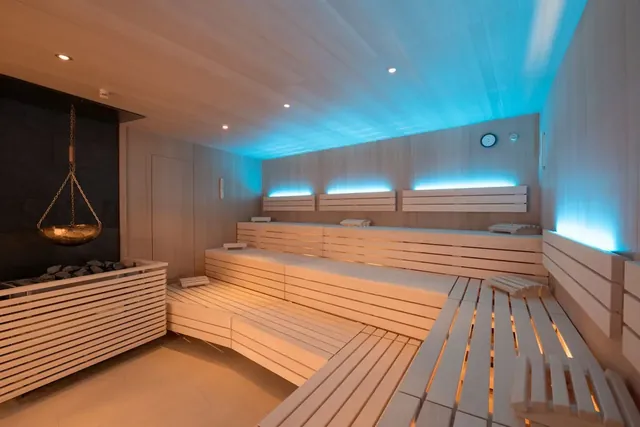
bellamar Schwetzingen
Mannheim · Herbal sauna
Frequently asked questions
Can you put essential oils on sauna rocks?
Not undiluted, as the oils are flammable. Use a sauna fragrance mixed into water, an ice ball with a few drops, or a bowl of scented water under the benches.
What is the best essential oil for a sauna?
Birch, pine and eucalyptus are the classics. Citrus is fresh and light, and lavender is gentler. Pick the one you enjoy.
Can I use essential oils in an infrared sauna?
Yes, but not on the panels. Put a drop on a damp towel or use a small diffuser if the studio allows it.
How many drops of essential oil in sauna water?
Follow the label, as products differ. Start with a few drops and add more only if you need to.
Do essential oils in the sauna have health benefits?
The evidence is weak. They can make a sauna more pleasant, but there is little proof they do more than that.