Outdoor sauna guide: types, costs and placement
 By the Find My Sauna team·
Updated ·
7 min read
An outdoor sauna gets you something an indoor one can't: fresh air, a sky to look at and somewhere to cool off between rounds. It also brings more decisions. Here are the main kinds, where to put one, what it needs underneath, and the rules to check first.
The short answer
Outdoor saunas come as cabins, barrels, cubes, tents, trailers and even floating rafts. Put yours on level, well-drained ground with a proper base, close enough to the house for power or with space for a chimney, and with somewhere to change and cool down. Small garden buildings are often exempt from planning or building permits, but the limits vary, and wood stoves and electrics usually have their own rules. Check locally before you buy.
Types of outdoor sauna
Cabin
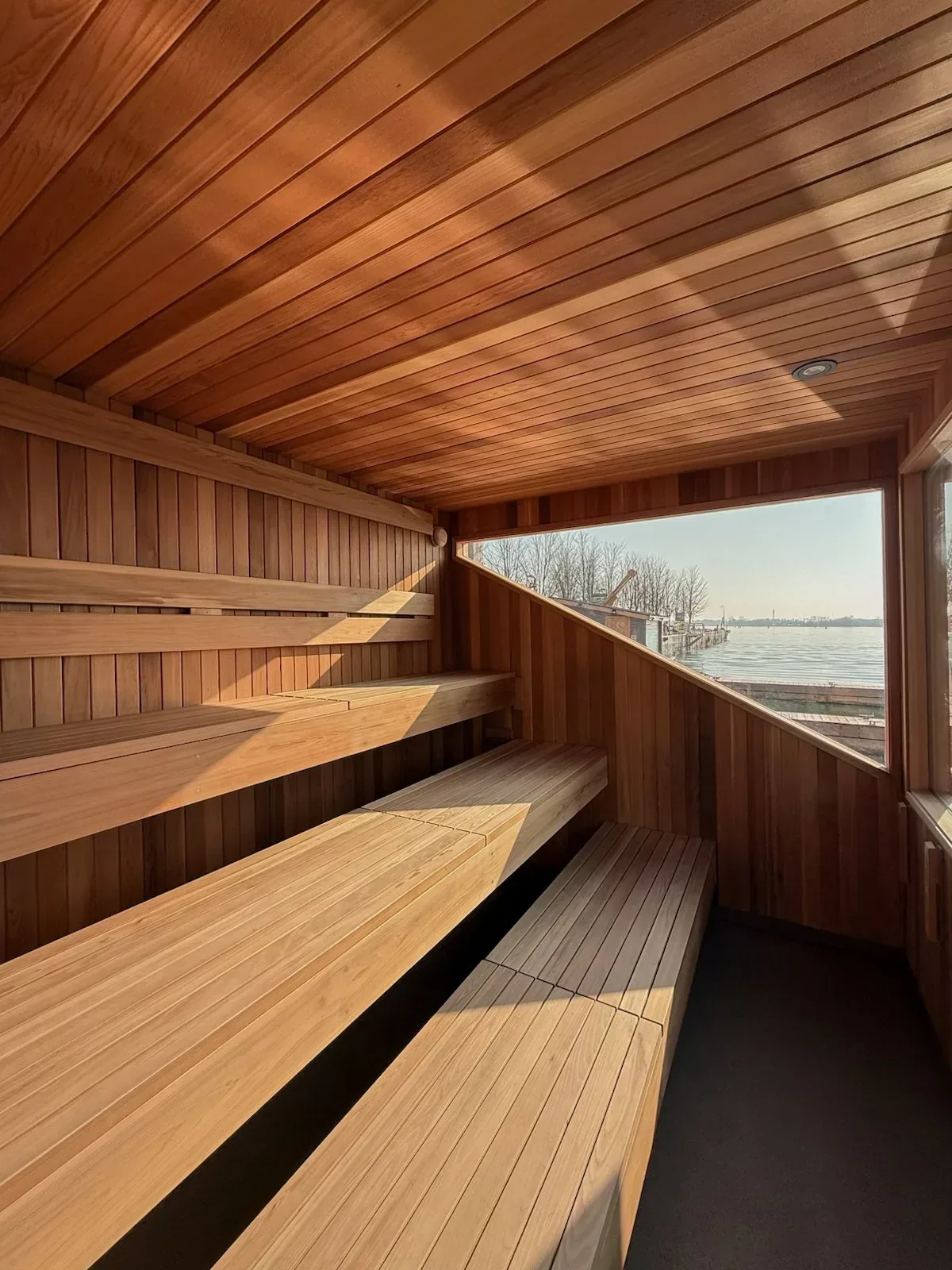
A small wooden building, usually with a pitched or sloping roof. Cabins give you the most headroom, room for tiered benches and space for a separate changing area under the same roof. They're the closest thing to a traditional Finnish lakeside sauna, and usually the most expensive.
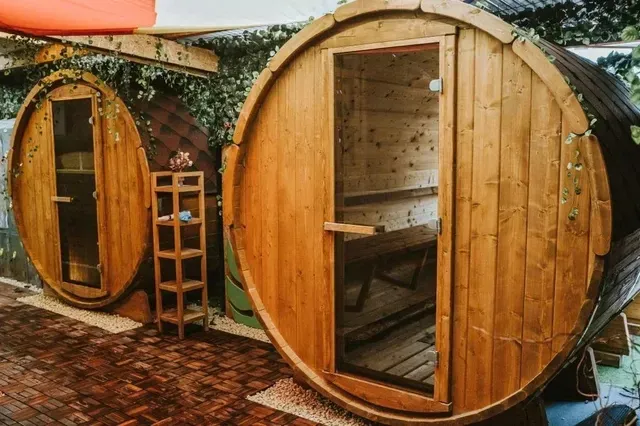
Barrel
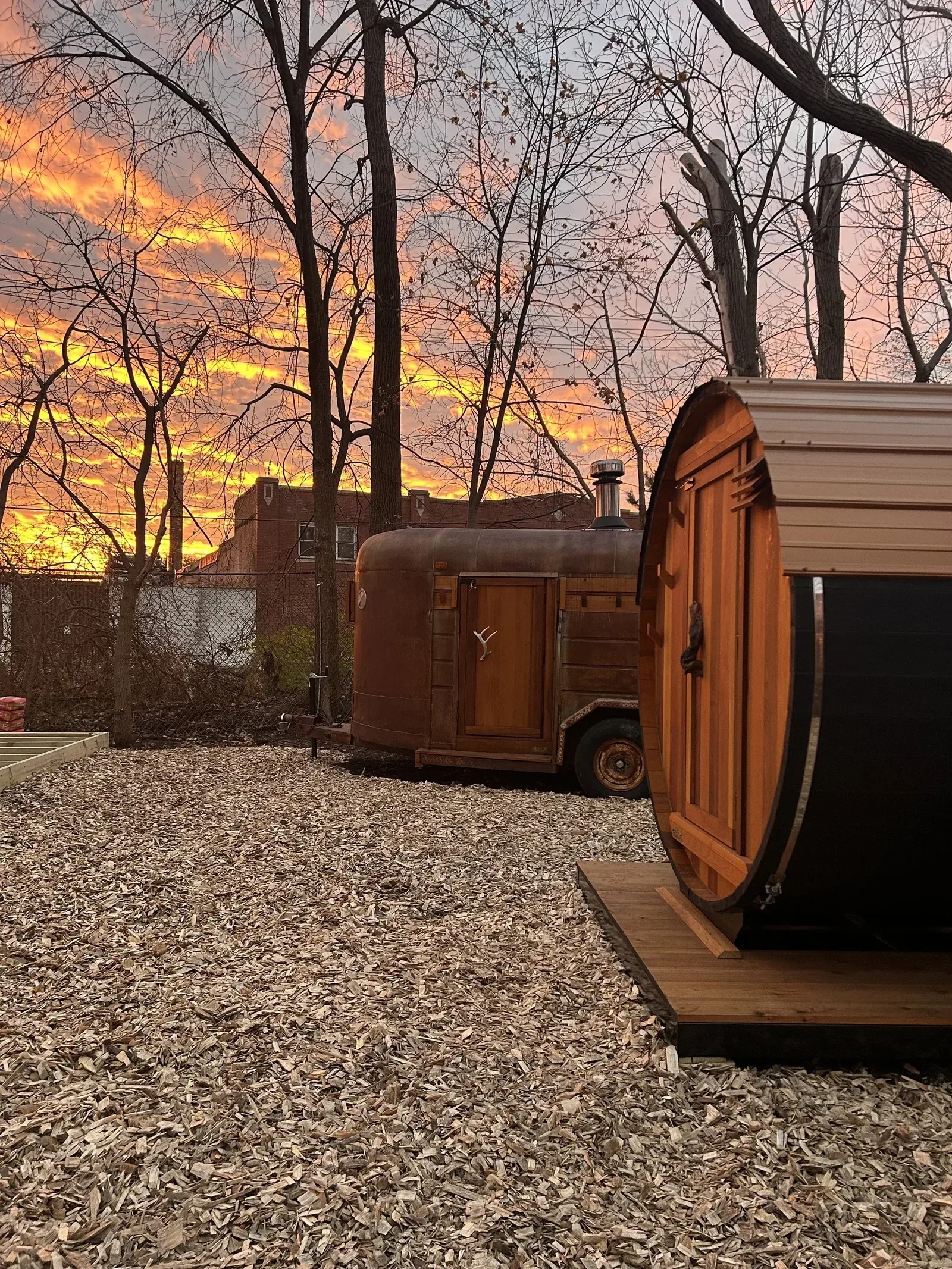
Curved staves held together by steel bands. Barrels heat quickly and shed rain and snow well, but they have limited headroom and usually only one bench level. Our guide to barrel saunas covers the pros and cons in detail.
Cube or pod
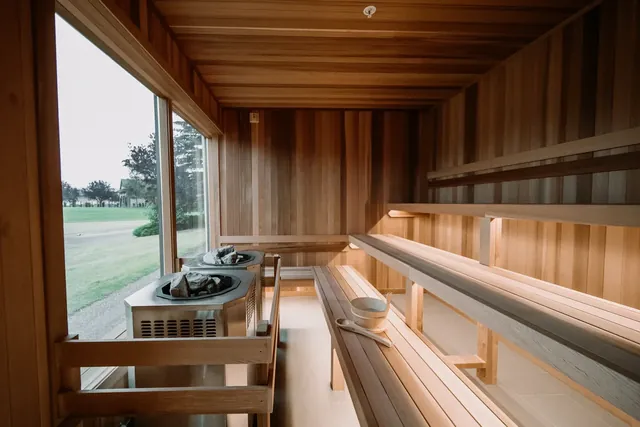
Square or slightly rounded modern designs, often with a big window or a glass wall. They have flat or gently sloping roofs, so they suit gardens where height is limited. Glass looks good but loses heat, so the heater has to be bigger.
Tent
A heat-resistant tent with a small wood stove inside and a flue through the roof. Tents pack away and go camping, but they lose heat fast once the stove dies down, and need care around the stove. Think of them as a weekend sauna rather than a daily one.
Trailer or mobile
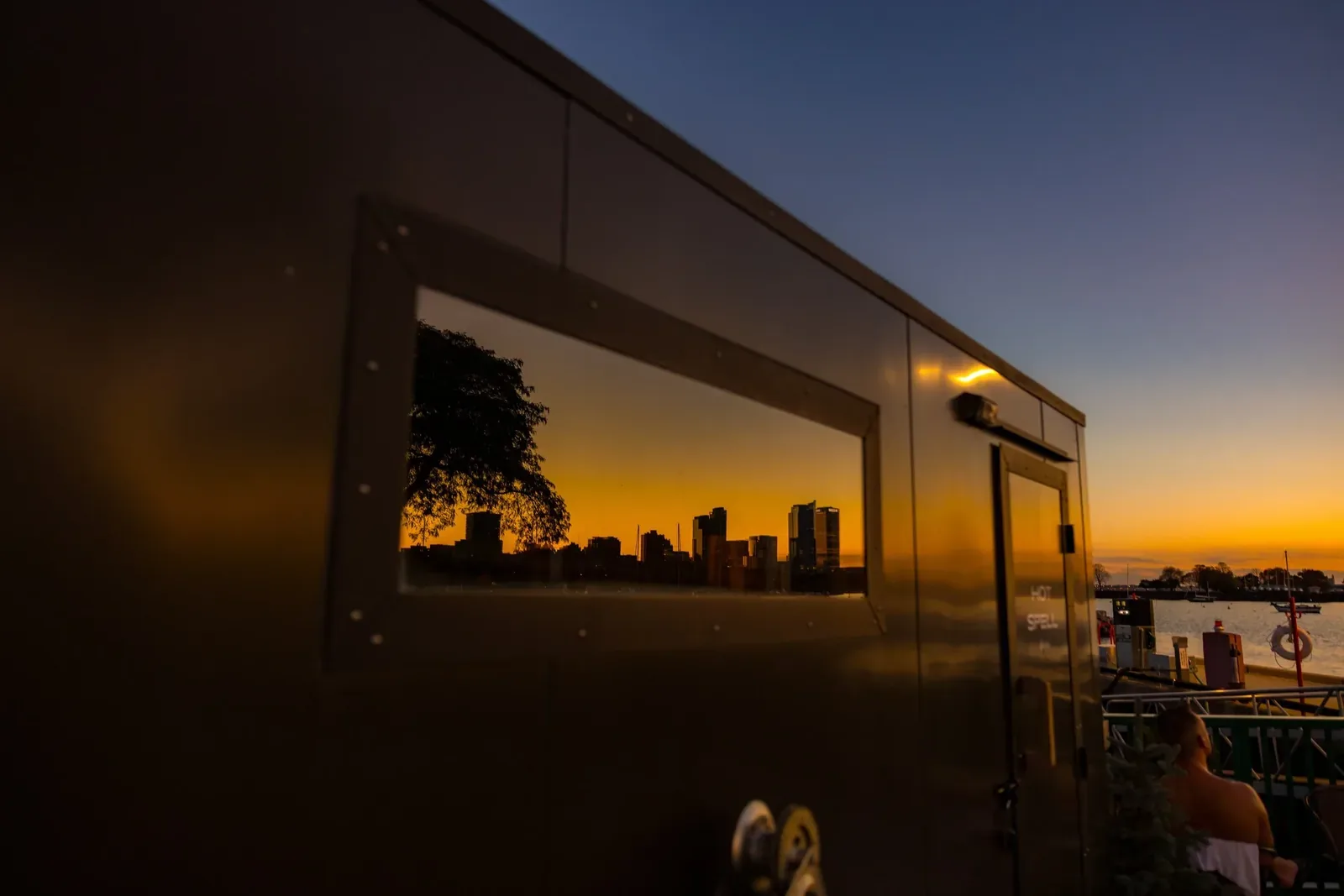
A sauna built on a trailer can follow you to the lake or the beach. Many pop-up sauna businesses use them. Check towing weights and road rules before you build or buy one.
Floating
A sauna on a raft or pontoon, so you can step straight from the bench into the water. They're popular in Scandinavian harbours. You'll need permission from whoever controls the water, and a plan for winter ice and storms.
Choosing the spot
- Level and dry. Avoid low spots where rain collects. Water under a sauna rots wood and shifts the base.
- Distance from the house. Closer means a cheaper cable run and a shorter walk in winter. Further away gives more privacy.
- Neighbours and views. Think about what people see from next door, and where the chimney smoke will drift.
- Space around it. Leave room to walk round the sauna for upkeep, and to keep wood stoves well clear of fences, trees and sheds.
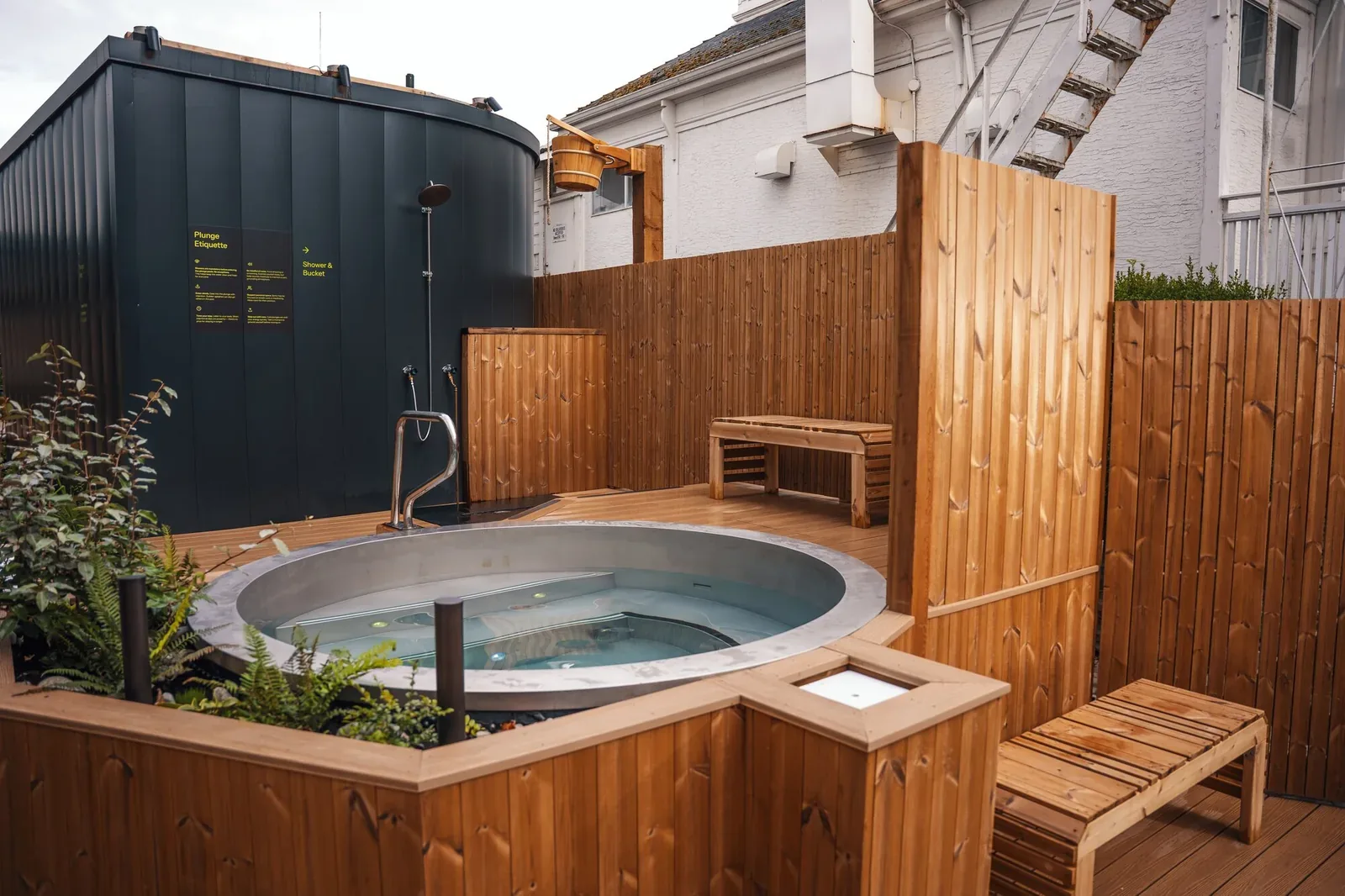
- The cool-down. Where will you sit, shower or plunge between rounds? Plan it now, not after the sauna arrives.
Foundations
A sauna is heavy once you add the heater, stones and people, and it needs to stay level for its doors and seams to stay tight. The common options:
- Gravel pad. Compacted gravel inside a timber or steel edge. Cheap, drains well, and suits barrels and small cabins.
- Paving slabs. Laid on a compacted base. Fine for smaller saunas on firm ground.
- Concrete piers or ground screws. Lift the sauna off the ground so air can circulate underneath. Good on slopes.
- Concrete slab. The most solid option, and the most work. Worth it for a large cabin.
Follow the sauna maker's guidance for the base. A barrel on uneven ground can warp and leak, and a cabin that settles unevenly will have doors that stick.
Permits and rules
Rules depend on where you live, so treat these as examples of what to look for, not as advice for your plot.
- England. Many garden buildings count as permitted development, so they don't need planning permission. The Planning Portal sets limits: single storey, eaves up to 2.5 metres, and no more than 4 metres tall with a dual-pitched roof (3 metres for other roofs). Within 2 metres of a boundary, the whole building must stay under 2.5 metres. Stricter rules apply in national parks and other protected areas.
- United States. The model International Residential Code exempts one-storey detached accessory buildings of up to 200 square feet from a building permit. Many towns change that limit, some to 120 square feet, and wiring and stoves are usually dealt with separately.
- Wood smoke. In the UK's smoke control areas, wood can only be burned in a Defra-exempt appliance, and that applies to a stove with a chimney in a garden building. Other countries and towns have their own burning rules.
Also check your deeds, any homeowners' association rules and your home insurance.
Wood or electric?
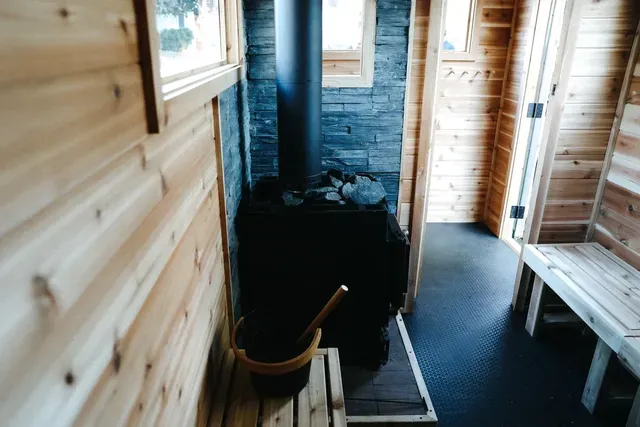
Outdoors, both work. Electric heaters are easy to use and can be switched on before you leave the house, but a garden sauna means a long armoured cable, usually dug in, and a dedicated circuit. A wood stove needs no power at all, which suits a sauna at the far end of a plot or off the grid, but you'll need an approved chimney, safe clearances and dry firewood.
Many outdoor sauna fans prefer wood for the crackle and the ritual. Our guide to sauna heaters compares the two properly, including how to size a heater for a room with a big window.
Changing room and cool-down
A sauna on its own means undressing in the garden or walking across it in a towel. That's fine in July and less fun in January. A covered porch or a small changing room makes a real difference: a bench, hooks, a mat for wet feet and a place to leave dry clothes.
For cooling down, a cold tub, an outdoor shower or simply a chair in the fresh air works well. If you're adding a plunge tub, read cold plunge benefits for temperatures and safety.
What it costs
An outdoor sauna has the same costs as an indoor one, plus the base, the cable run or chimney, and more weatherproofing. Fixr's US cost guide puts small outdoor saunas at $3,000–6,000 installed, but large cabins with a changing room cost much more. Our guide to home sauna costs shows how to work out running costs for your own tariff.
Where to try an outdoor sauna
Before you build one, spend an evening in someone else's. Many outdoor saunas rent private sessions, so you can try a barrel against a cabin, or wood against electric.
Find My Sauna lists 277 outdoor saunas. These cities have the most:
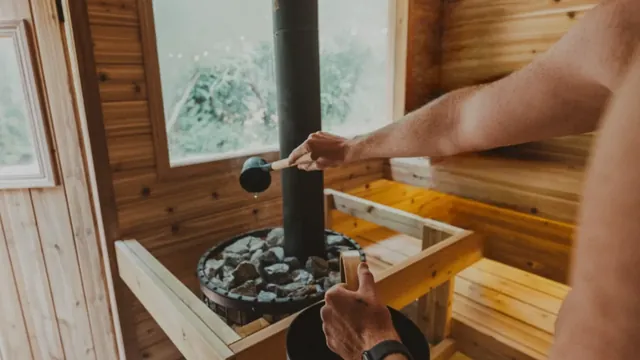
Wildwood Saunas
Victoria · Outdoor sauna
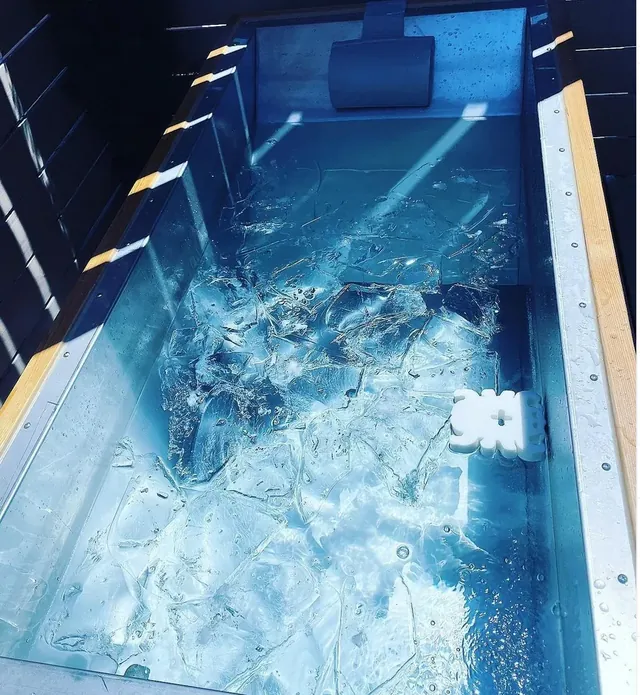
Element Outdoor Sauna
Toronto · Outdoor sauna
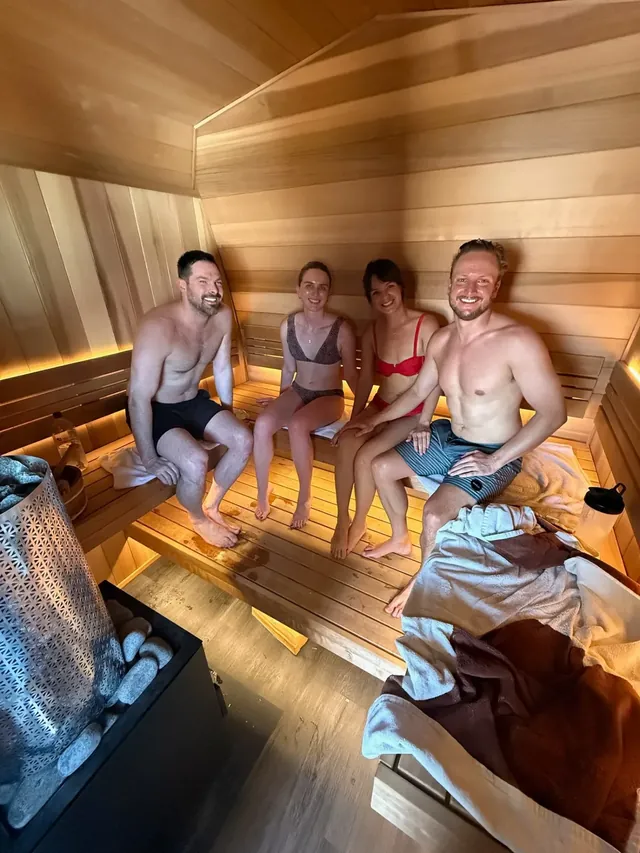
WELLHOUSE
Boise · Outdoor sauna
Frequently asked questions
Do you need planning permission for an outdoor sauna?
Often not for a small garden building, but limits on height, size and position vary. In England, check the Planning Portal rules for outbuildings. Elsewhere, ask your local council or building department.
What is the best base for an outdoor sauna?
A level, well-drained one. Compacted gravel suits barrels and small cabins. Concrete piers or a slab suit larger saunas and sloping ground.
Can an outdoor sauna be used in winter?
Yes. Saunas come from cold countries. It may take longer to heat, and a covered place to change makes winter use far more pleasant.
Is a wood-fired or electric outdoor sauna better?
Electric is easier day to day. Wood needs no power and many people prefer its heat, but it needs a chimney and firewood, and may be restricted in smoke control areas.
How far should an outdoor sauna be from the house?
There is no single rule. Follow the stove maker's clearances, local fire and planning rules, and think about cable length and the walk in winter.