Dry sauna vs wet sauna explained
 By the Find My Sauna team·
Updated ·
7 min read
"Dry sauna" and "wet sauna" are used to mean different things depending on who's talking. A gym in Ohio, a spa in Bavaria and a cottage in Finland would each explain them differently. This guide sorts out what the terms describe, how much water is really in the air, and which kind of heat might suit you.
The short answer
A "dry sauna" usually means a Finnish-style sauna kept at 80–100 °C (176–212 °F) with low humidity, around 10–20%. A "wet sauna" can mean the same sauna after water is thrown on the stones, which briefly raises the humidity and the felt heat, or it can mean a steam room at 40–50 °C (104–122 °F) and close to 100% humidity. Between them sits the soft sauna or biosauna, at about 45–60 °C with 40–55% humidity. Humid heat strains the body more at the same temperature, which is why wet rooms are kept cooler.
What the terms mean
There are three common uses, and most confusion comes from mixing them up:
- Dry sauna vs steam room. In many gyms and hotels, "dry sauna" is simply the wooden hot room, and "wet sauna" is the tiled steam room next door. You'll hear it most in gyms and hotel spas.
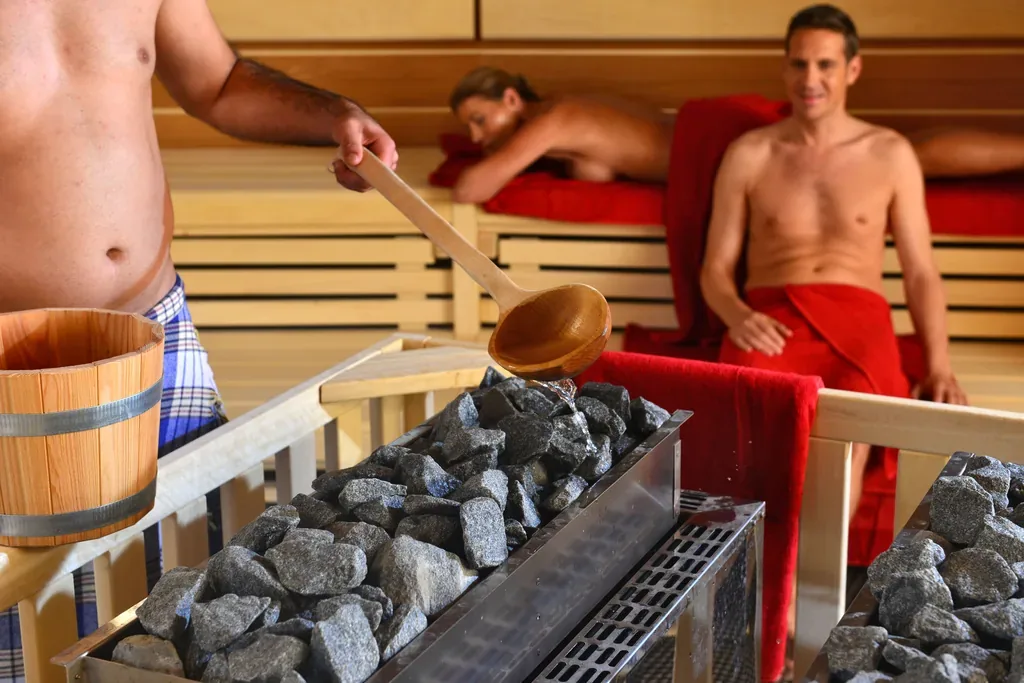
- Dry vs wet Finnish sauna. To a Finn, a sauna is never really "dry". It's dry air most of the time, then wet for a minute or two after someone throws water on the stones. When UNESCO added Finnish sauna culture to its heritage list in 2020, it called löyly the sauna's central experience.
- Dry vs soft sauna. In German-speaking spas you'll see a classic Finnish sauna, hot and dry, next to a cooler, more humid room called a biosauna, soft sauna or Sanarium.
An infrared cabin is dry too, but works differently: it heats your body directly rather than the air. If the steam room is what you're really weighing up, our guide to sauna vs steam room compares them for skin, breathing and health.
Humidity in numbers
| Air temperature | Relative humidity | |
|---|---|---|
| Finnish sauna, no water on the stones | 80–100 °C (176–212 °F) at head height | About 10–20% |
| Finnish sauna with löyly | Varies. Set to about 75 °C (167 °F) in one 2026 study | Rises in bursts. About 41% on average in one 2026 study |
| Biosauna or soft sauna | About 45–60 °C (113–140 °F) | About 40–55% |
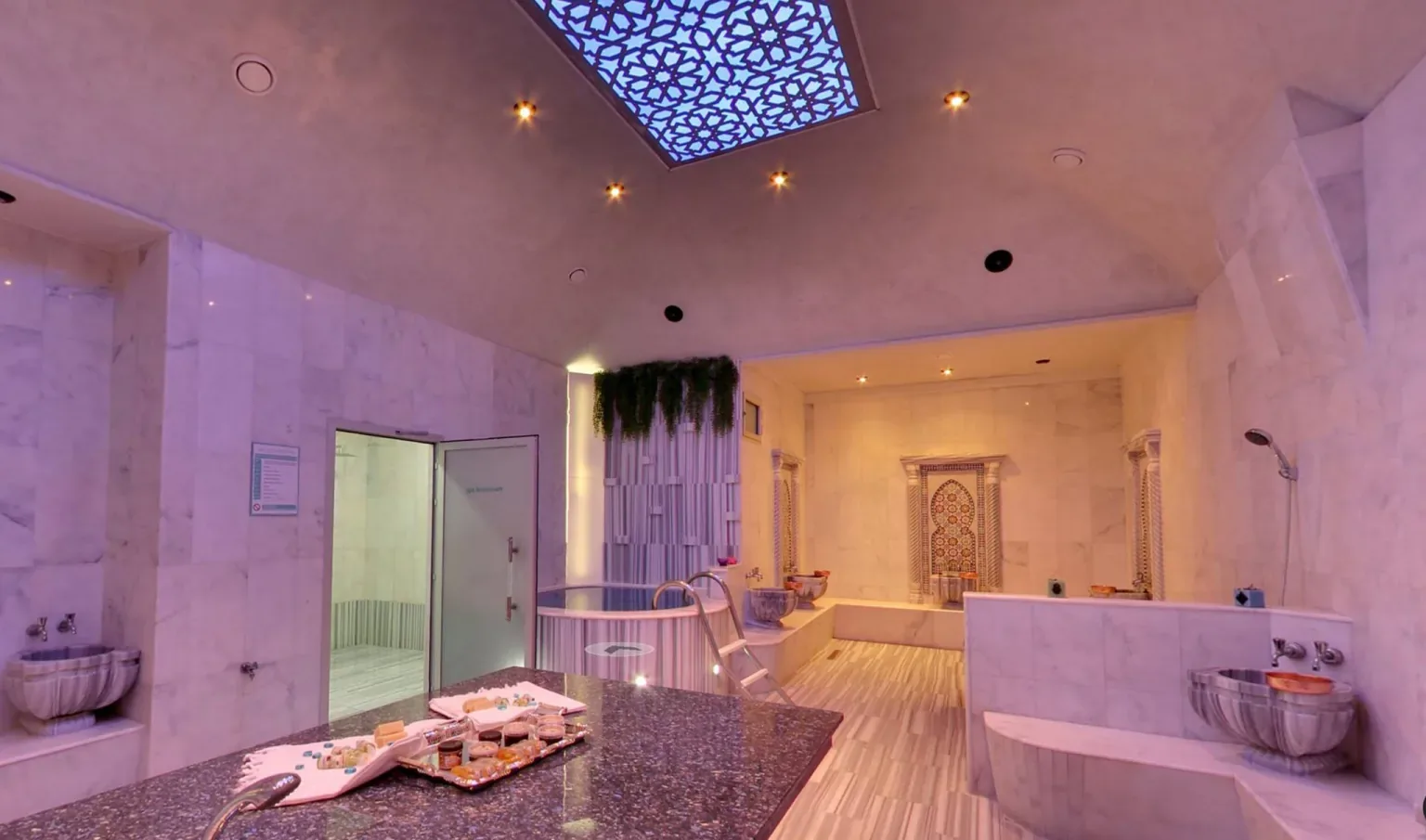
| Steam room or hammam | About 40–50 °C (104–122 °F) | Close to 100% |
| Infrared cabin | About 45–60 °C (113–140 °F) | Low, no water used |
Why is the humidity in a Finnish sauna so low, when a ladle of water makes so much steam? Relative humidity measures how much water the air holds compared with the most it could hold at that temperature. Very hot air can hold a lot, so the same amount of water gives a much lower percentage at 90 °C than at 45 °C. The steam from one ladle spreads through the room and the reading soon falls again.
The 2026 figure comes from a University of Jyväskylä study in which 50 adults threw as much water as they liked. The saunas were set to about 75 °C (167 °F), and average relative humidity came out at about 41%, well above the textbook range. Real saunas, used the way people like them, can be wetter than the books say.
Why humid heat feels hotter
Your body cools itself by sweating. The sweat only cools you when it evaporates, and it evaporates easily in dry air. In a dry sauna at 90 °C your skin stays fairly dry to the touch, because sweat leaves almost as fast as it appears.
In wet air, sweat can't evaporate well. It runs off you instead, and your body loses its main way of cooling down. That's why a steam room at 45 °C can feel as intense as a dry sauna at 80–90 °C.
The Jyväskylä study measured this. Both temperature and humidity raised heart rate and core body temperature, each on its own. Temperature was still the bigger factor, but humidity added strain on top. As the lead researcher, Iida Laatikainen-Raussi, explained, high humidity stops sweat from evaporating, so the heart and circulation have to work harder.
Löyly: the sauna that is both
Löyly is the Finnish word for the steam that rises when water hits the hot stones. It's an old word, related to words for spirit and breath in other Finnic languages, and Finns never call it by the ordinary word for steam, höyry.
When the water hits the stones, a cloud of vapour rises to the ceiling and rolls down over the benches. For a few seconds the air is much wetter, and the heat bites at your ears, shoulders and back. Then it dries out again. That rhythm of dry heat and sudden steam is what Finns mean by a good sauna.
The gym "dry sauna"
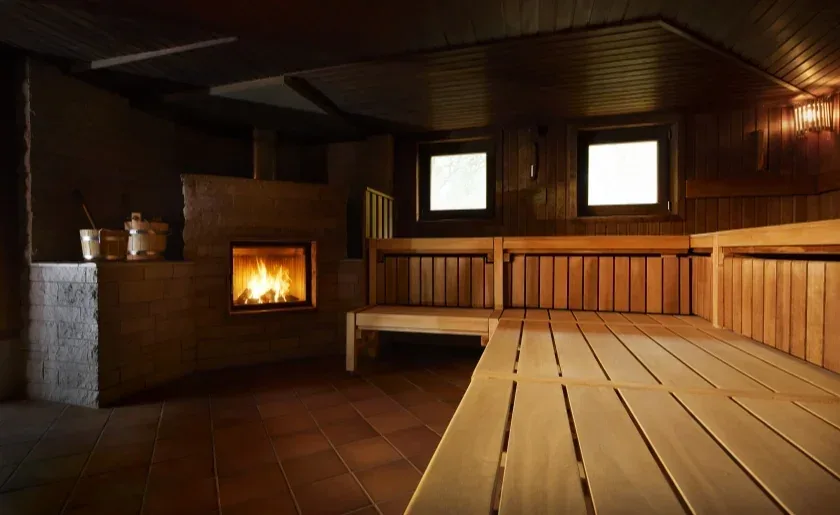
Many gym and leisure-centre saunas have a sign saying not to pour water on the heater. That's not a rule about tradition. The heater is an electrical appliance, and some aren't designed for water at all. The heater maker Tylö also warns against pouring chlorinated pool water on its heaters, and says too much water can damage them and void the warranty. So in these saunas, "dry" really does mean dry, and you should respect the sign.
If you want löyly, look for a sauna with a bucket and ladle by the stove, or ask the staff.
Which should you choose?
- A classic dry sauna if you like clear, hot air, want to sit longer, or find steam stuffy.
- A Finnish sauna with löyly if you like intensity and the rush of a ladle on the stones. Sit lower if it gets too much.
- A soft sauna or biosauna if you're new to saunas or find 90 °C too harsh. It's gentler on the face and breathing.
- A steam room if you like moist air on your skin and a lower temperature. Keep sessions shorter, since you can't cool down as well.
- An infrared cabin if you want gentle, dry warmth with no stones and no steam. Read what is an infrared sauna.
For the full range of temperatures, see how hot is a sauna, and for what moist heat does for skin and breathing, steam room benefits.
Who should be careful
Because humid heat makes the heart work harder, go easy on löyly and steam rooms if you have a heart condition or high or low blood pressure, and ask your doctor first. The same applies if you're pregnant. Leave any hot room as soon as you feel dizzy or sick, and never mix it with alcohol.
This guide is general information, not medical advice.
Where to try both
Many spas have a dry sauna, a soft sauna and a steam room under one roof, so you can compare in a single visit:
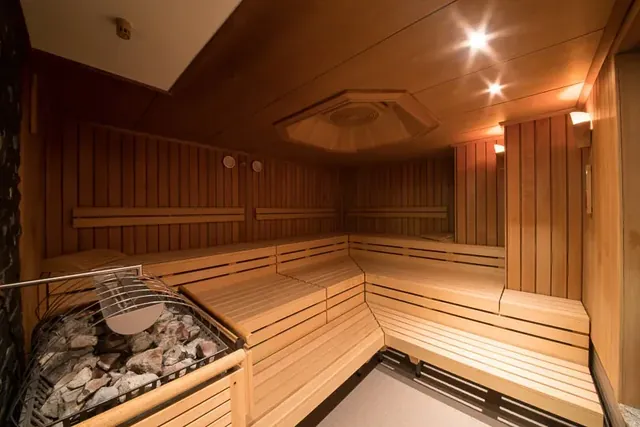
Dampfbad Salurner Straße
Innsbruck · Finnish, herbal and steam
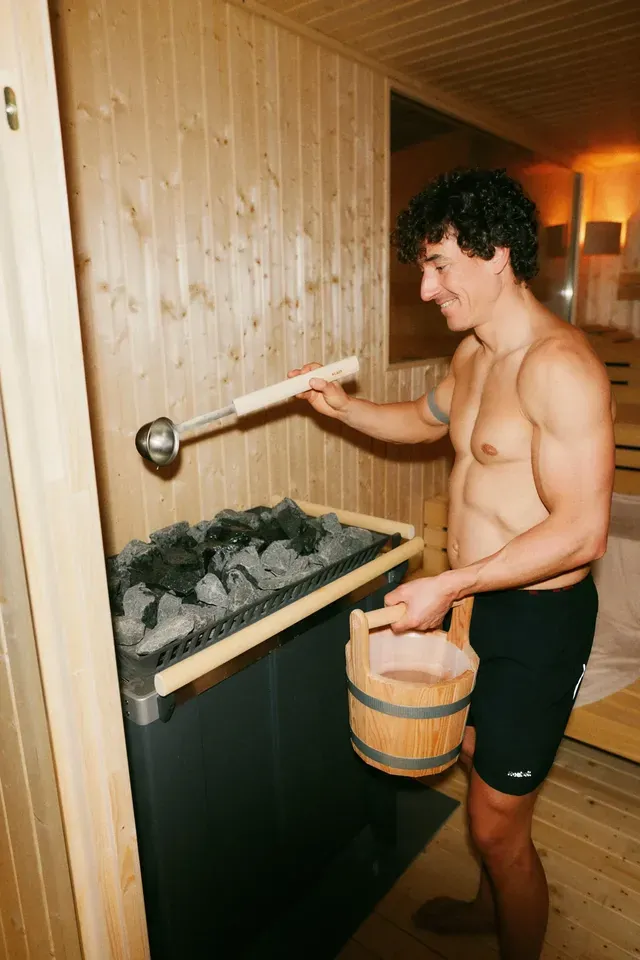
Hold Space
Munich · Finnish sauna with löyly

Spa Wellness Hammam
Rotterdam · Hammam and steam room
Frequently asked questions
Is a dry sauna or wet sauna better?
Neither is better for everyone. Dry heat lets you sit longer at a higher temperature. Humid heat feels more intense at a lower temperature. Try both and see which you enjoy.
What is the humidity in a dry sauna?
Usually about 10–20% in a Finnish sauna without water on the stones. It rises for a short while each time water is thrown on.
Is a steam room a wet sauna?
In everyday use, yes. A steam room is kept at about 40–50 °C with air close to 100% humidity, and many gyms call it the wet sauna.
Why does a wet sauna feel hotter?
Because sweat cannot evaporate in humid air, so your body loses its main way of cooling down.
Can you pour water in a dry sauna?
In a Finnish-style sauna with a ladle and bucket, yes. In many gym saunas, no: the sign by the heater will tell you.