Russian banya: what to expect
 By the Find My Sauna team·
Updated ·
7 min read
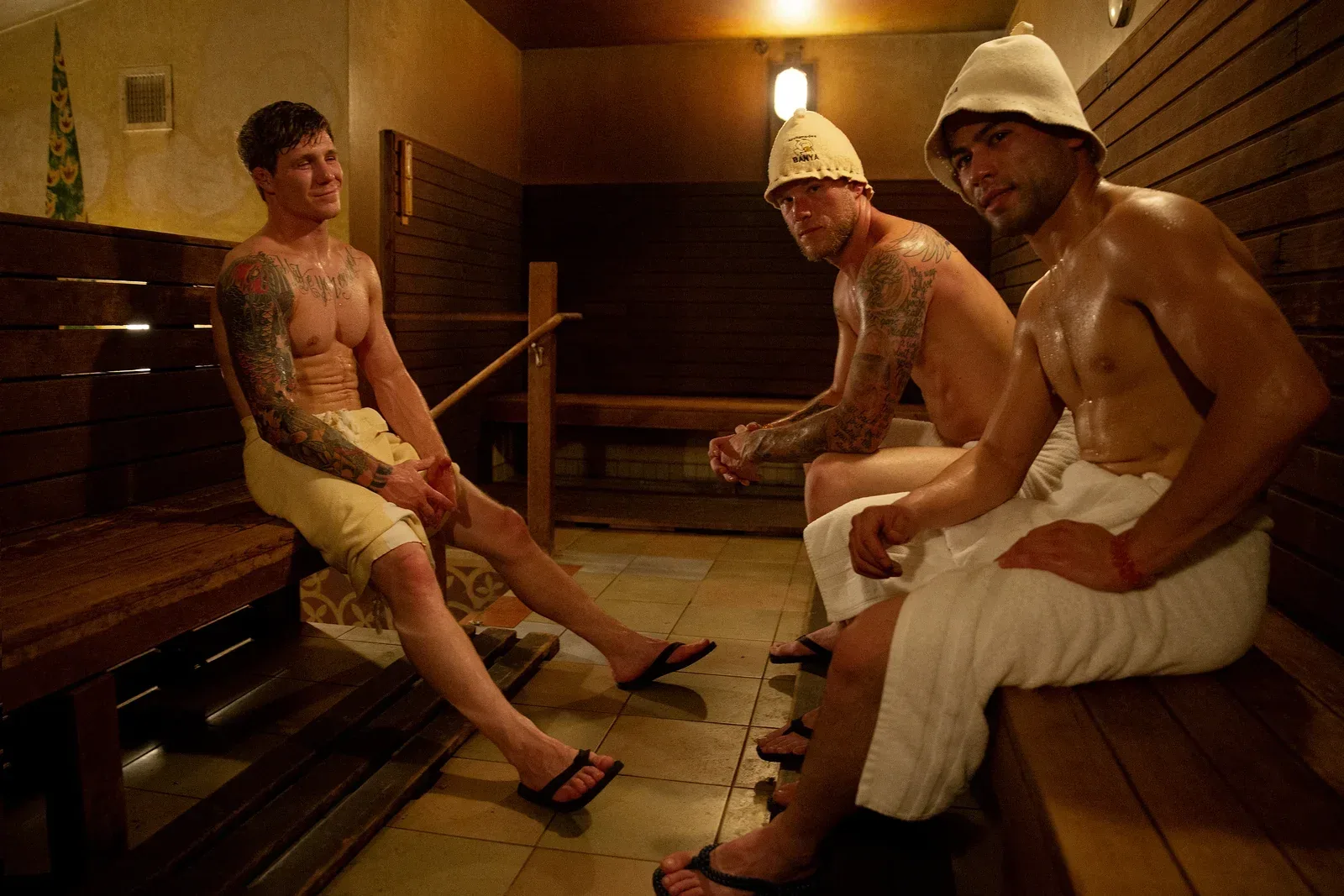
A Russian banya is wetter than a Finnish sauna, louder than a spa and built around one ritual: lying on a bench while someone beats you with a bundle of hot, wet leaves. It sounds odd. It feels wonderful.
The short answer
A banya is a Russian bathhouse built around a steam room called the parilka or parnaya, heated by a large stone stove. It's humid rather than dry, and bathers wear felt hats to protect their heads. The centrepiece is the venik, a bundle of soaked birch or oak branches used to whisk you, often by a bath master in a treatment called parenie (or platza in the US). Between rounds you plunge into cold water, then rest with tea. Plan on two to three hours.
What a banya is
The banya is old. The 12th-century Primary Chronicle, one of the earliest histories of the Eastern Slavs, already describes people steaming and whipping themselves with twigs in wooden bathhouses. For centuries Russians went once a week, typically on Saturdays.
A traditional banya has three rooms: an entrance room for undressing and resting (the predbannik), a washing room, and the steam room itself. In a "black" banya, the oldest kind, smoke from the stove escapes through a hole in the ceiling and darkens the wood, much like a Finnish smoke sauna. A "white" banya has a chimney. City bathhouses scaled this up, with big stoves, plunge pools and restaurants, and Russian emigrants took them to London, Dubai, Toronto, New York and San Francisco.
The parilka: heat and steam
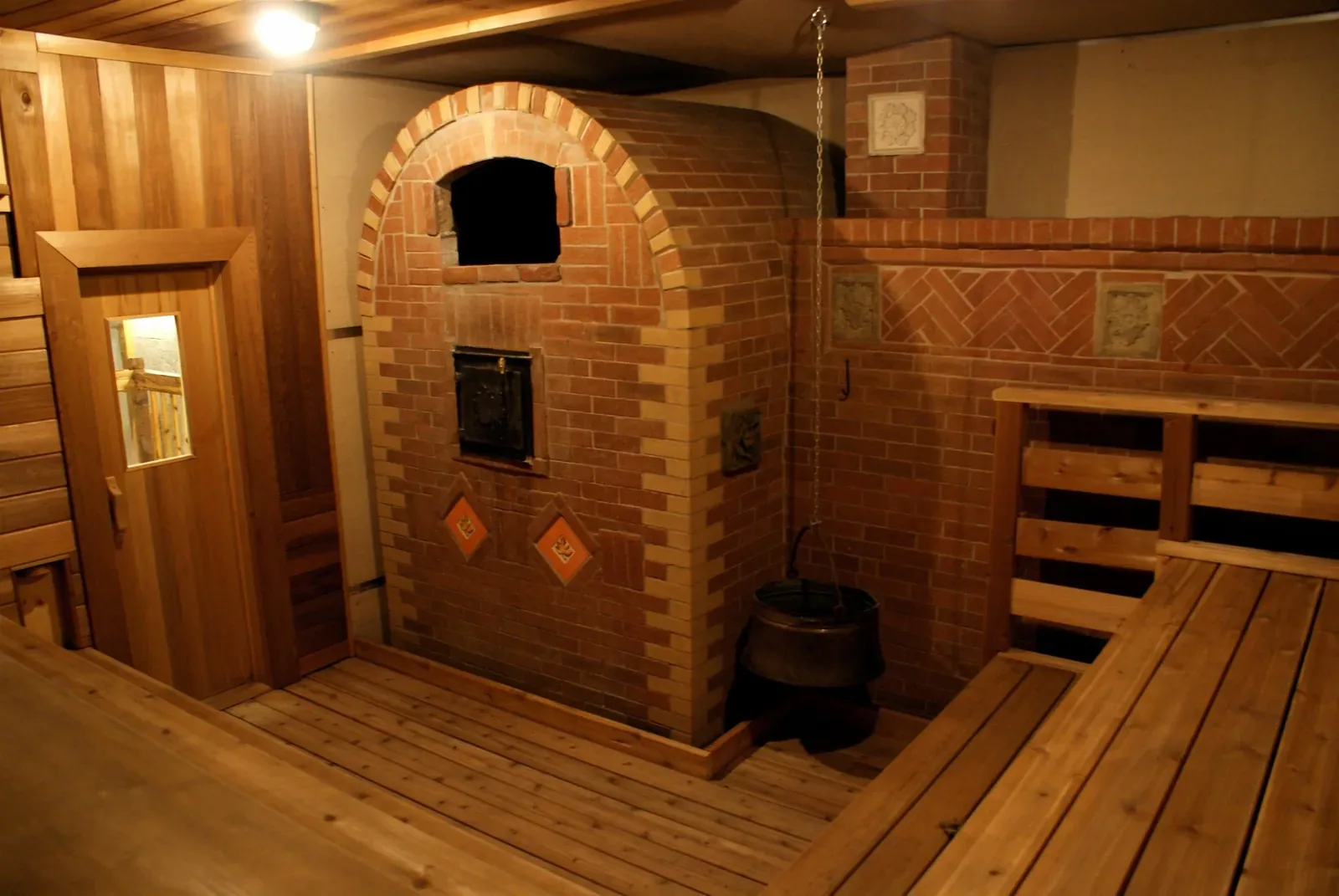
The stove in a banya holds a huge mass of stone, often several tonnes, closed inside a brick or tiled chamber. Water is thrown in a little at a time, and the stones turn it into a fine, heavy steam that hangs in the room.
Temperatures vary a lot from one banya to the next. Many modern ones keep the steam room around 60–80 °C (140–176 °F) with 40–60% humidity: Banya No.1 in London and Dubanya in Dubai both quote figures in that range. Old-school rooms run much hotter, and some go past 90 °C (194 °F). Because the air is wet, it feels hotter than a dry sauna at the same temperature. Our guide to sauna vs steam room explains why humid heat hits harder.
The venik
The venik is a bundle of leafy branches tied at the handle. Birch is the classic, soft and fragrant. Oak has bigger, tougher leaves and feels heavier. Eucalyptus is common too, and plenty of banyas offer all three.
Dried veniks are soaked in very hot water before use until the leaves soften, and fresh ones are used in summer. Some people freeze them to keep them green through the winter. Many banyas sell them at the desk, and you can bring your own. Our guide to sauna whisking goes into the techniques in detail.
Parenie and the bath master
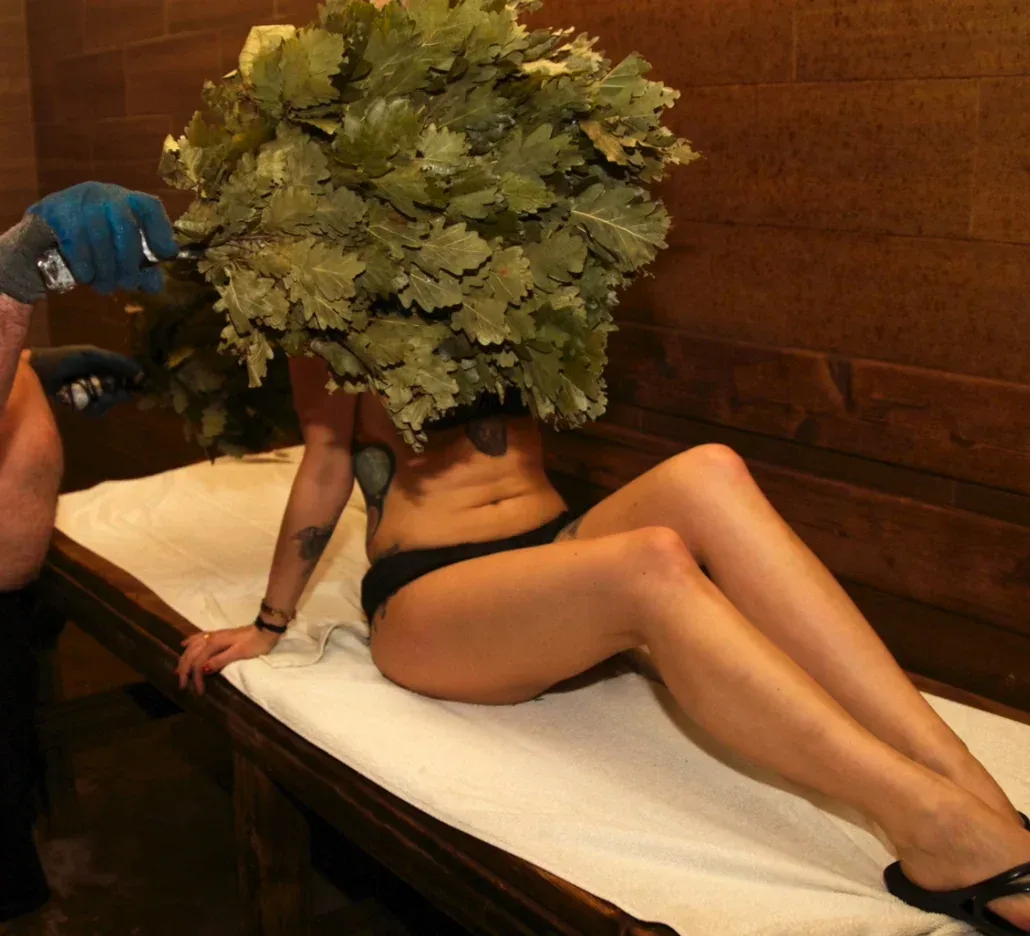
You can whisk yourself, or a friend can do it, but the real thing is a session with a bath master, often called a parmaster. You lie face down on the top bench. The master wafts hot air onto you with the venik, presses the hot leaves onto your back and legs, then taps, strokes and swishes in rhythm, sometimes with two veniks at once. You turn over and it continues on your front. It ends with a bucket of cold water or a plunge.
It's intense, but it shouldn't hurt. A good master checks how you're doing and adjusts. Say so if the heat gets too much. In the US the same treatment is called platza, and most banyas charge for it on top of entry.
Felt hats
The pointy wool felt hats you see in banya photos aren't decoration. Felt shields your head from the worst of the heat, which gathers near the ceiling, so you can stay in longer. Many people also wear felt mittens when using a venik, and sit on a towel or a felt mat. Our guide to what to wear in a sauna covers hats and the rest of your kit.
The cold part
After each round you cool down hard. Banyas have an ice-cold plunge pool, a bucket that tips cold water over your head, or both. In winter in the countryside, people roll in snow or dip into a hole in the ice. Some city banyas have a snow room. The cold is short, a few seconds to a minute, and then you rest. See cold plunge benefits for what the cold does and how to start gently.
Tea and the rest room
Between rounds you sit in the rest room wrapped in a sheet or robe and drink. Tea is the classic. Beer is common too, though alcohol and intense heat are a poor mix. Food is part of it: many banyas have a restaurant or bar, and a visit easily turns into an afternoon.
How to do it
- Shower and warm up. Do a first, short round with no venik to let your body adjust.
- Cool off and rest for 10–15 minutes. Drink water or tea.
- Second round with the venik. This is when most people use it, either alone or with a bath master.
- Plunge, then rest again.
- Repeat two or three times, then finish with a warm shower and a long rest.
Who should be careful
A banya combines strong heat, high humidity and sudden cold, and that puts real strain on your heart. Ask your doctor first if you have a heart condition, high or low blood pressure, or are pregnant. Skip the venik on broken skin or sunburn. Don't drink alcohol before or during, drink plenty of water, and leave the steam room if you feel dizzy.
This guide is general information, not medical advice.
Where to find a banya
Find My Sauna lists 51 banyas and banya-style steam rooms. These cities have the most:

Vizlas pirts
Riga · Russian-style public bathhouse
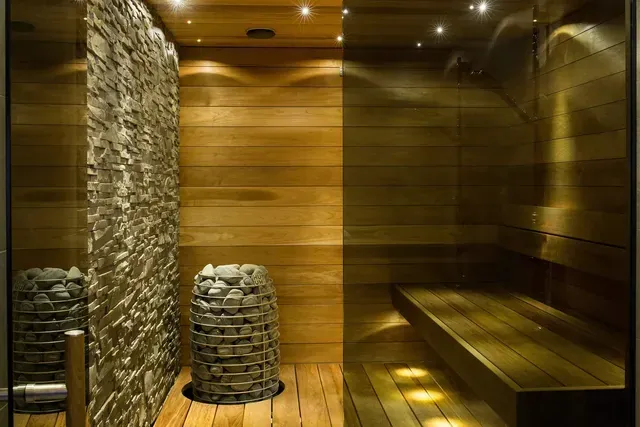
Banya No.1 Hoxton
London · Parnaya and parenie
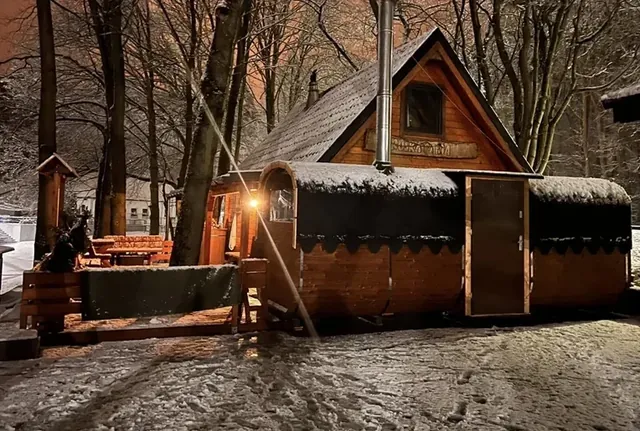
Ruska Bania
Szczecin · Wood-fired banya on a lake
Frequently asked questions
What is the difference between a banya and a sauna?
A Finnish sauna is usually hotter and drier. A banya is usually more humid, uses a big closed stone stove, and is built around whisking with a venik.
What is a venik?
A bundle of leafy birch, oak or eucalyptus branches, soaked in hot water and used to whisk the body in the steam room.
Why do people wear felt hats in a banya?
Felt keeps your head cooler, so you can stay in the heat longer without feeling faint.
Do you wear clothes in a banya?
It depends on the place. Single-sex banyas are often nude. Mixed ones usually ask for swimwear. A sheet or towel is used in the rest room.
How long does a banya visit take?
Plan on two to three hours, with three or four rounds of steam, cold and rest.


